
- Offer Profile
- The Center
for Engineering Education and Outreach has been in operation for over 10
years, and has grown from one professor and a few graduate students to a
Director, Assistant Director, several other full and part-time staff members,
and graduate and undergraduate students.
The Center, tucked away on the lower level of a building at Tufts, is buzzing with activity on a daily basis, with undergraduate students developing and testing innovative educational technologies, staff members facilitating teacher workshops, and visiting professors sharing their knowledge through the semester seminar series.
STOMP
- One of the goals of STOMP at Tufts is to help other universities establish and manage STEM outreach programs. Tufts STOMP has been working to document curriculum, training, and management information to make it easier for other groups to launch and maintain their program.
What is STOMP?
- The Student Teacher Outreach Mentorship Program
(STOMP) began at Tufts University’s Center for Engineering Education and
Outreach (CEEO) in 2001 to create a partnership between Tufts engineering
students and local K-12 educators to promote STEM (Science, Technology,
Engineering and Mathematics) at the K-12 level.
University engineering students participating in STOMP outreach present STEM concepts to K-12 students in the form of project-based activities.STOMP lessons enable K-12 students to work with given materials to design projects and achieve goals around the new concepts.
Benefits of Educational Outreach Programs
Evaluations and pilot studies implemented by STOMP at Tufts have shown that engineering students participating in STOMP gain both leadership and communication skills.
STOMP participants also realize the value of community service. In fact, the past three Tufts STOMP program managers have received the Tufts Presidential Award for Active Citizenship and Public Service, which recognizes Tufts students for their community leadership, public service and civic engagement.In 2009-2010 there are 35 Tufts students who spend an average of 5 hours per week developing and implementing hands-on STEM activities. Eighteen other universities have also adopted the STOMP model and contribute to STEM K-12 education beyond the Boston area.
STOMP Networking
To further expand the STOMP Network, STOMP at Tufts offers starter equipment grants ($3,000 - $5,000) to other universities interested in developing a STEM outreach program.
All activities, photos, and project videos from past Tufts STOMP classrooms are available on the website for programs to adopt or gain ideas for the development of new STEM activities.How to Join STOMP
Become a member of the STOMP network to gain access to STOMP manuals and program resources. The STOMP Network brings outreach programs together, fostering collaboration and sharing of resources, curriculum and classroom materials.There are two ways to get involved with STOMP at Tufts:
- Classroom Hosts
As a classroom teacher. You can host Tufts undergraduate/graduate students in your classroom as engineering/technology experts to help you in teaching engineering/technology subject areas. - Tufts Students
Tufts undergraduate/graduate from any academic program who are interested in assisting teachers in the greater Boston area teach engineering and technology are encouraged to apply to STOMP.
- Classroom Hosts
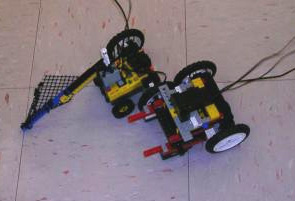
Battlebots
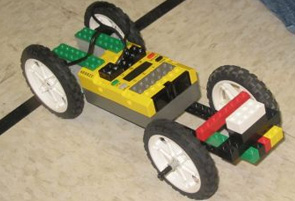
Egg Smash
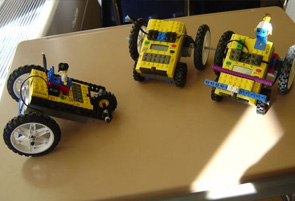
Going the Distance
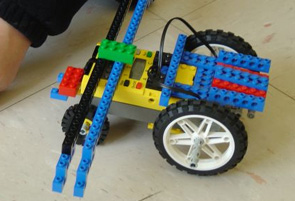
Harry

Titanic
Education Research
Investigating Middle School Teachers' Engineering Subject Matter and Pedagogical Content Knowledge
- Investigators: Morgan Hynes
Dissertation Committee
Barbara Brizuela & Judah Schwartz (Tufts University, Education Department)
Chris Rogers
David Crismond (City College New York)
Goals
The goal of this research is to investigate the subject matter knowledge(SMK) and pedagogical content knowledge (PCK) that middle-school math,science, and technology teachers use and develop as they teach an engineering unit. Understanding the knowledge base required to teach engineering at the middle-school level can guide teachers and teacher educators in preparing future engineering teachers.
Research Questions- What subject matter knowledge do middle school math and science teachers use and develop as they teach an engineering unit focusing on the engineering design process?
- What engineering pedagogical content knowledge do middle school math and science teachers know, use,and develop as they teach the said engineering unit?
- How do math and science teachers connect their subject matter and pedagogical content knowledge the same and differently when teaching the said engineering unit?
Methodology
Six middle-school teachers were selected to participate in this study and all taught the same LEGO robotics-engineering curriculum developed by the researcher and collaborators. Each of the teachers previously participated in a summer teacher professional development workshop led by the researcher or collaborators. Data from these teachers was collected in the form of: (1) semi- structured interviews, (2)videotaped classroom observations, (3) hands-on think-aloud tasks, and(4) student projects.
Miles and Huberman's (1994) qualitative data analysis approach will be applied in the analysis of the interview, task, observation, and student project data. The approach incorporates different types of data into displays and matrices to help reduce and organize data for analysis. The data is then analyzed by noting patterns and themes, clustering data, making comparisons, and noting relationships and then organizing the data into conceptually ordered matrices and charts, which help tell the story. A complete content analysis of the curriculum and results from the previous pilot study (see Hynes, 2007b) provided the basis for the coding scheme that has been developed to this point. Both within-case analysis for each teacher and cross-case analysis among the teachers will be used to examine the data.
Implications
The results from this study may help inform engineering educators prepare teachers,develop teacher resources, and create curriculum that will foster students' knowledge and interest in engineering. The research may also provide valuable insight into methods of analyzing teacher knowledge and how it can be researched further. If nothing else a small handful of teachers and their students will experience the excitement of engineering with LEGO!
Transforming Elementary Science Through LEGO Engineering Design
- Investigators: Kristen Wendell,Chris Wright,
Amber Kendall & Chris Rogers, (CEEO) Kathleen Connolly & Linda Jarvin (Tufts
University, PACE Center), Ismail Marulcu & Michael Barnett (Boston College,
Lynch School of Education)
Funding Source
This project is funded by the National Science Foundation REESE program, grant # REC-0633952, and it is a collaboration with the Tufts PACE Center and the Boston College Lynch School of Education. (Any opinion, findings and conclusions or recommendations expressed in this material are those of the author(s) and do not necessarily reflect the views of the National Science Foundation.)
Research Overview
To address the dual challenge in the United States of improving both students' science achievement (National Center for Education Statistics, 2000) and their technological literacy (Pearson & Young, 2002), educators have suggested that technological design activities be used as a context for science instruction (Fortus, Dershimer, Krajcik, Marx, & Mamlok-Naaman, 2004; Kolodner, 2006). Primary grade students (grades K-4) may be particularly receptive to design-based science instruction, since children of this age tend to exhibit less apprehension toward designerly endeavors than do adults or adolescents (Baynes, 1994). Educators argue that when children engage in design activities whose successful completion requires understanding of specific science content, the children will make progress toward two major educational objectives simultaneously. On the one hand, the young students will develop knowledge of and skills in engineering design, which are fundamental components of technological literacy (Pearson & Young, 2002). On the other hand, the children will develop deeper understanding of science content because they are using it in the service of design completion (Layton, 1993). In the Transforming Elementary Science through LEGO Engineering research study, we are investigating this design-based approach to primary science instruction.
Goals
The main goal of our work is to determine how curriculum based on LEGO engineering design challenges affects science learning in third and fourth grade classrooms. We have developed four new science curriculum modules based on LEGO engineering challenges, and we are studying the enactment of these modules by collaborating teachers in local urban schools. The new engineering-design-based curriculum modules are: (1) The Science of Sound: Design a Musical Instrument; (2) The Properties of Materials: Design a Model House; (3) Animal Studies: Design an Animal Model; (4) Simple Machines: Design a People Mover. Each module takes about 12 hours of instructional time, and throughout each module, students use LEGO MINDSTORMS materials for artifact construction, electronic sensing, and robotic programming.
Research Questions- What and how do students learn from engineering design challenges tailored to standards-based science concepts?
- What are the best practices for designing effective engineering-based science curricula?
- Can engineering contexts improve elementary school teachers' practice of science instruction?
Methods Overview
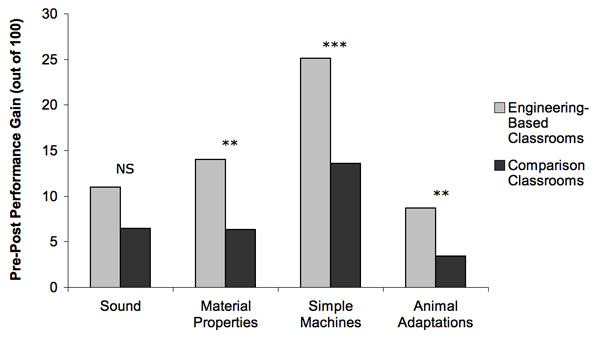
In this quasi-experimental intervention study, the experimental teachers participate in a week-long summer training program on two of the engineering-based curriculum modules and then implement those modules in their classrooms during the following academic year. The comparison teachers are teachers in the same districts who continue to use their conventional curriculum to address equivalent content. These teachers become experimental teachers the year after they provide comparison data. The metrics for studying the curriculum enactments include pre and post-intervention knowledge assessments of all students, pre- and post-intervention interviews with selected students, videotaped classroom observations, and attitudinal surveys of all students and teachers.During the 2008-09 year, we conducted a study of science content learning in 14 experimental (engineering-design-based curriculum) and 6 comparison (traditional curriculum) classrooms. Pretests and posttests were used to measure science content performance in the domains of material properties, sound, simple machines, and animal adaptations.
Overall, paired t-tests revealed significant gains from individual pretests to posttests, across all four domains and both treatment groups. However, there was a main effect of treatment (engineering vs. traditional curriculum) on the magnitude of the pre-post gain score. On average, in three of the four science domains (material properties, simple machines, and animal adaptations), the engineering-design-based science students improved significantly more (p<.01) than the comparison students, as shown. In the domain of sound, the engineering students' average gain was higher than that of comparison students, but this difference was not significant. However, the engineering students earned equivalent sound posttest scores, despite having significantly lower sound pretest scores than the comparison students. Thus, after the engineering-design-based curriculum module on sound, students were able to achieve at levels equal to those of comparison students who had previously been outperforming them.
- Investigators: Kristen Wendell,Chris Wright,
Amber Kendall & Chris Rogers, (CEEO) Kathleen Connolly & Linda Jarvin (Tufts
University, PACE Center), Ismail Marulcu & Michael Barnett (Boston College,
Lynch School of Education)
Multiple Representations of Ideas about Science
- This research project aims to learn how students
represent their ideas about science, math, and engineering in various forms
of representation. The forms include oral language, drawing, constructing
physical artifacts, and stop-action movies using the CEEO's SAM Animation
software.
Brian E. Gravel, Doctoral Candidate in Science Education
Goals and Overview
The overarching goal of this funded research project is to investigate the use of animation as a tool in the teaching and learning of science and engineering. Using SAM Animation (Stop motion animation software), students can create simple frame-by-frame animations of science, mathematics, and engineering concepts. More specifically, this research aims to discover how students spontaneously represent their ideas about science in the animated medium as compared with other, more traditional methods of explicating about science.
The domain of science is shaped by the development and use of representations of the concepts that explain the world in which we live. In other words, the language of science is representation. When children begin to make sense of science ideas, they do so through interactions with multiple forms of representation. Be it speech, written language, graphical notations, or gesture, the centrality of representation in science is undeniable. However, the conventional systems of representation that expert scientists use are systems that children must come to understand while making sense of the natural world. Thus, scientific understanding develops concurrently with knowledge of representation. Please see Gravel (2008) for a deeper discussion of the theoretical underpinnings of this work.
Research Questions- What conceptual aspects of air and a particle model of matter are students able to represent across different systems of external representation?
- How are students' understandings of air and the particle nature of matter impacted by representing these concepts across multiple systems?
- How are representations produced through animations both similar and different from representations produced in other systems such as oral language, drawing, and building physical artifacts?
Methodology
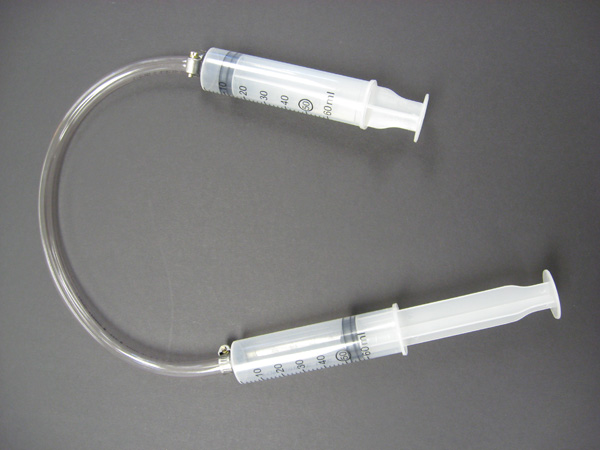
Students in the 5th grade at a Boston area middle school were participants in this study. The study consisted of each student participating in three interview-based sessions where they produced representations in various systems. The science task/exploration in question is the linked syringe problem (below). In this demonstration, the outlets (nozzles) of each syringe are linked using a piece of clear plastic tubing. As the participant pushes the plunger of one syringe down, the other plunger extends.
Students were asked to share what they know about air and air pressure, based on the device, using oral language, drawing, stop-action movies, and physical constructions. All students participated in a classroom project that familiarized them with the SAM Animation software prior to participating in the research. The interview sessions were ordered as such: (1) oral language and drawing, (2) animation, and (3) physical construction. Students were presented example representations in each session, produced by students in the pilot study, to see how students were able to critique other ways of expressing how air works in the linked syringes.
Pilot Study Results
A pilot study was conducted with a very similar methodology, and the results are as follows. In the four primary forms of representation used in this study (oral language, drawing, animation, and physical construction), there appears to be two trends in students' explanations about air and air pressure. Students have a tendency to attend to the "material substance" aspects of air in certain circumstances and to the "process" of air moving in other circumstances. The material-substance aspects of air include descriptions of gases, of how gases fill spaces, and of the particle nature of matter. Process descriptions refer to how air can move objects, how air is compressible in specific contexts, and how it flows as a fluid quantity. Alongside these two perspectives, state and process, students tend to use semblances of some basic explanatory frameworks, depending on the context. These models include "air takes up space", "air as a continuous, fluid material", and "air as a collection of particles". Each model is used in different ways to make sense of different aspects of the linked syringes. Therefore, the analysis of these data will be guided by the notions of state vs. process and of the primary explanatory models employed by the students.
One hypothesis for the relationship between process ideas and animation is the inherent temporal nature of stop-motion animation. In order to make an animation, the student must generate a sequence of images. Each image comprises an instance in time, and the collection of images represents a some change over time. While the student generates an image, he or she is aware of the prior image and anticipating the next image - in a sense, considering three instances at once. Therefore, the medium forces students to think over some temporal span (albeit, relatively small), which provides them with a method for analyzing change over small amounts of time. In the case of change-over-time, we believe this helps students to better understand processes by helping them break down changes over time.
- This research project aims to learn how students
represent their ideas about science, math, and engineering in various forms
of representation. The forms include oral language, drawing, constructing
physical artifacts, and stop-action movies using the CEEO's SAM Animation
software.
The Role of Service-Learning: Improving Engineering Education
- Investigators
Adam Carberry, Gay Lemons, Mary McCormick, Chris Rogers, Chris Swan, & Linda Jarvin
Collaborators
William Oakes (Purdue University)
Russel Faux (Davis Square Research Associates)
Funding Source
This research is funded under the National Science Foundation's IEECI Program, under Grant No. EEC-0835981. Any opinions, findings and conclusions or recommendations expressed in this material are those of the author(s) and do not necessarily reflect the views of the National Science Foundation.Goals and Overview
The overall purpose of this research project is to measure the effectiveness of engineering service experiences as pedagogical methods for teaching engineering and to examine how these experiences attract a more diverse set of engineering students than is currently represented in the population of engineering students. This project will conduct an investigation of how participation in engineering service relates to the dynamic interplay between students' engineering design self-efficacy, engineering epistemological beliefs, and understanding of fundamental engineering concepts. Our analysis will be used to quantify the role that such programs - specifically the Student Teacher Outreach Mentorship Program (STOMP), Engineers Without Borders (EWB-USA), and Engineering Projects in Community Service-Learning (EPICS) - have in attracting and retaining students to engineering.
Furthermore, because these engineering service experiences tend to have a disproportionately high percentage of women participants in relation to the overall percentage of women in engineering programs, this project will also use these three constructs to explain why these programs are particularly attractive to women in engineering.
Research Questions- How do engineering service experiences affect students' self-efficacy, views of the nature of engineering, and conceptual understanding of engineering design?
- Does positive self-efficacy toward engineering lead to student retention in engineering?
- Does engineering service lead to a more accurate view of the nature of engineering?
- Do students conceptually understand engineering design more thoroughly through an engineering service experience?
- Why do engineering service experiences attract a high percentage of female participants?
- Does engineering service lead to higher retention of women in engineering?
Methods
To investigate the research questions, engineering undergraduate students participating in STOMP, EWB, and EPICS will be compared to engineering students going through traditional classroom learning and undergraduate research opportunities. Each participant will be given a set of surveys and and a design task to analyze their self-efficacy toward engineering design, their engineering epistemological beliefs, and their conceptual understanding of the engineering design process. The first two assessments will be conducted using online surveys that have already been validated. The latter instrument will be administered as a hands-on design task.Preliminary Results
Pilot studies of the design task using verbal protocol analysis have just been completed. The results of these studies can be viewed in our REES Conference publications, Design Studies publication, and ASEE conference proceedings. The results of these studies have been used to develop a digital workbook (using Robobooks) designed to collect quantitative data. The purely quantitative study is currently underway and will hopefully have presentable results by the Summer of 2010.
Exploring How Experience with Planning Impacts First Grade Students’ Planning and Solutions to Engineering Design Problem
- Investigators
Merredith Portsmore & Chris Rogers
Barbara Brizuela & Ana Schliemann (Tufts University, Education Department)
Funding Source
This research is funded by a Karol Fellowship.
Research Overview
K-12 Engineering Education is a innovative an powerful movement in U.S Education. Design is one of the fundamental components of engineering that is being introduced in many classrooms. However, how to teach design is an area of research at all levels. At the early elementary level, we know very little about how best to teach children the basic components of design. This study aims to examines how engaging children in planning impacts their planning abilities. In addition, it looks to describe how young children identify and understand engineering design problems.
Research Questions- What is the impact of having students engage in planning on the quality of their solution to engineering design problems in the classroom?
- What is the impact of having students engage in planning on the time needed to create their solution to engineering design problems in the classroom
- What is the relationship between experience planning and performance on tasks that require planning?
Problems
What problems do first grade students identify?Methods
This study, still in development, will use qualitative methods for documenting classroom interactions. In addition, students performance on tasks used in the pre and post assessments will be evaluated to generate a performance score.
Characterizing Engineering Learning Through Service Students By Gender and Academic Year
- Investigators: Adam Carberry
Goal
The goal of this research is to examine and characterize the perceptions, beliefs, traits, and self-concepts of learning through service students.
Research Questions- What are the perceptions of service as a source for engineering learning, engineering epistemological beliefs, personality traits, and self-concepts – self-efficacy, motivation, outcome expectancy, and anxiety – toward engineering design for students participating in an engineering learning through service experience?
- How do perceived sources of engineering learning, engineering epistemological beliefs, personality traits, and self-concepts toward engineering design of students participating in engineering learning through service vary in terms of gender and academic year? What, if any, interactions exist between gender and academic year?
- How well do perceived sources of engineering learning, epistemological beliefs, and personality traits predict the engineering achievement of learning through service students?
Methodology
The study conducted was a one-time cross-sectional assessment of multiple constructs designed to provide an in depth characterization of learning through service students who volunteered to be part of the study. These combined sources were designed to provide a broad overview of the students attracted to learning through service. The chosen constructs analyze how a student perceives service compared to traditional coursework as a source of learning professional and technical skills, what their epistemological beliefs are toward engineering, what their personality traits are, and their self-concepts toward the key service component of engineering design. Each construct was measured and analyzed to investigate the dynamic interplay between constructs and the predicting power of achievement.