
- Offer Profile
- Epson Factory Automation, a
pioneer in robotics and full-service provider from manufacturing to sales,
including support. Since the launch of our robots in 1980, we have been
among the leading providers in the sphere of automation.
Our robot systems are characterised by exceptional precision, speed, reliability and durability.
Epson Robots
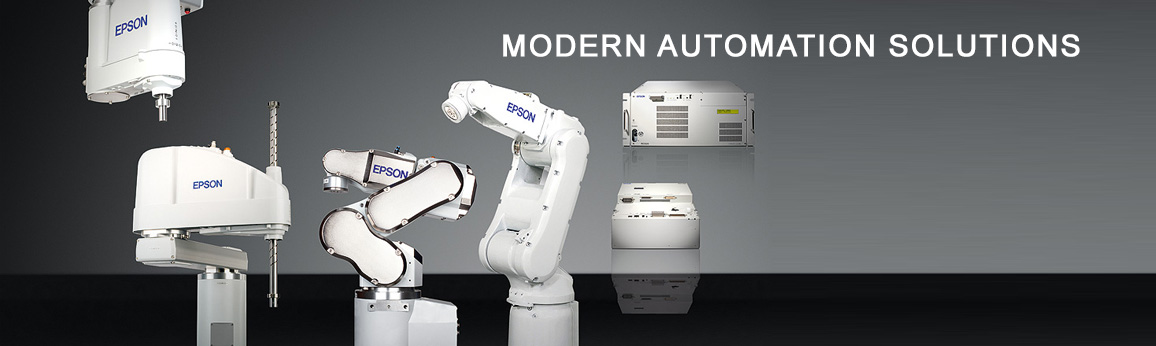
- Modern automation solutions must meet a few simple requirements: as fast as possible, as small as possible, as inexpensive as possible. Epson offers you a wide range of unique high-speed and high-precision industrial robots.
New Epson Robots
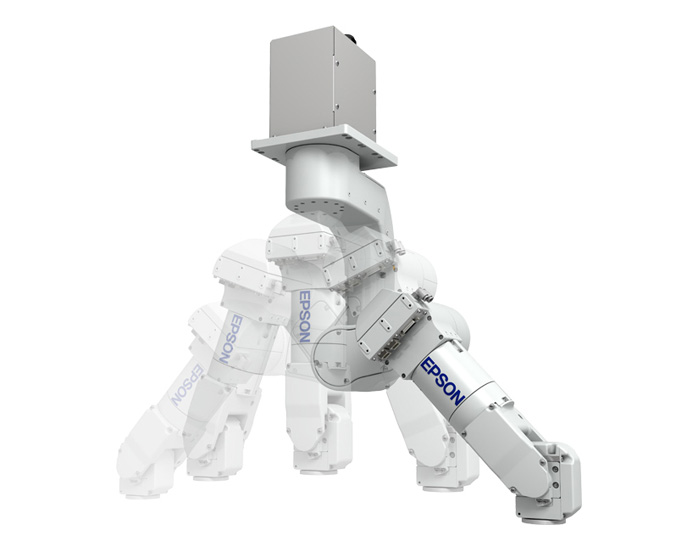
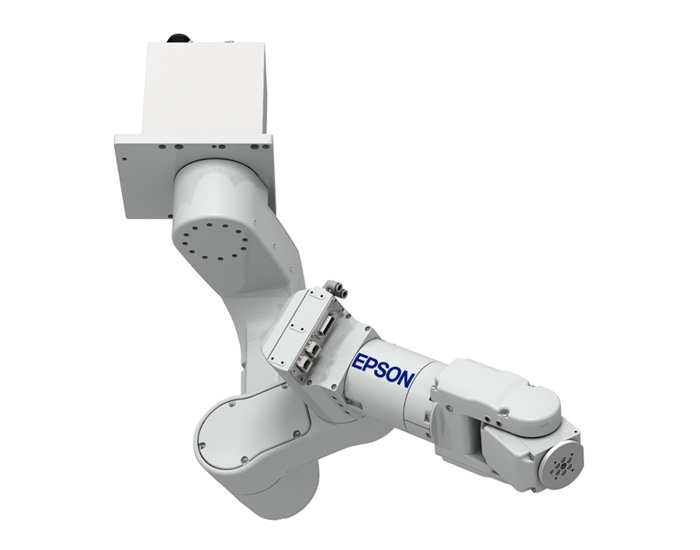
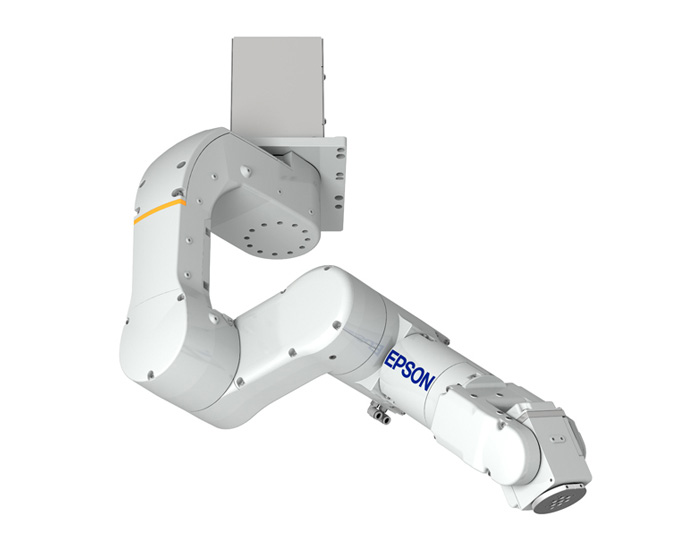
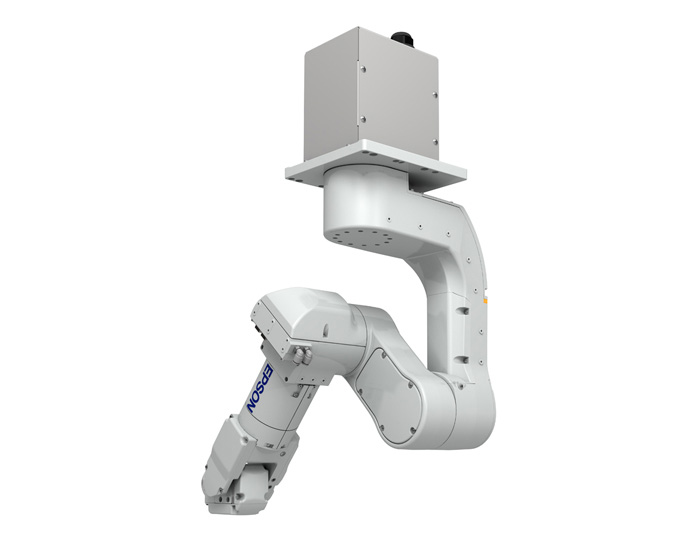
The new Epson N Series
-
Compact like no other 6 axis robot. Maximum efficiency over the smallest footprint. Extremely manoeuvrable due to inwardly orientated second axis.
Design: Vertical articulated arm
Load capacity: 2,5 kg
Range: P point* 450 mm
Repeatability: + / – 0.02 mmHigh output, low space requirement
The new Epson N series 6 axis robot can reach every point of its work cell with ease – even where it's really cramped. The reason: a revolutionary kinematic geometry with a completely new folding arm.
The new N series covers an action field for which you would normally require a 6 axis robot with a significantly longer arm length.
Extremely manoeuvrable due to inwardly orientated second axis
A classic 6 axis robot works in an external orientation: The arm must fully extend for reorientation. This costs space and time.
In the new Epson N series, the second axis is oriented inwards, thus moving the centre of rotation downwards. This means the second axle shaft can travel through the zero position. To put it more bluntly: The second axis "hops" from one side to the other. This manoeuvrability over a very small footprint is unheard of until now, and leads to highly efficient work processes.
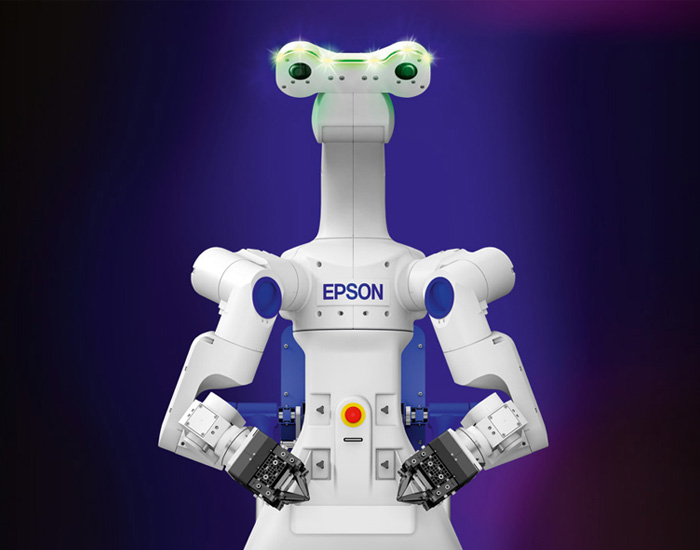
The new intelligent dual arm robot from Epson
-
The dual arm robot from Epson can carry out varying tasks almost autonomously using its arm geometry based on human physiology and wide-ranging integral sensors such as cameras, force sensors and acceleration meters. Even tasks which to date have been difficult to automate can now be performance by a robot.
Spider Robots - The Epson Robot Revolution
-
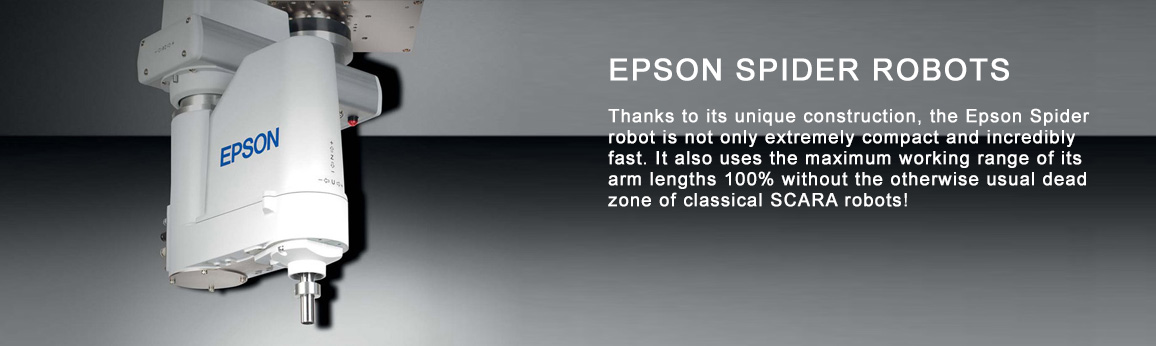
Thanks to its unique construction, the Epson Spider robot is not only extremely compact and incredibly fast. It also uses the maximum working range of its arm lengths 100% without the otherwise usual dead zone of classical SCARA robots!
Extremely compact, flexible, and ideal for narrow production cells
The Epson Spider is a new species of SCARA robots. These 4-axis robots designed like a human arm work on horizontal planes and are ideal for fast pick-and-place applications and assembly processes.
Apart from that, the Spider combines all advantages of the high-performance Epson SCARA robots. Among them are outstanding cycle times and joining properties, high insertion forces and rigidities, superb repeatability and an excellent deadload–payload ratio.
It is the first and only SCARA robot with a perfectly cylindrical envelope. Thanks to that, the impressively productive spider can reach all positions of its area of activity (100%) and also convinces with short cycle times 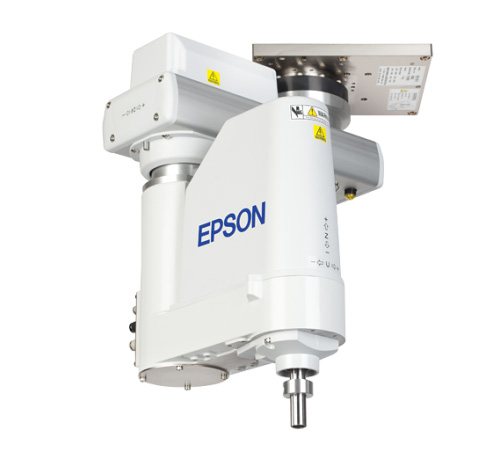
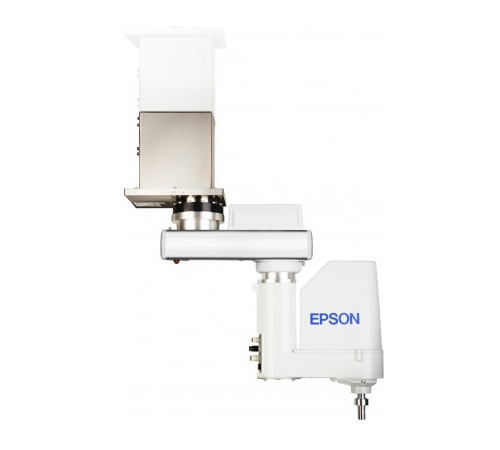
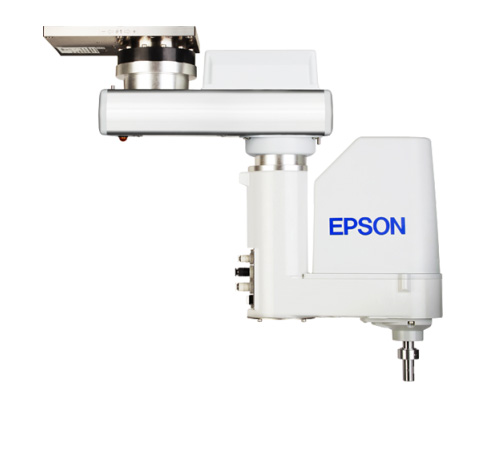
Epson Spider RS3
-
Cylindrical Workspace
Payload: 1/3 kg
Reach: 350 mm
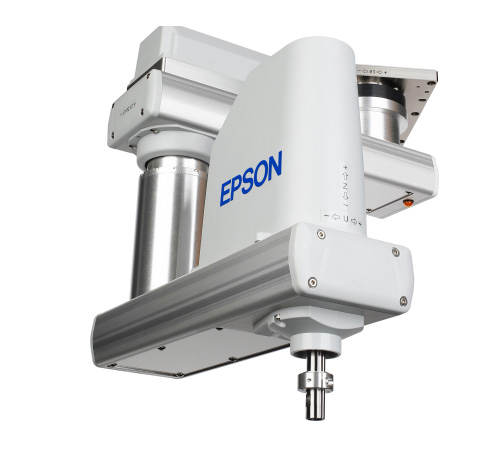
Epson Spider RS4
-
More Arm Strength
Payload: 1/4 kg
Reach: 550 mmThe Epson Spider RS4 has more “arm strength” and a wider operating range than its little brother RS3. As a result, the Epson Spider RS4 is able to carry heavier loads and is optimally suited for applications with a larger envelope.
The Epson Spider is a new species of SCARA robots. These 4-axis robots designed like a human arm work on horizontal planes and are ideal for fast pick-and-place applications and assembly processes.
Apart from that, the Spider combines all advantages of the high-performance Epson SCARA robots. Among them are outstanding cycle times and joining properties, high insertion forces and rigidities, superb repeatability and an excellent deadload–payload ratio.
It is the first and only SCARA robot with a perfectly cylindrical envelope. Thanks to that, the impressively productive spider can reach all positions of its area of activity (100%) and also convinces with short cycle times.
SCARA Robots
-
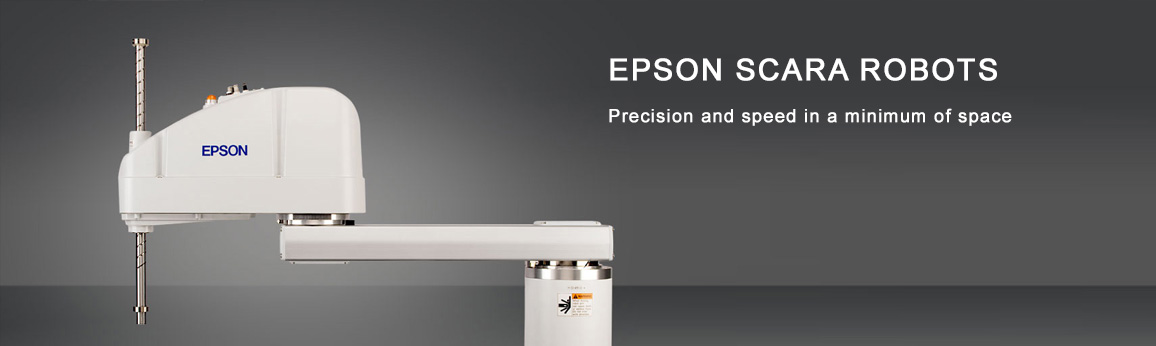
The next generation SCARA Robots
Compact, high Speed, high Precision and wide VarietyLook no further for your next SCARA robot as Epson Robots give you more Power of Choice than ever before. With 300 models available in sizes from 175 – 1.000mm in reach and payloads of up to 20KG, washdown models and cleanroom models, chances are that Epson has the model and configuration you need for your application.
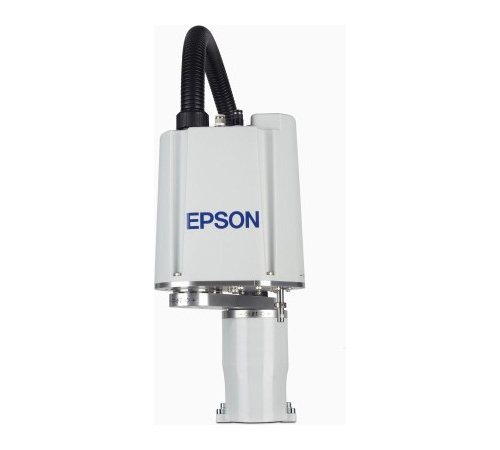
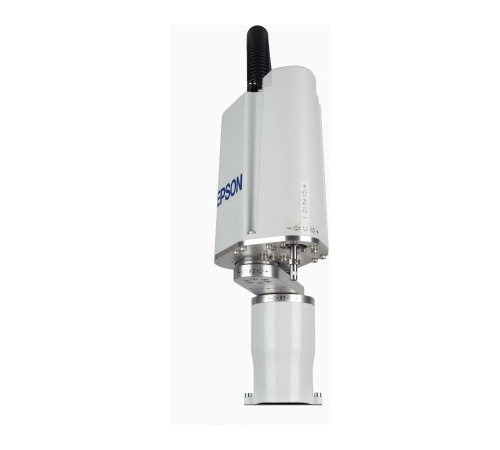
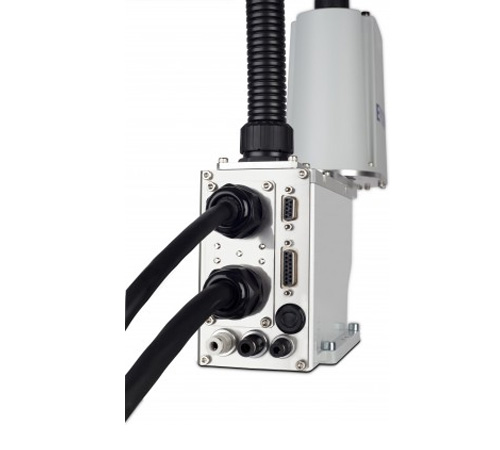
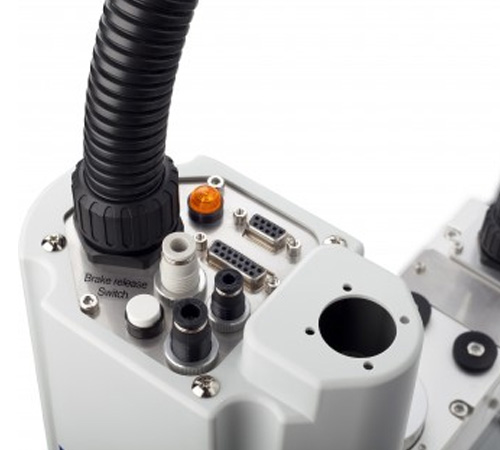
Epson SCARA G1
-
Our mini — compact power
Payload: 0.5/1 kg
Reach: 175 /225 mmThe solution for tasks in most confined spaces: the Epson G1 series — developed as a micromanipulator, transfer unit or high-performance feeder for larger robots. Designed for work where a hundredth of a millimetre matters, such as for electronic manufacturing or precision-mechanical work processes. Ultralight due to its high-strength aluminium design and at the same time compact and powerful.
Epson SCARA G3
-
It's all about the curve
Payload: 1/3 kg
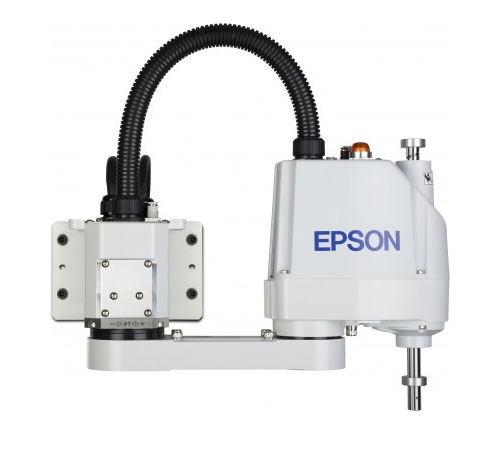
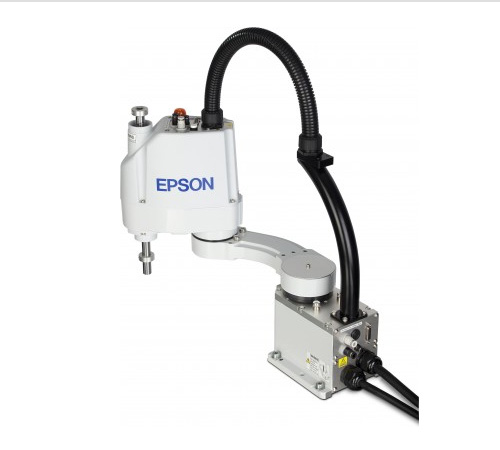
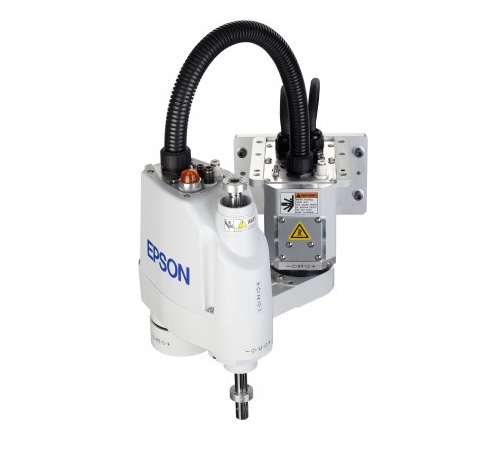
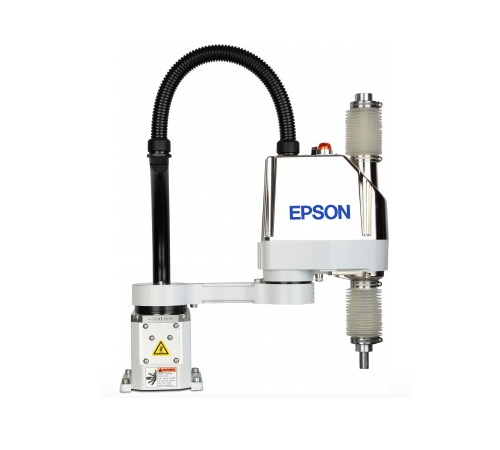
Reach: 250 /300/ 350 mmA high percentage of all assembly work is performed in the same arm position. Therefore, Epson SCARA-G3 are available with a left-curved first arm (sine) or a right-curved first arm (cosine). The patented arm geometry allows considerably reduced movement cycle times, since time-consuming swivelling to change arm positions is obsolete in most cases. The G3 is also available with a straight arm. The devices are particularly suitable for use in confined spaces as they are common in medical engineering and automated component manufacture, for example.

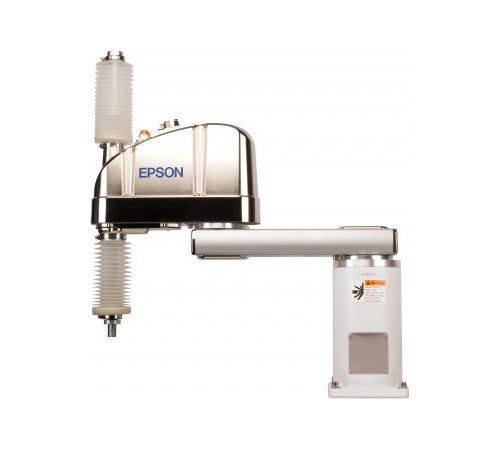
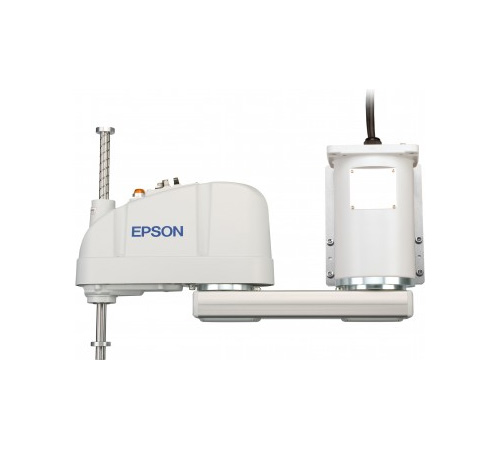
Epson SCARA G6
-
The new efficiency level
Payload: 3/6 kg
Reach: 450 /550/ 650 mmThe new design of the G6 series offers maximum work envelope at very compact dimensions. The robots can carry out tasks with an arm length of e.g. 550 mm when usually 600 mm would be required. The G6 series is the ideal solution for applications in which high speed at maximum precision is required — such as the production of mechanical and electrical parts, pick-and-place applications, equipping with small parts, dosing and feeding.
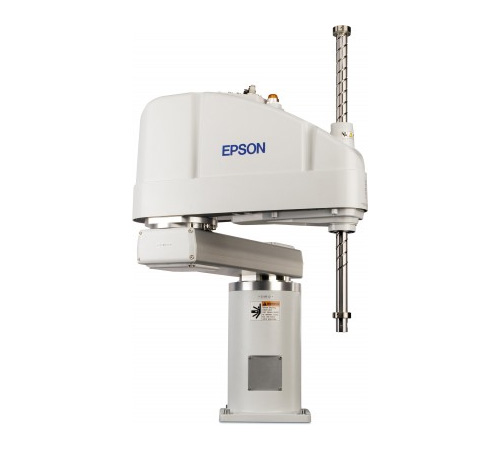
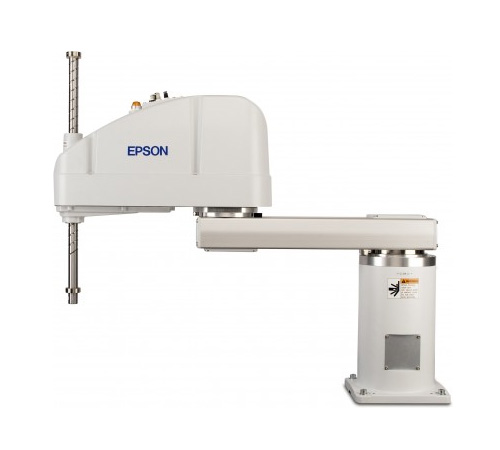
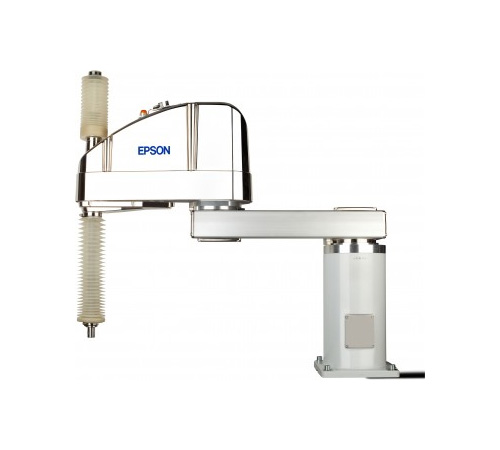
Epson SCARA G10
-
Fast and strong
Payload: 5/10 kg
Reach: 650 / 850 mmUltrafast speed and higher payload? A combination that Epson SCARA robots of the G10 series can perfectly handle due to the high arm rigidity. G10 are fast in every sense of the word — for assembly and configuration as well as for handling with multi-grippers. They use all their advantages particularly in applications such as the assembly of heavy parts, packaging and palletising as well as loading and unloading. Since there are no tubes, the design is very compact.
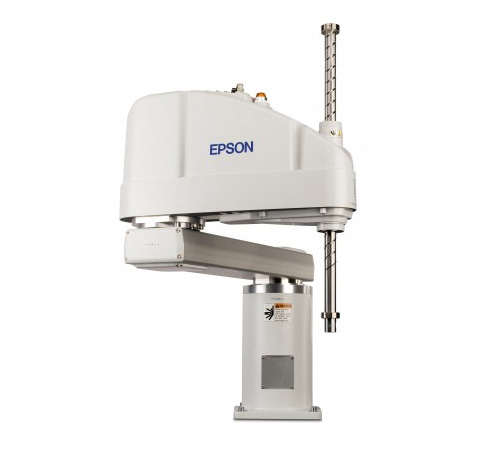
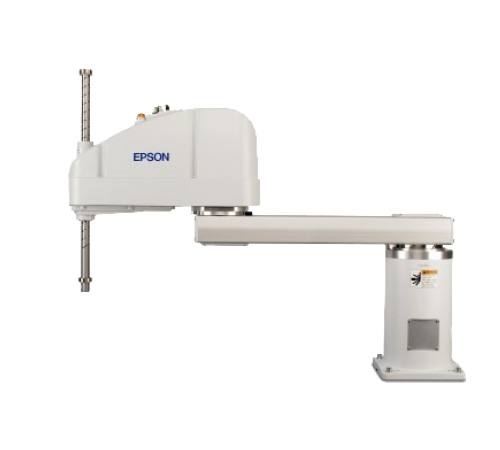
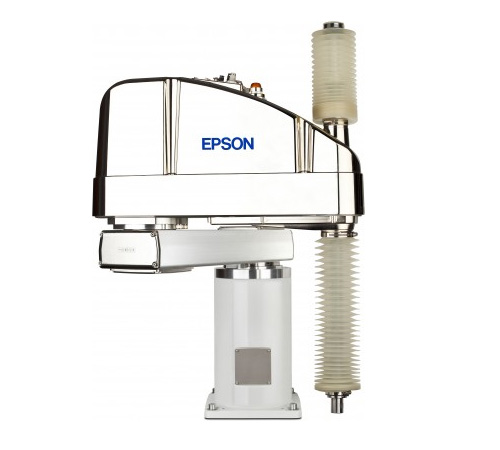
Epson SCARA G20
-
Long arm with high strength
Payload: 10/20 kg
Reach: 850 /1000 mmManipulators of the G20 series are particularly suitable for high payloads such as heavy parts or packaging units (up to 20 kg). Since the arm of the G20 is up to 1,000 mm long, the work envelope is large. Due to the high moment of inertia of the U joint, heavy loads can be handled fast and reliably without any vibration of the robot arm as is the case for many models with a similar arm length.
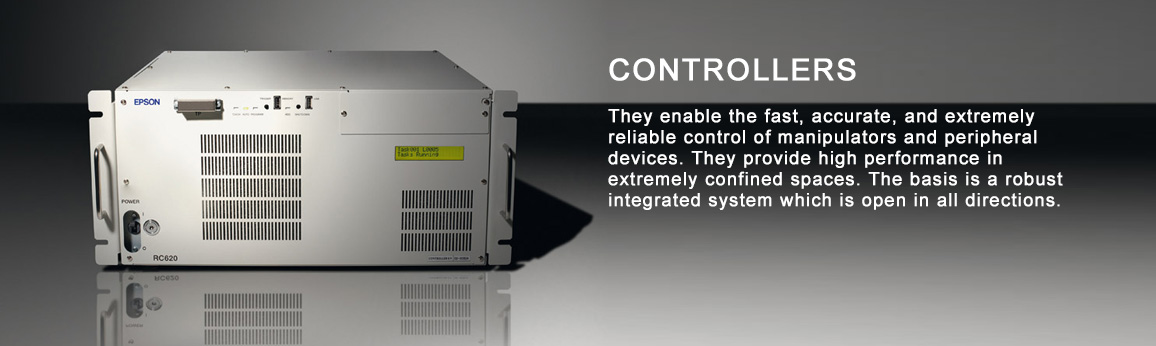
Controllers
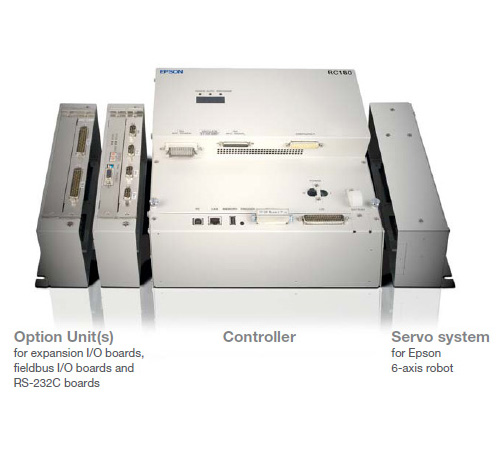
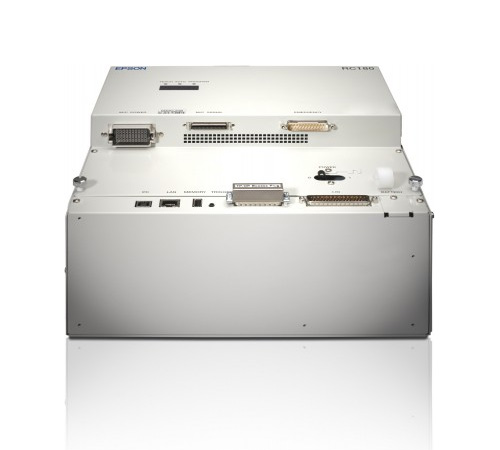
Epson RC180
-
Works According to Instruction
The Epson RC180 can be used equally for SCARA robots and 6-axis robots. Moreover, the option units designed as a modular system provide further interfaces and technology modules.
With a base area only slightly larger than an A4-sheet, the RC180 is incredibly small and yet extremely powerful. The small smart one of extremely good value was mainly designed for slave network operation. It is particularly flexible since the compact slave controller can be used for SCARA as well as for 6-axis robots.
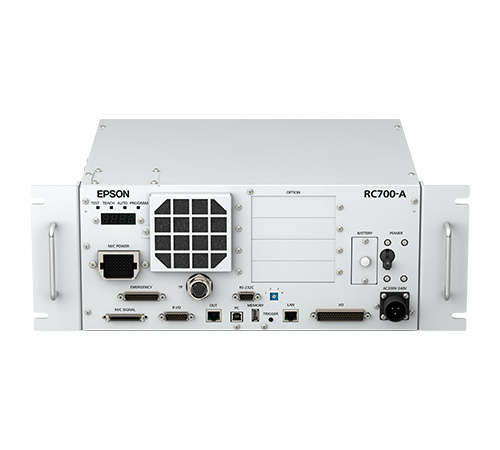
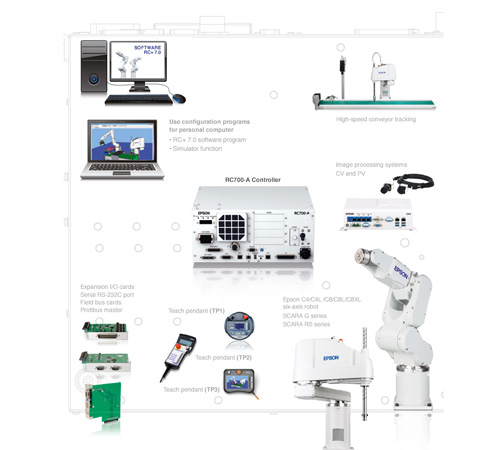
Epson RC700-A
-
Open control concept for a wide range of applications
Compact, powerful and as flexible as you need to meet your demands, the new RC700-A controller is a universal prodigy, just as capable as a stand-alone or part of an integrated system. If it's extended to create a multi-manipulator controller, the RC700-A can control several robots and various peripherals in a complex system.
The RC700-A controller can be expanded with a variety of image processing systems to meet your requirements. It's also designed for the new generation of robots featuring Epson's QMEMS sensor technology.
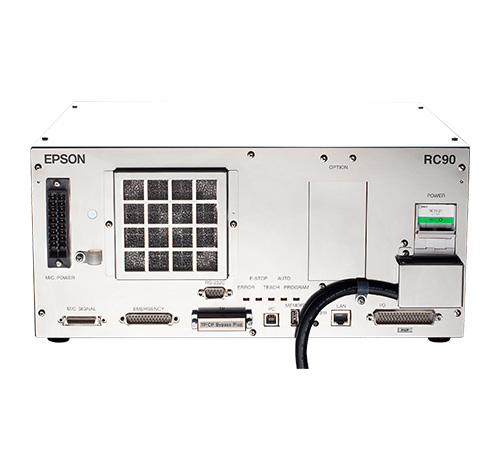
Epson RC90
-
RC90: A world of possibilities, in a tiny space
The RC90 is one of the the most compact and lightweight controllers of its performance class on the market. Small, smart and very good value, it was primarily designed for slave network operation. Serial interface RS-232C, 26/14 standard I/O and an Ethernet port are already installed. Also, expansion cards for communication with external devices and integration into fieldbus networks can flexibly expand your system according to your requirements, at a very low cost.
Epson Vision Systems
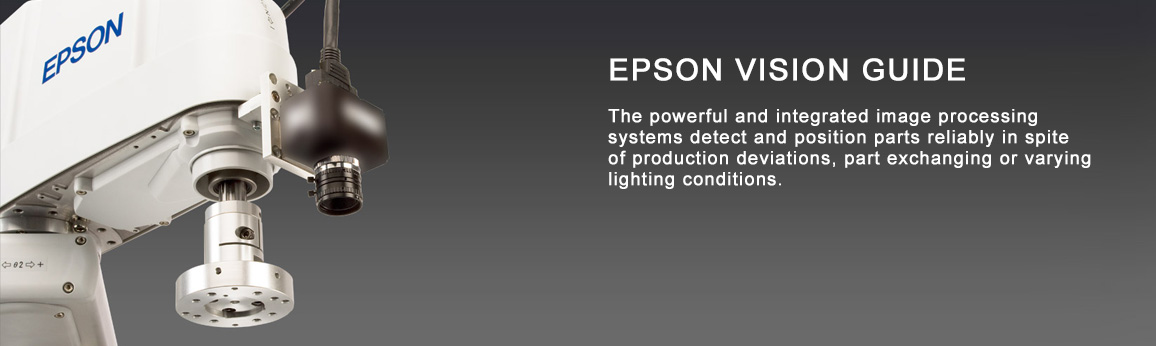
For Robots with eye contact
Communication in milliseconds between robots and image processing is the basic principle of Epson image processing systems. You can connect the Epson Smart Vision software to stationary or mobile cameras or – in Version 6.0 – with frame grabber cards that contain additional functionalities.The innovative software for image processing
Thanks to the joint programming environment with the Epson RC+ development interface , no time is wasted when connecting robot and vision system. Through simple commands and the intuitive interface with graphic objects, tasks that require flexible automation are solved with simple parameterization.
Features & advantages
- Communication in milliseconds between robot and image processing
- Reduction of development time through integration into the RC+ development environment
- Easy and comfortable Drag & Drop programming without additional complex editors
- Detection of parts even in varying lighting conditions thanks to various tools like blob analysis, geometric and polar search, and many more.
SOFTWARE EPSON VISION GUIDE 7.0
-
Create vision sequences with a few clicks of a mouse. Epson vision guide 7.0 supports high resolution cameras.
Simple, reliable and powerful
The Epson vision Guide 7.0 for the Epson universal controller RC700-A assure with already proven - and new features:
- Simulation of image processing
- Catch-on-fly recording and evaluation during the robot motion at high speeds
- Defect inspection for checking specifications and samples
- Support for high resolution cameras (2 mp/ 5 mp) and colour cameras
High-performance image processing system - matched to your application
EPSON COMPACT VISION (CV1) -- This compact system is particularly suitable for customers who do not always use a computer for image processing.
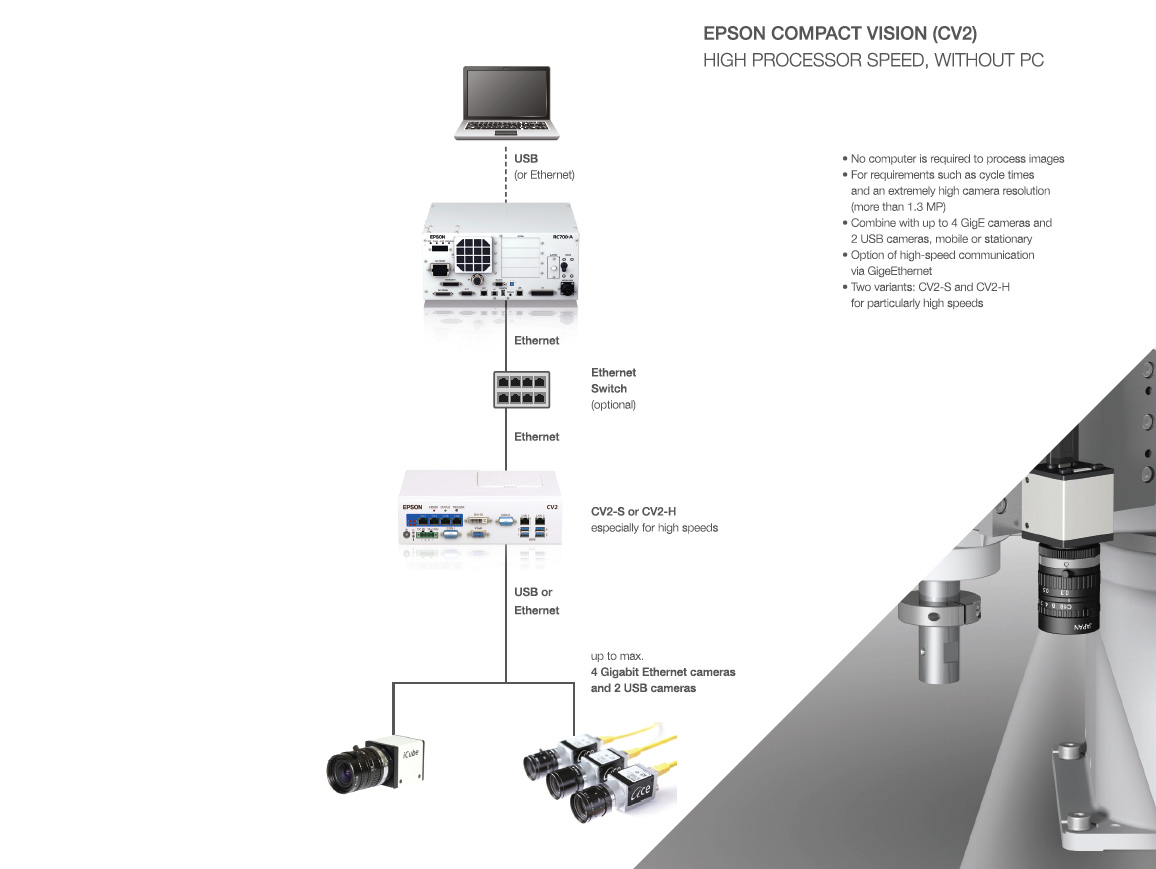
EPSON COMPACT VISION (CV2) -- For requirements such as short cycle times and an extremely high camera resolution (more than 1.3 MP).
EPSON PC VISION (PV1) -- This solution is suitable for customers who require very short cycle times and extremely high camera resolution (more than 1.3 MP) for their application.
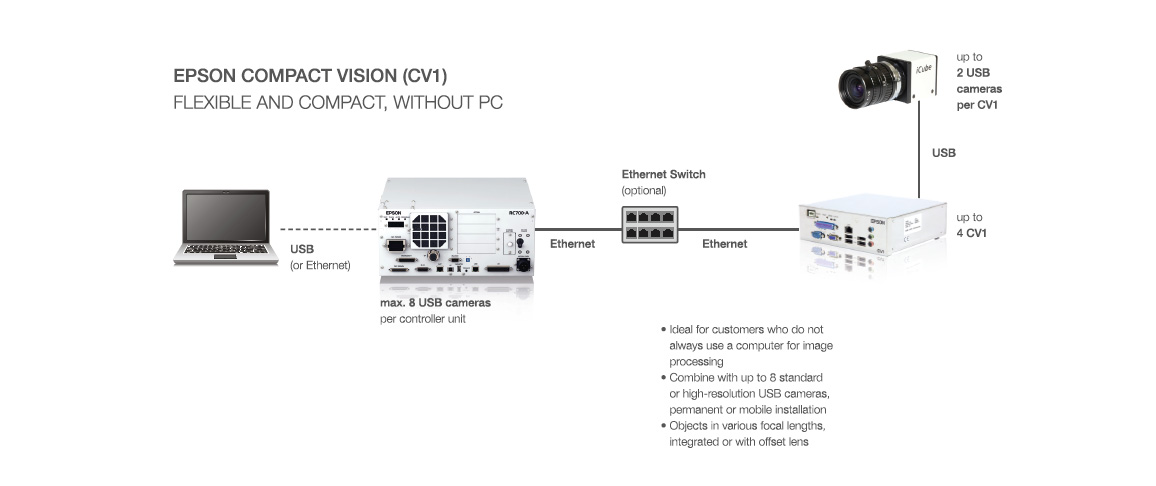
Epson compact vision (CV1)
-
Flexible and compact, without PC
- Ideal for customers who do not always use a computer for image processing.
- Combine with up to 8 standard or high-resolution USB cameras, permanent or mobile installation.
- Objects in various focal lengths, integrated or with offset lens.
- Outstanding price/performance ratio.
Epson compact vision (CV2)
-
High processor speed, without PC
- No computer is required to process images.
- For requirements such as short cycle times and an extremely high camera resolution (more than 1.3 MP).
- Combine with up to 4 GigE cameras and 2 USB cameras, mobile or stationary.
- Option of high-speed communication via Giga-Ethernet.
- Two variants: CV2-S and CV2-H for particularly high speeds.
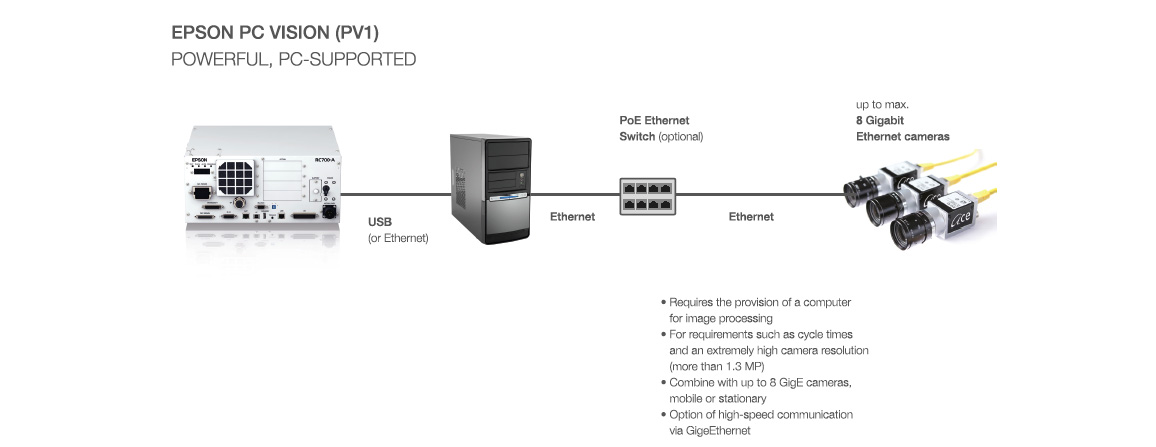
Exceptionally powerful, PC-supported
-
- Requires the provision of a computer for image processing.
- For requirements such as cycle times and an extremely high camera resolution (more than 1.3 MP).
- Combine with up to 8 GigE cameras, mobile or stationary.
- Option of high-speed communication via GigaEthernet.