
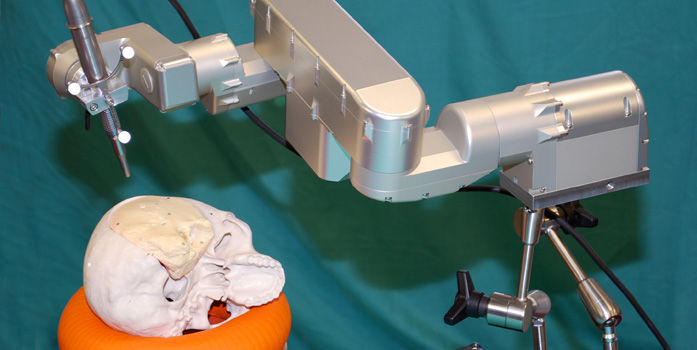
- Offer Profile
- The strategic vision of the ARTORG Center is to advance healthcare by integrating education, discovery, innovation and entrepreneurship. The Center supports this effort by encouraging a new partnership between clinicians, laboratory scientists and engineers and aims to: cultivate new translational research projects based on clinical practice needs, identify and support promising biomedical engineering collaborative research projects, rapidly translate biomedical engineering research into the clinic by fully utilizing the University of Bern resources for technology transfer
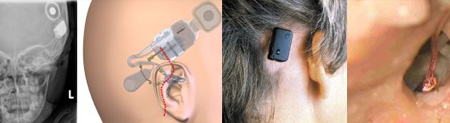
Artificial Hearing Research
- The ARTORG Center for Artificial Hearing Research which
has been established in September 2008 is part of the Artificial Organs (ARTORG)
Center for Biomedical Engineering Research of the University of Bern.
The sense of hearing fulfils an important function in interpersonal relationships, but also helps to orientate and to alerts of danger. The disease of hearing loss is quite often and goes from a light loss up to complete deafness. The ARTORG Center for Artificial Hearing investigates in implantable hearing systems and theirs surgical and audiological procedures. The Artificial Hearing Research Group operates in a network consisting of engineers, surgeons, audiologists and industrial partners. The Artificial Hearing Research as a part of the departement of ENT head and neck surgery of the Inselspital has a large experience in hearing rehablitation i.e. otological microsurgery, conventional hearing systems, semi- and fully implantable hearing systems and cochlear implants. Based on this large experience the Artificial Hearing Research Group focuses on clinical driven research in implantable hearing systems.The research group of artificial hearing is at any given point interested in offering academic work opportunities to highly motivated and encouraged individuals at all levels (i.e. Master Students, PhD students, PostDocs, Group leaders etc.). We are always looking forward to receiving applications from interested persons with a broad background in engineering, computer science, physics and mathematics. Always feel free to contact us.
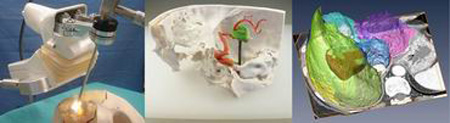
Center Comp. Aided Surgery
- The ARTORG Center for Computer Aided Surgery (CCAS) is a
joint technological and clinical research effort within the ARTORG Center of
the University of Bern and the Inselspital (Medical Faculty of the
University of Bern). CCAS connects technological expertise in the areas of
computer aided surgery, diagnosis, medical image processing and smart
instruments with clinical problems and motivations. The bandwith of our
research activities ranges from answering novel clinical challenges to
improving existing approaches and medical technology with competences from a
purely algorithmic developments across component and systems development all
the way to clinical validation (through our clinical network).
CCAS envisions to support society and its healthcare system for the challenges to come (demographic, economic, socio-cultural) by the enhancement and integration of novel technology, improving its availability for patients and indications and demonstrating its clinical benefit respectively.
The center aims on creating a powerful network of scientists with engineering and medical backgrounds with a awareness for the possibilities of one anothers side: Engineers with expertise on clinical problems, workflows and methodologies as well as clinicians with understanding of technological approaches, possibilities. Together, both sides can and will create novel diagnosis and therapy solutions with real clinical impact. CCAS is co-directed by two experts from the scientific and clinical disciplines, respectively.
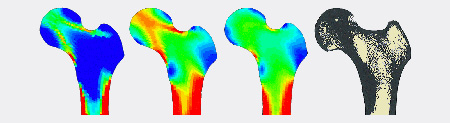
Computational Bioengineering
- The Computational Bioengineering Group tackles challenges
in basic and applied medical research with modern computational simulation
tools. Rather than focusing on the computational methods themselves, we are
concerned with their appropriate application to resolve practical and
fundamental clinical questions. Numerical methods are combined with
experimental and clinical research in order to improve the quality and
extend the validity of our models.
Together with our collaborators we constitute a strong team covering a wide spectrum of research topics ranging from direct support of surgical patient treatment to basic cell research. Besides our core expertise in applying finite element analysis to study skeletal biomechanics, we are seeking to improve surgical planning by developing and applying refined numerical techniques into the field of computer aided surgery. Another important research focus of the group is modeling the metabolic activity at the organ and tissue level and its alteration by external stimuli.
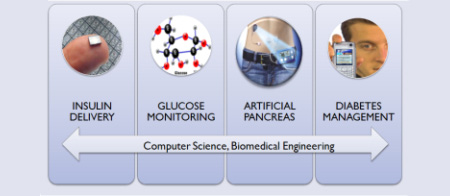
Diabetes Technology
- The ARTORG Diabetes Technology Research Group (DTRG)
which has been established in November 2008 is part of the Artificial Organs
(ARTORG) Center for Biomedical Engineering Research of the University of
Bern.
DTRG incorporated into the Faculty of Medicine of the University of Bern and the Inselspital (University Hospital of Bern) brings together people from medicine, engineering and physical science in order to conduct research on the application of technology in diabetes mellitus. DTRG is mainly active in the following areas:- Closed loop artificial pancreas
- Simulation, modeling and control of complex, non-linear metabolic systems
- Decision support systems for management of glucose profile
- Computational tools for analysis of data related to diabetes mellitus
- Advanced tools for the identification of interactions in the development of complex disease phenotypes, like chronic metabolic disorders
- Assessment of glucose monitoring devices and insulin delivery systems
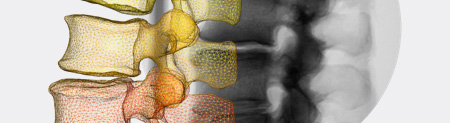
Spine Research Center
- The ARTORG Spine Research Center (SRC) is a collaborative
research organization operating under the umbrella of the ARTORG Center of
the University of Bern. The SRC draws together the expertise of researchers
from the Institute for Surgical Technology and Biomechanics (ISTB) and the
Spine Service of the Department of Orthopaedic Surgery (Inselspital),
performing basic and applied biomedical research and clinical research to
seek new solutions for the treatment of spinal disorders. The strategic
vision of the Spine Research Center is to advance spinal care by integrating
education, discovery, application and evaluation, with the patient firmly in
the foreground.
The SRC is co-directed by three experts from the scientific and clinical disciplines, respectively. The SRC builds on the historical strengths of clinically-driven orthopaedic research at the University of Bern, with nearly two decades of experience as recognized leaders in the field of spine biomechanics research and innovators in the clinical treatment of spinal disorders, and has well- established collaborative links to internal and external institutes covering the broad spectrum of multi-disciplinary research activities.The SRC is strongly integrated with the medical technology industry network in Switzerland, ensuring a direct path to the realization of our research goals.
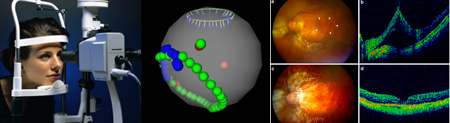
Ophthalmic Technology Group
- The Ophthalmic Technology Group is dedicated to the
development of innovative surgical and diagnostic instruments and techniques
in the area of ophthalmology. The novel engineering solutions should allow
for an increased surgical precision, while at the same time diminish the
risks for patients and reduce the costs for the intervention. We are focused
on projects that are clinically relevant and we are committed to advance the
project development to a state were a potential clinical benefit can be
assessed. The successful combination of applied research and development on
one side and clinical implementation on the other represents the main
challenge of our group.
The Ophthalmic Technology Group consists of a multi-disciplinary team of engineers and clinicians. Our core competencies are in mechatronic systems design, signal processing, computer vision and computer graphics.
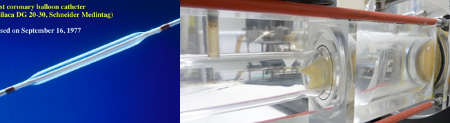
Cardiovascular Engineering
- Switzerland 1977, Dr. Andreas Grüntzig performed the
worldwide first balloon dilatation of a coronary artery to treat coronary
artery disease. He used a balloon catheter that was developed in close
collaboration with engineers and clinicians. Our mission is to carry on this
tradition and spirit leading to the development of innovative cardiovascular
devices and treatment techniques.
ARTORG Cardiovascular Engineering (ACE) is a joint technological-clinical research organization that is part of the newly founded Artificial Organ (ARTORG) Center for Biomedical Engineering Research at the University of Bern. The clinical partners of ACE are found in the Departments of Cardiovascular Surgery and Cardiology (Inselspital, University Hospital Bern) and the Medical Faculty of the University of Bern. ACE converges expertise in biomedical engineering research, clinical research and clinical medicine in search of novel solutions for the diagnostic and therapeutic management of cardiovascular diseases. With the patient in the focus, our dedicated vision is to improve cardiovascular care by education, development, application and evaluation. To achieve this, joint ventures are formed and services rendered to lead to continuous translation of new technologies to clinical practice.
ACE is co-directed by two experienced researchers with strong technological and clinical background, respectively, and has well established collaborative links to internal and external institutes covering the broad spectrum of multi-disciplinary research activities. ACE is well integrated into the medical technology industry network worldwide and in Switzerland, ensuring a direct path to the realization of our research goals.