ifm electronic

Videos
Loading the player ...
- Offer Profile
- At the beginning it was passion driving the founders to make it better. To develop sensors with extraordinary quality and reliability and to provide unequalled customer service. It was with this vision and knowing that 'quality' by far exceeds the actual product that ifm started in October 1969.
Close to you
After many years of intensive cooperation with our customers we have established ourselves in the market as service-oriented sensor specialists and today we are represented by more than 7,300 employees in over 95 countries worldwide. Even though we have grown into a big company we have still maintained the virtues of the founding years: The flexibility and individuality of a small enterprise and the quality and professionalism of a group. And our customers are still today in the centre of our work - close to you.
Product Portfolio
Position sensors

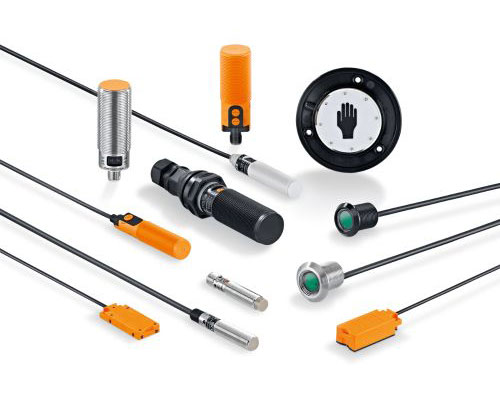
Inductive sensors
- Wide operating temperature range
- High protection rating for the requirements of harsh industrial environments
- Reliable detection due to low sensor tolerances
- Reduced storage due to wide range of applications
Inductive sensors are nowadays indispensable for industrial applications. As compared to mechanical switches they offer almost ideal conditions: non-contact operation free from any wear and tear, high switching frequencies and accuracy. In addition, they are insensitive to vibration, dust and moisture. Inductive sensors detect all metals without contact.
Capacitive sensors
- High noise immunity
- Sensing range adjustable by means of potentiometer or teach button
- Plastic or metal housings for different applications
- Sensors for position and level detection
- Accessories for mounting on tanks or sight glasses
Capacitive sensors are used for the non-contact detection of any objects. In contrast to inductive sensors, which only detect metallic objects, capacitive sensors can also detect non-metallic materials.
Typical applications are in the wood, paper, glass, plastic, food, chemical and semiconductor industries.
Magnetic sensors
- Reliable detection also through non-magnetisable metals
- Cylindrical or rectangular types
- Small housings with very long sensing ranges
- High mechanical stability in case of shock or vibration
- Flush or non-flush mountable in non-magnetisable metals
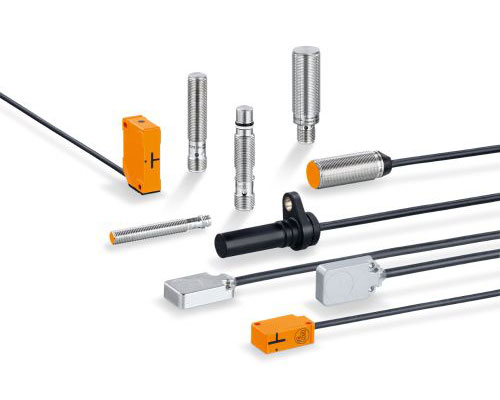
Magnetic sensors are used for the detection of positions without contact or wear and tear. They are used where very long sensing ranges are required. Since magnetic fields penetrate all non-magnetisable materials, the sensors can detect magnets through walls made of stainless steel, aluminium, plastic or wood.
Cylinder sensors
- Self-locking fixture for quick mounting and easy adjustment
- Easy fit 'drop from the top' into a slot
- Suitable for the most commonly used C- and T-slots
- Versions with connectors or connection cable
- Wide range of adapters
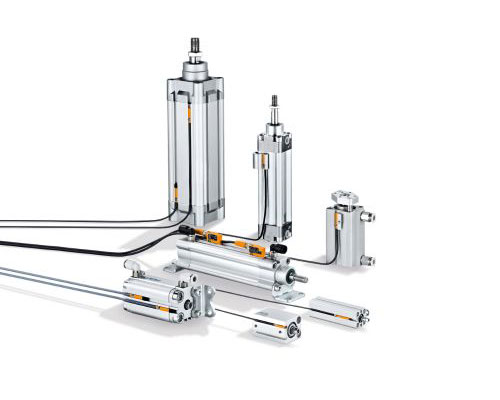
Cylinder sensors are used for position detection of pistons in pneumatic cylinders. They are directly mounted onto the cylinder. The ring magnet attached to the piston is sensed through the housing wall of non-magnetisable material (e.g. aluminium, brass or stainless steel). They can be fixed to almost any T-slot, C-slot, clean-line, tie rod, integrated profile or trapezoidal slot cylinder.
Ultrasonic sensors
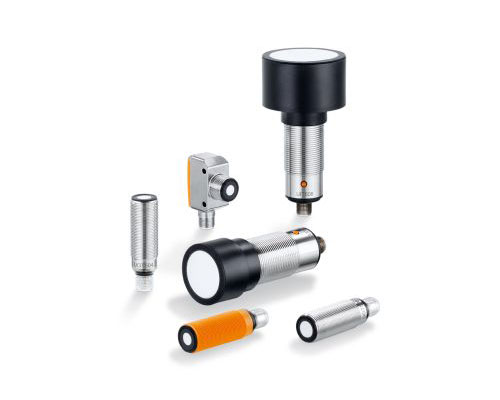
- Ultrasonic sensors are used for reliable position detection and precise continuous distance measurement of solids, powders and liquids. They transmit and receive sound waves in the ultrasonic range. The object to be detected reflects the sound waves and the distance information is determined via time-of-flight measurement. Blister packages in packaging technology or transparent plastic bowls in the food industry, for example, can be reliably detected.
Even in operating conditions with heavy soiling, dust or mist the sensors detect objects reliably and without interference.
ifm's compact ultrasonic sensors provide a particularly small blind zone, long sensing ranges and a high resolution.
The product range includes units with programmable switching output, analogue output, or a combination of both. Output function, switch points and measuring range are conveniently set via a pushbutton on the unit or via wire teach.
Some sensor types can additionally be configured via IO-Link, e.g. using a USB interface. The LINERECORDER SENSOR software is used to visualise, transfer and archive parameter sets.
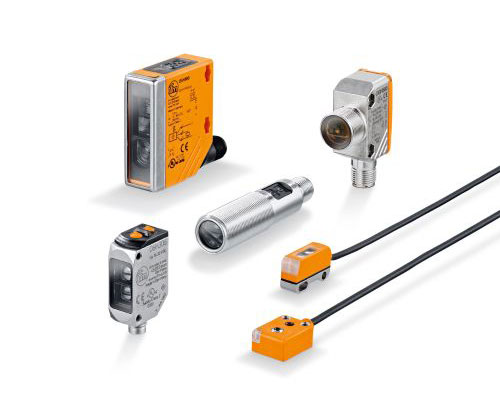
Photoelectric sensors
- Simple alignment due to visible red light
- Versions for the use in hygienic applications
- LED display to check operation, switching status and function
- Setting process saves time and cost during set-up
- Extensive range of system components for easy and secure mounting
Automation technology can no longer be imagined without photoelectric sensors as "artificial eyes". They are used where a reliable and non-contact detection of the exact position of objects is required. The material of the object to be detected is of no importance. Compared to inductive sensors, photoelectric sensors have a much greater sensing zone.
Through-beam sensors are distinguished by a long range. The system consists of two separate components: a transmitter and a receiver. The light only covers one way (from the transmitter to the receiver). Adverse effects in the applications, such as dust in the air, dirt on the lenses, steam or mist do not immediately interfere with the system.
For retro-reflective sensors the transmitter and receiver are incorporated into one housing. By means of a reflector the transmitted light is returned to the receiver. Retro-reflective sensors without polarisation filter operate with infrared light, systems with polarisation filter with visible red light.
Diffuse reflection sensors are used for the direct detection of objects. The transmitter and receiver are integrated into one housing. The transmitter emits light which is reflected by the object to be detected and seen by the receiver. The light reflection from an object is evaluated. Therefore additional functional components (such as reflectors for retro-reflective sensors) are not needed for the operation of a diffuse reflection sensor.
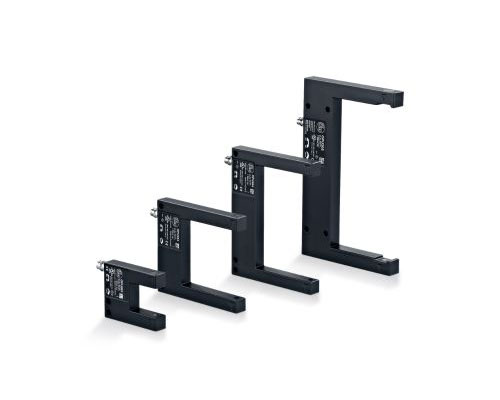
Photoelectric fork sensors / angle sensors
- Quick set-up: no need to align transmitter and receiver
- Fine and precise light beam across the whole fork width
- Metal housing reduces distortion
- Light-on/dark-on mode selectable via rotary switch
- Easy sensitivity setting via potentiometer
Photoelectric fork and angle sensors are used for the detection of very small objects and for counting tasks in feeding, assembly and handling applications. Further application examples are belt edge and guide monitoring. The sensors are distinguished by a high switching frequency and a particularly fine and precise light beam. This allows for the reliable detection of very fast processes.
Made from distortion-resistant diecast zinc, the housing ensures long-term stability of the optical axis. No time-consuming adjustment is required because transmitter and receiver are already aligned towards each other.
The sensitivity can be set intuitively via potentiometer. Light-on / dark-on mode is selected via rotary switch.

Laser sensors
- Reliable detection of tiny objects
- Simple alignment due to visible red light
- Simple switch point setting via pushbutton
- Sensors for special applications
- Accurate fine adjustment by means of system components
Laser sensors are used where small objects or precise positions are to be detected. They are designed as through-beam sensors, retro-reflective sensors or diffuse reflection sensors.
Laser light consists of light waves of the same wave length with a fixed phase ratio (coherence). This results in an important feature of laser sensors, that is the almost parallel light beam.
The result: Long ranges can be achieved thanks to the small angle of divergence. The laser spot which is clearly visible even in daylight makes the alignment of the system easier.

Distance sensors
- Reliable optical distance measurement with high ranges up to 10 m
- Switch point setting via pushbutton, setting ring or IO-Link
- Use in applications with background suppression
- Excellent price/performance ratio
- Versions with laser protection class 1 or 2
PMD technology
PMD sensors with time-of-flight measurement (PMD = Photonic Mixer Device) combine the following advantages: long range, reliable background suppression, visible red light, high excess gain and all that in connection with either laser class 1 or 2. In the same price range as standard sensors, these units are a clever alternative.
Easy handling
The switch point is set easily to the nearest centimetre via "+/-" buttons and display, by turning the setting ring (easy turn) or via IO-Link, which also allows read-out of the actual value.
Any surface and any mounting position
Shiny, matt, dark or light objects of any colour: The OID features reliable background suppression and allows any angle of incidence and thus flexible mounting positions. This simplifies installation and saves costs.
Laser class 1
Versions with laser class 1 meet the requirements of applications in the automotive industry.
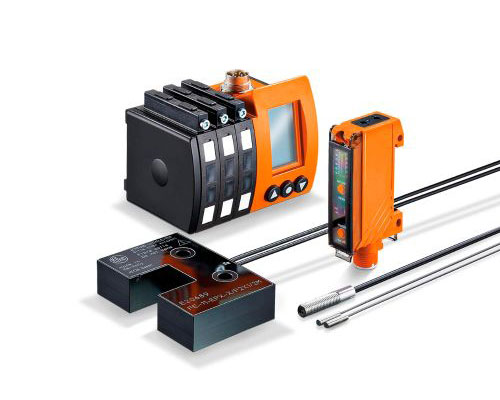
Fibre optic sensors and amplifiers
- Simple connection of the fibre optics to an amplifier
- Setting process saves time and cost during set-up
- LED display to check operation, switching status and function
- Acrylic or glass fibres for different applications
- Quick and easy mounting
Fibre optic systems are used where mounting space for photoelectric standard sensors is restricted. The evaluation unit and the fibre optics are mounted separately.
These systems can therefore be installed in places where access is difficult.
Fibre optic systems are designed as through-beam or diffuse reflection sensors.
Acrylic fibre optic sensors are suited for standard applications if no particular demands such as heat or chemical resistance are made. They can be cut to length and are less expensive than glass fibre optic sensors.
Fibre optics made of silicate glass are more resistant to heat, ageing and chemicals than acrylic fibre optics. They do not change their optical response when they are bent. Glass fibre optic sensors cannot be cut to length by the user.
High-flex fibre optics allow extremely small bending radii.
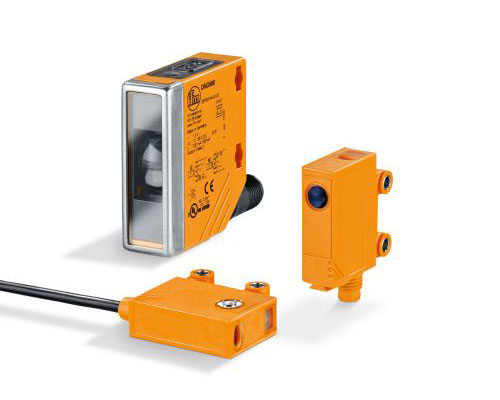
Photoelectric sensors for specific applications
- High-quality photoelectric sensors for different applications
- Excellent price/performance ratio
- Compact laser distance sensor with 10 m range
- Easy adjustment via teach buttons or potentiometer
- Extensive range of system components for easy and secure mounting
In highly automated industrial processes the colour is often a selection criterion for detecting, sorting or inspecting various products and goods. Both the colour of a product itself and the packaging, labels or imprints can be precisely detected using electronic colour sensors.
With contrast sensors, print marks and very flat objects can be detected easily and reliably.
Sensors for the detection of transparent objects consist of a retro-reflective sensor with polarisation filter and a very fine prismatic reflector. They safely detect glass, film, PET bottles or transparent packaging and can be used for counting bottles or glasses or monitoring film for tear.
Photoelectric level sensors detect levels of bulk materials and non-transparent liquids without contact.
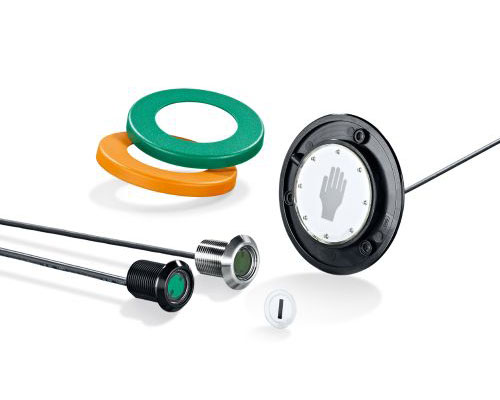
Touch sensors
- Robust alternative to mechanical pushbuttons
- Wear-free and maintenance-free thanks to switching without any mechanical pressure
- Actuation by finger or hand
- High protection rating for the requirements of harsh industrial environments
- Dynamic, static or bistable principle
Capacitive touch sensors can be used, for example, as a start and stop button on machines, as enable switches and for opening and closing gates. Compared to mechanical switches the sensors operate without wear.
A distinction is made between the dynamic, stable and latching operating principle.
Dynamic touch sensors detect an approaching human hand and suppress interference such as water, layers of ice or foreign bodies to a large extent. However, a gloved hand will still trigger them.
Static touch sensors detect hands and objects even through glass for as long as the sensing face is covered which provides, for example, protection against vandalism.
With the latching operating principle it is possible to switch the sensor on by touching briefly and to switch it off again by touching briefly again. The housing is resistant to oils and it is also impact and scratch resistant.
Powerful LEDs as optical feedback signal that the sensor has been activated.
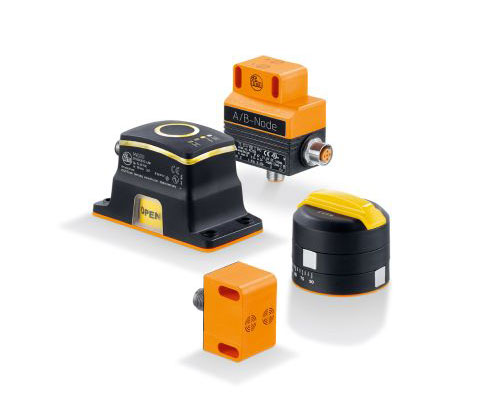
Feedback systems for valves and valve actuators
- Dual inductive sensor for pneumatic actuators and valves
- Designed for simple fit to common actuators based on VDI / VDE 3845
- Quick and easy installation of the AS-i dual sensor
- Position feedback for rising stem valves with up to 80 mm stroke
- Reliable permanent valve monitoring
Valve sensors
In industrial processes where liquids, air or gases are used, valves are needed for dosing and control. Pneumatic valve actuators are normally used for mechanical positioning. The valve position must be monitored electronically.
Dual sensor for valve actuators
A round target, also called a 'puck', with two metal screws offset by 90° is mounted on the actuator shaft. The screws are located at a different height. A compact dual inductive sensor (type IND) with two integral sensors detects the upper or lower metal screw depending on the valve position and thus the two switch positions. This system operates reliably with no wear at all. It is virtually resistant to external influence and insensitive to mechanical stress such as vibration and shock.
Sensor for rising stem valves
For position feedback on rising stem valves efector valvis is used. Two or three switch points can be set via pushbuttons over a stroke of 80 mm. In addition to the "open" and "closed" positions of the valve, a third position is used for "seat lift" monitoring (active during the cleaning process). Thanks to a resolution of 0.2 mm the sensor detects even very small changes in the position of the valve. The inductive measuring principle guarantees wear-free non-contact operation. Different adapters allow for easy installation of the same sensor on valves of various manufacturers and sizes.
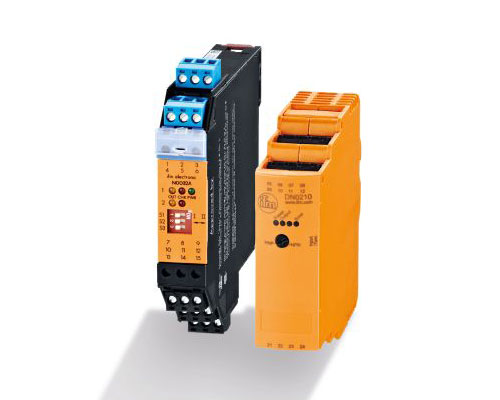
Switching amplifiers
- One- or two-channel design
- Small design requiring only very little space
- Programmable output function
- Relay or transistor outputs
- Easy mounting on DIN rail
The transistor outputs of conventional sensors are designed for small load currents. If the user wants to switch higher currents or even alternating currents, he must use a switching amplifier. It uses the sensor signal to control an output relay.
Sensors for motion control
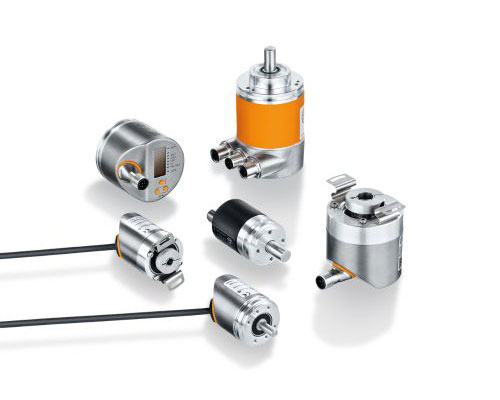
Encoders
- Compact and robust housing
- Designs to proven industrial standard
- Cable entry for axial and radial use
- Versions with integrated fieldbus interface
- Hollow shaft encoder for direct mounting on actuators
In many manufacturing and production processes, in mobile machines and in the area of renewable energies encoders have become established as reliable instruments to ensure precise positioning. They convert rotary movement into digital signals. Encoders use the wear-free photoelectric or magnetic detection. A pulse disc firmly attached to the shaft or a movable magnet carrier ensures this detection.
A distinction is made between incremental and absolute encoders.
Incremental encoders generate a precisely defined number of pulses per revolution. They are a measure of the angular or linear distance moved.
Absolute encoders provide an absolute numerical value for each angular position even over several revolutions.

Speed sensors
- 2 in 1: speed sensor and evaluation in one compact housing
- Particularly space-saving design
- Inductive or magnetic sensor principle
- Flexible combination of housings, connections and output signals
In many industrial applications drives need to be monitored for rotational speed or standstill. In the automotive, food, steel and mining industries, speed sensors are used to safely detect standstill, overspeed and underspeed of drives or belt break on conveyors. On mobile machines such as fork-lift trucks, speed sensors serve as speed pick-ups.
Speed sensors integrate rotational speed detection and monitoring in one unit. The sensor head operates using inductive or magnetic sensing principles. The sensor detects metal actuating surfaces on a rotating machine part. The integrated evaluation converts this information into rotational speed.
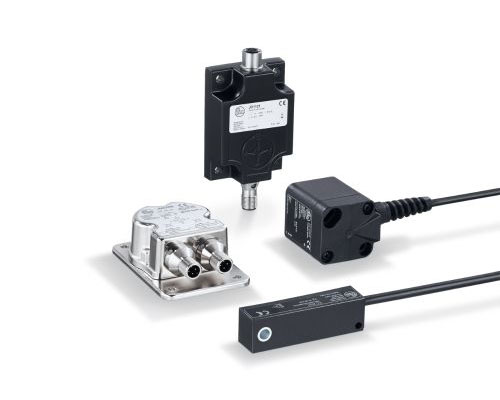
Inclination sensors
- Static and dynamic versions
- Angular ranges up to 360° available
- Versions with 1 or 2 axes
- Different designs with very high protection rating (up to IP 69K)
- Depending on the sensor type, signal output via different interfaces
Horizontal alignment is an important requirement for reliable operation of plants and machinery. Inclination sensors are designed for angular position detection or levelling of mobile machinery as they measure the angle of the respective object in relation to gravity. For installation, no complicated, complex mechanical connections are required, so that sensor integration into the respective application is extremely simple. ifm provides inclination sensors in different versions and with different measuring ranges and accuracy grades depending on the requirements. Furthermore, the devices are available with different output options, e.g. CANopen, J1939 and IO-Link.

Systems for evaluation of standard signals
- Reliable evaluation of analogue signals
- Displays for visualising actual values
- Switching output to reliably monitor limit values
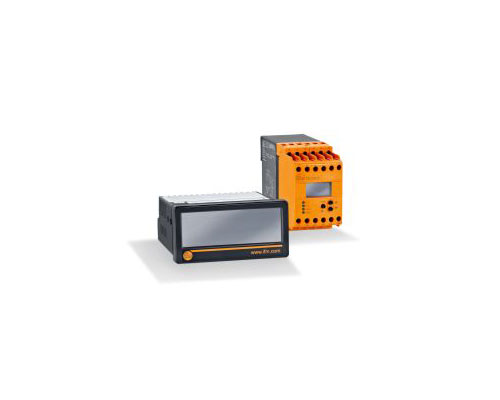
In many industrial processes, the indication and detection of analogue standard signals is an important requirement for the reliable operation of plants and machinery.
Threshold relays and displays with analogue input indicate actual values. Switching outputs signal if limit values are reached or exceeded.
Systems for signal conversion
- Reliable stretching and division of pulses
- Reliable frequency-to-current conversion
- Adjustable switch-on and switch-off delay
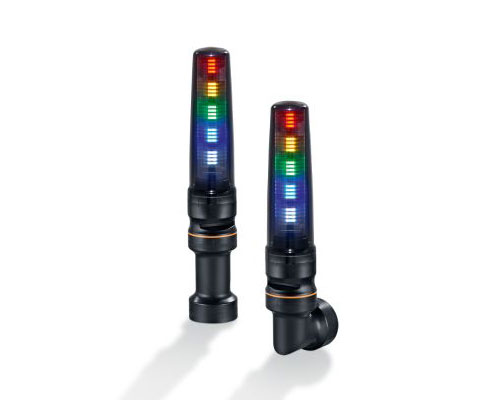
In machines and installations, monitoring and evaluation of pulse sequences is often necessary. For evaluation in a control system, the generated signals must be preprocessed. The ifm range includes pulse dividers, pulse stretchers, frequency-to-current converters and units for switch-on and switch-off delay of signals.
All units can be mounted on a rail.
Signalling and display systems
- Display of analogue process values
- Display and monitoring of process values
- Display and monitoring of pulse-shaped signals
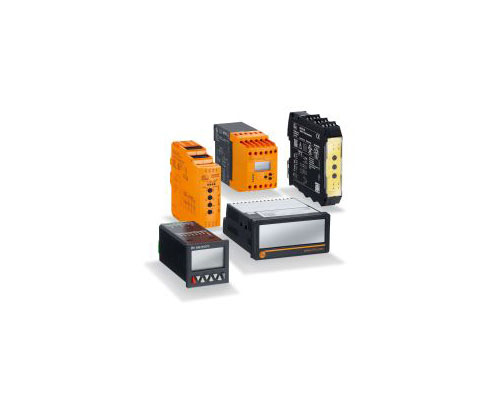
In industrial processes, decentralised indication and processing of current process values is essential both to keep important process data in view and to be able to quickly execute a fault analysis if disruptions occur. Displays with analogue input show the actual values according to the preset physical units. Displays with switching output signal if limit values are reached or exceeded.
Pulse evaluation systems
- Intuitive, user-friendly handling Integrated wide-range power supply
- Easily programmable output functions Devices for monitoring standstill, speed, direction, slip, and frequency
- Switching relays and transistor outputs, scalable analogue output
Pulse evaluation systems monitor rotating and linear movements as well as all physical quantities which can be converted into pulse sequences.
Units with different functions allow customised monitoring of slow and fast rotational speeds as well as complex synchronous or direction monitoring.
Relay or transistor outputs give a signal if the actual value is above or below the set limit value.
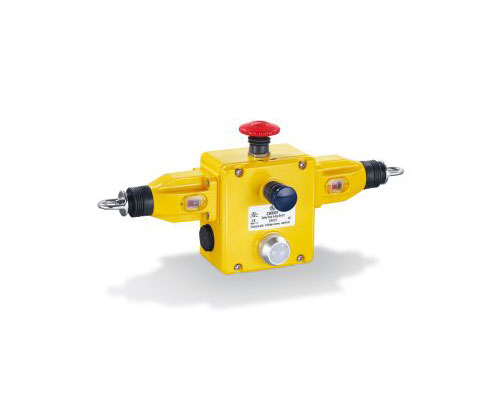
Sensors for conveyor monitoring
- In many industrial applications drives need to be monitored for rotational speed or standstill. In the automotive, food, beverage, steel and mining industries, speed sensors are used to reliably detect standstill, overspeed and underspeed of drives or belt break on conveyors.
ifm's product range for conveyor belt system monitoring covers belt drift switches, safety rope emergency stop switches, motor switches, compact speed monitors and 3D sensors.
The belt drift switch is used to protect the belts from damage or destruction in case of belt misalignment on continuous conveyors. Using safety rope emergency stop switches, vast hazardous areas can be secured. Motor switches are used to reliably switch three-phase motors in direct or reversing operation.
Using AS-i, PCBs, rope switches, belt drift switches and other switches can be integrated into AS-i systems. If needed, this can also be safety-related (Safety at Work).
Industrial imaging
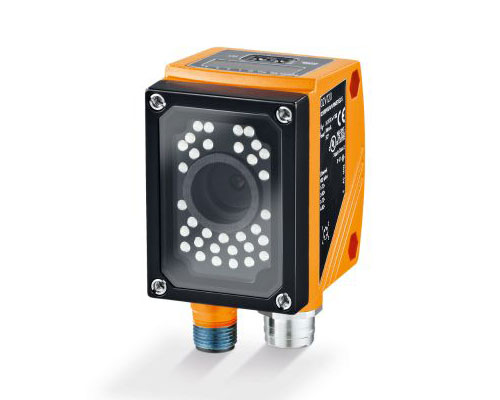
Vision sensors
- Easy integration in the application
- Compact and robust housing
- For use as a stand-alone device
- Intuitive, user-friendly handling
In automation technology visions sensors are an integral part of assembly and manufacturing tasks as well as quality control. In a robust, industrially compatible housing, they combine lighting, lens, camera chip, evaluation and process connections for the integration in the higher-level controller.
The O2D object recognition sensor with orientation-independent contour verification solves tasks like presence and position monitoring, quality control and sorting and counting tasks. It is ideal in applications where the object’s shape is repeatable and defined.
The O2V object inspection sensor is used for presence and completeness checks, position, size and quality control, and sorting tasks. It is ideal for applications where the objects vary in shape, size or shade.
Application areas of the O2I multicode reader range from product tracking and product control to product identification. The sensor can read 1D and 2D codes regardless of their position.

3D sensors
- Up to 38500 distance values per measurement for a detailed assessment of the application
- Different output functions configurable
- Visual assessment of distance, level or volume
- Predefined function blocks
- Reliable function due to time-of-flight measurement
Photoelectric 3D sensors have a wide range of applications including the detection of volume, distance and level. They measure the distance between the sensor and the nearest surface point by point using the time-of-flight principle. The units illuminate the scene with an internal or external infrared light source and calculate the distance by means of the light reflected from the surface.
The sensors for industrial applications can be used for completeness checks, volume determination or sorting tasks. Sensors for use in mobile machines offer outstanding shock and vibration resistance.
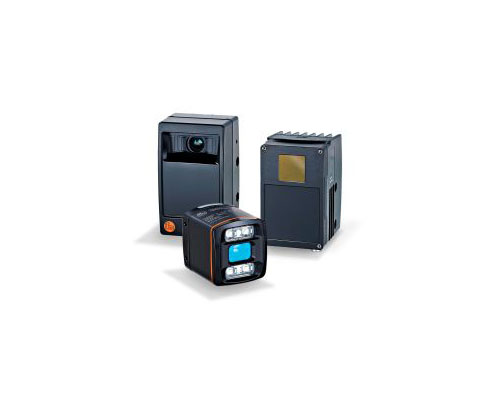
3D cameras
- Up to 92928 distance values per measurement for a detailed assessment of the application
- Reliable function due to time-of-flight measurement
- Illumination, measurement and evaluation in one unit
- Output of distance and grey values Integration by means of intuitive parameter setting software
The 3D camera detects scenes and objects in their spatial dimensions at a glance. In contrast to laser scanners it does not require moving components and is thus robust and wear-free. It measures the distance between the sensor and the nearest surface point by point using the time-of-flight principle. The camera illuminates the scene with an internal infrared light source and calculates the distance by means of the light reflected from the surface.
Applications can be found in such areas as packaging, storage and materials handling, airport logistics, collision avoidance, robotics, monitoring of space and persons.
If the camera is integrated into a machine, the measured data can be evaluated with common image processing libraries. A software development kit with code samples is available in different programming languages.
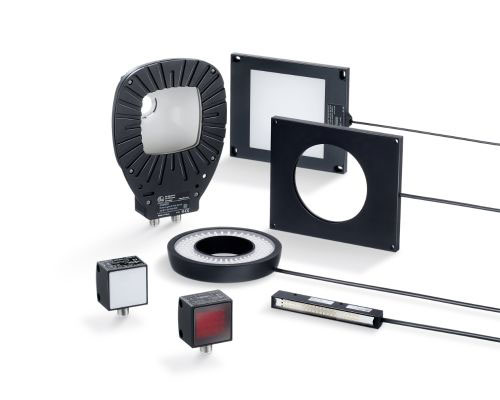
Illumination
- Backlights for contour and position verification and object recognition
- Permanent light or pulse operation White light, red light and infrared versions
- Compact and robust housing
- Homogeneous and virtually shadow-free illumination of the object
Safety technology
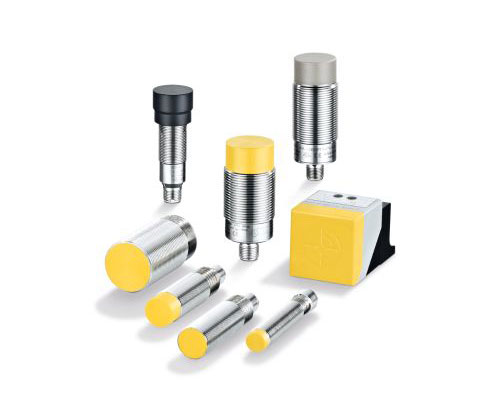
Fail-safe inductive sensors
- Certification to EN 60947-5-3 for electromechanical controlgear
- Ensuring operator and machine safety
- No special actuator for electronic fail-safe sensors required
- Connection to safety plc or safe AS-i module
- Series connection of sensors and contacts possible
Safety technology in automation has a share of the responsibility for safe human-machine interaction. Fail-safe sensors with safety functions are an important part of a safety system for persons and machines. The operating principle and thus the advantages of inductive sensors can also be used for safety applications. Direct detection of metal solves many applications. Magnetic or mechanical counterparts do not have to be considered in the design. A wear-free function due to the non-contact principle and a high protection rating guarantee high uptime of the machines and installations.
No special demands such as shielding, twisted cables or laying separately, are made on the socket. The sensor is directly connected to existing PLCs or logic modules using common existing unshielded 4-pole cables. The output characteristics of the sensor follow the characteristics of an input to EN 61131-2 type 1 or 2. Connection to ifm evaluation relays, AS-i Safety at Work, PROFIsafe, Interbus Safety bus systems or safe PLCs and logic modules is equally simple. For the unit family with dynamic pulse detection (Gx50xS) the corresponding software modules are required. The fail-safe sensors with 2 x PNP output (Gx70xS; Gx71xS) can be connected to approved two-channel safety relays without cross-monitoring. The evaluation units from ifm electronic enable functionalities such as muting or connection of e-stop devices to DIN EN 60947-5-1 without extra cost.
A magnet or coded target is not necessary for the function of the fail-safe sensor.
Safety light curtains
- Safety categories 2 and 4 to IEC 61496
- Reliable protection of hazardous areas and gates
- Wide range selectable on the unit
- No dead space when mounted in L shape
- Easy connection via the tried-and-tested M12 connector
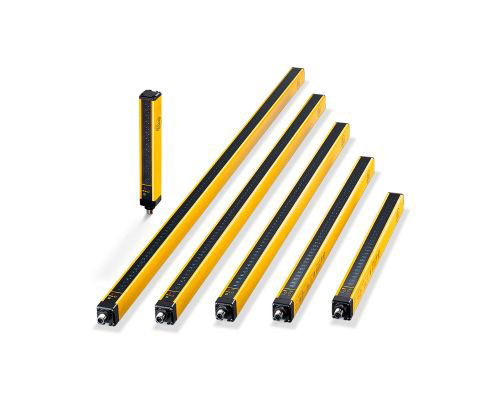
Safety light curtains are used where hazardous areas must be secured. They are optoelectronic safety devices consisting of one transmitter and one receiver. They conform to the safety requirements of type 2 / SIL 1 or type 4 / SIL 3. Typical applications include access prevention or hazardous area monitoring of robot cells and production lines. For food and beverage applications, units with protective tubes and high protection ratings are offered. Safety light curtains with floating blanking can be used to safeguard material feed processes on presses and saws.
Safety light grids
- Safety categories 2 and 4 to IEC 61496
- Reliable protection of hazardous areas and gates
- Easy connection via the tried-and-tested M12 connector
- Versions for the use in hygienic applications
- Versions with active /passive system
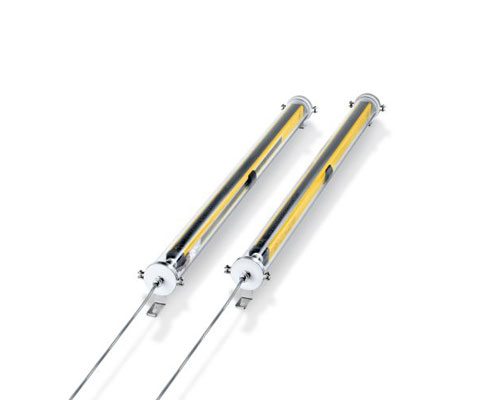
Safety light grids are used where hazardous areas must be secured. They are optoelectronic safety devices consisting of one transmitter and one receiver. They conform to the safety requirements of type 2 / SIL 1 or type 4 / SIL 3.
Typical applications include access prevention or hazardous area monitoring of robot cells and production lines. For food and beverage applications, units with protective tubes and high protection ratings are offered. Active / passive systems substantially reduce wiring complexity.
Safety relays
- Evaluation units for fail-safe sensors and E-STOP switchgear
- Connection of mechanical fail-safe switches and fail-safe sensors
- Evaluation systems for safe rotational speed or standstill monitoring
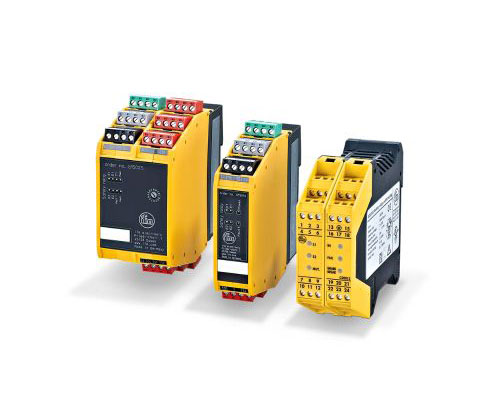
Safety relays can be used in a variety of ways. They perform monitoring tasks in safety applications in combination with different non-contact guards. They are capable of evaluating signals from safety light grids, safety light curtains, position sensors with and without cross-fault monitoring, electronic safety sensors or mechanical safety switches for protective guard contacts.
Safety relays with relay outputs and muting function are used for the connection of safety light curtains and safety light grids. In handling and loading stations, the muting function reliably differentiates between the entry of personnel and material.
Standstill monitors and speed monitors are pulse evaluation systems for safe detection of underspeed or standstill or for safety-related minimum speed monitoring.
Safety controllers
- Safe inputs and outputs
- Layered safety concept, extended monitoring and test routines
- Performance configurable in case of a fault
- Quick boot-up and short fault detection time
- High-performance CAN interface for various communication tasks
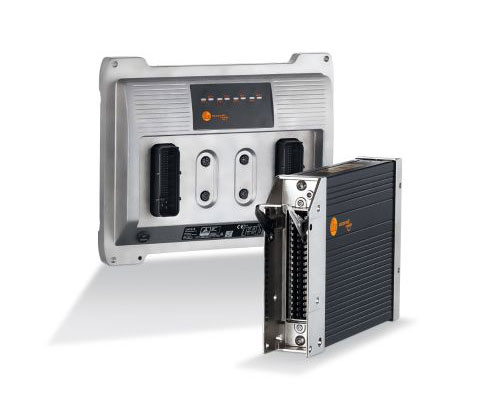
The powerful, freely programmable 32-bit SafetyControllers are designed for use in harsh conditions. They are suitable for direct installation in vehicles and mobile machines using the on-board system. Thanks to special integrated hardware and software functions for safety-related tasks, these controllers can be used as safety controllers.
Hardware and software have been certified by the German TÃV association. The programmable, layered error handling feature ('Keep Alive') enables the SafetyController to switch off in case of a serious fault and bring the plant into a safe state. In case of less serious errors however, parts of the plant in previously defined areas can still be used. Not all components have to be switched off. The behaviour of the inputs and outputs can be adapted to the application easily and precisely using the CODESYS programming software.
AS-Interface Safety at Work
- Monitoring of up to 31 safe AS-i slaves
- Areas of application: door monitoring, light curtains, e-stop, two-hand control
- Safe AS-i modules for field applications and control cabinets
- Safe AS-i door switches with guard locking and guard lock monitoring
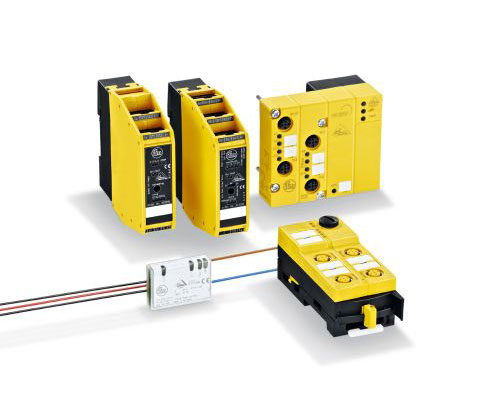
AS-Interface is a simple and economic wiring system for the first level of industrial communication. An AS-Interface network consists of a control unit, the so-called master, the modules for signal processing, and the associated sensors and actuators.
Safety components can easily be incorporated into an AS-i network via AS-Interface Safety at Work. Signals from standard units and safe components are transmitted via a common cable.
The fail-safe AS-i PLC is certified for use in safety-related applications up to SIL 3, PL e.
AS-i safety monitors are used to monitor safety components in AS-i systems. They monitor the code sequences to be transmitted in the AS-i network. In the case of message deviations or timeouts the monitor ensures the safe state of the system.
Safe AS-i modules detect safety-related switching states of 1- or 2-channel E-stops, position switches or door contacts. Using the safe input module safety-related components without integrated AS-i interface can be connected to the AS-i system.
RFID-coded and magnetically coded safety sensors
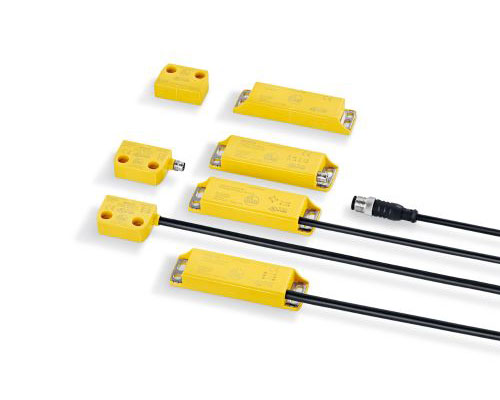
- Actuation possible from different directions
- Meets the new interface description CB24I from ZVEI
- Can be connected in series
- Conceal behind stainless steel for enhanced tamper prevention
- Meets highest safety levels to ISO 13849-1 and SILCL 3 to IEC 62061
Safety over IO-Link
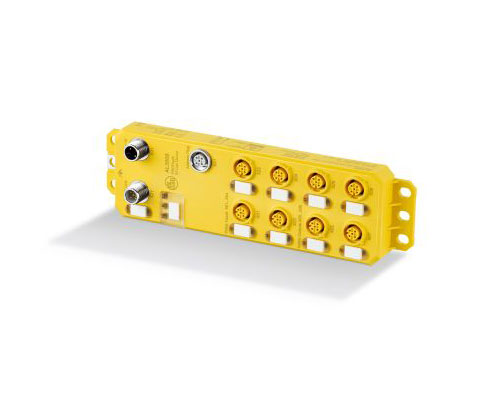
- Safety components for Safety over IO-Link
- Safe modules for field applications
- Wiring advantages due to IO-Link
Process sensors
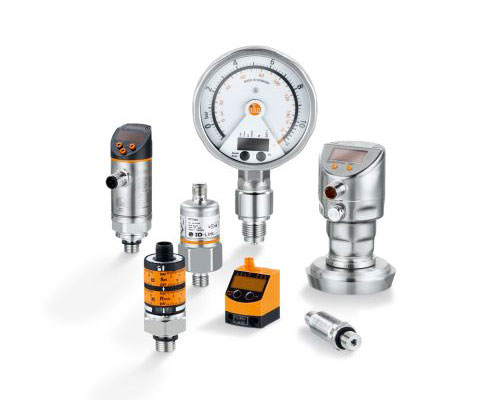
Pressure sensors / Vacuum sensors
- Sensors and transmitters with integrated evaluation
- Specially for the use in hygienic applications
- Excellent overload protection and long-term stability
- Measuring ranges of -1…600 bar
- Variable process connection using adapters
ifm offers a wide range of electronic pressure sensors to meet the requirements of various industrial applications. The ceramic-capacitive measuring cell, tried and tested millions of times, is complemented by a stainless steel measuring cell with thin-film or thick-film wire strain gauges (series PK, PV, PT) and a piezoresistive measuring technique (for pneumatic applications).
All units have robust housings and do not require moving parts such as pistons or springs. The result: The sensors are extremely shock and vibration resistant and operate without any wear or maintenance.
The tried and tested ceramic-capacitive measuring cell is corrosion-resistant and long-term stable. This ensures consistent and long-term accuracy of the measured values. The sensors are resistant to dynamic pressure peaks and guarantee high overload resistance even in the case of extreme pressure peaks that occur for example with fast closing valves.
Units with wire strain gauge in thick-film technology on a stainless steel measuring cell are distinguished by their very compact and robust design. They can be used in almost all industrial areas. The welded stainless steel measuring cell without any seals ensures a high degree of safety, in particular for applications with gas pressures of up to 600 bar as well as in air-conditioning and refrigerating technology where aggressive coolants (freons) are used.
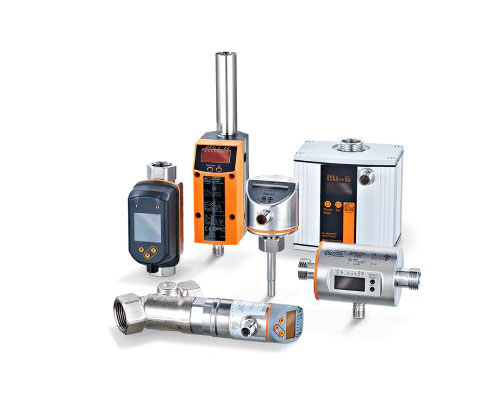
Flow sensors / flow meters
- For liquids and gases
- Versions for the use in hygienic applications
- Variable process connection using adapters
- Flow monitoring also for aggressive media
In almost all fields of process and plant engineering liquids or gases are used, e.g. for coolant and lubricant supply of plants and power units or ventilation of installations and buildings. Electronic flow sensors are used to prevent damage or downtime caused by flow interruptions.
ifm's product range comprises flow sensors with different measuring principles for monitoring the most varied types of media, including water, oils and coolants, but also air, compressed air or aggressive media.
Their application areas range from simple monitoring tasks to precise flow rate measurements.
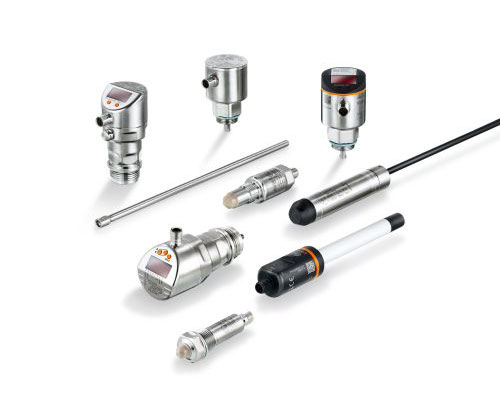
Level sensors
- High reliability due to the elimination of mechanical components
- Different function principles: Guided wave radar, capacitive and hydrostatic Devices for limit level detection or continuous level measurement
- Clearly visible LED display
- Suitable for all common industrial and process fluids
Electronic level sensors monitor filling levels of liquids or bulk materials in containers, tanks and silos. Even critical process conditions such as emptying a hydraulic tank or the unintentional overspill of a tank are monitored using level sensors.
The ifm product range includes units for continuous level measurement or point level detection. Depending on the application, different measuring principles such as capacitive, guided wave radar or hydrostatic level measurement are offered. For non-contact level detection, photoelectric distance sensors or 3D camera systems can be used.
Build-up and wear often lead to failures, in particular if mechanical switches are in contact with the medium. The electronic ifm sensors can do without any mechanical parts or floats. This makes the sensors especially robust and reliable. Further advantages of electronic sensors are the local level indication and easy switch point setting via pushbuttons.
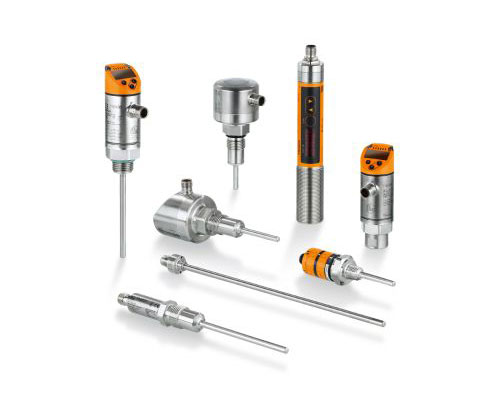
Temperature sensors
- Units with integrated or separate evaluation electronics
- Modular concept for a large variety of applications
- High process safety due to self-monitoring
- Variable process connection using adapters
- High shock and vibration resistance
Temperature is the physical variable most often measured in machines and installations.
In the food, beverage and pharmaceutical industries, temperature sensors are used to ensure that products are at the correct temperature. In machine tool and automotive applications, the temperature or temperature difference measured at drives, gears and motors plays an important role as an indicator of the machine condition. In the steel, metal and glass industries, temperature monitoring of cooling circuits serves to prevent overheating of plants.
A large selection of ifm temperature sensors is offered to suit different temperature ranges, installation depths, environmental conditions and media.
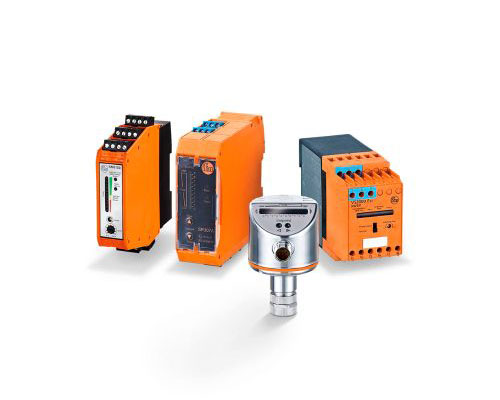
Signal evaluation systems
- Integrated flow, temperature and wire monitoring
- Adjustable switching outputs for monitoring flow and temperature
- Clearly visible multi-colour LED bargraph display
- Signal output via potential-free relay contacts
- Connection options: Insulation displacement / screw terminals and cage clamps
In applications where it is not possible to use flow sensors with integrated evaluation, sensors are used in combination with evaluation units. For example, this is the case in hazardous areas, confined spaces or if flow values are to be indicated in a decentralised manner.
The product range comprises evaluation units for control cabinet installation or local mounting. Depending on the unit, it is possible to monitor flow, temperature and/or wire break. All units indicate the flow by means of an LED bar graph.
The evaluation units for local mounting are connected to the flow sensor directly at the measuring point using an M12 connector.
Sensors and evaluation systems are designed and approved for use in hazardous areas according to the applicable directives.
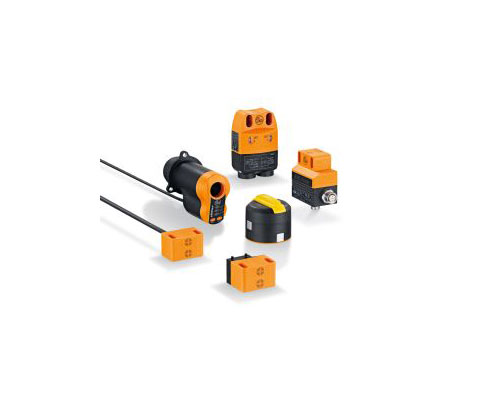
Feedback systems for valves and valve actuators
- Dual inductive sensor for pneumatic actuators and valves
- Designed for simple fit to common actuators based on VDI / VDE 3845
- Quick and easy installation of the AS-i dual sensor
- Position feedback for rising stem valves with up to 80 mm stroke
- Reliable permanent valve monitoring
In industrial processes where liquids, air or gases are used, valves are needed for dosing and control.
Dual inductive sensors provide reliable position feedback for pneumatic valve actuators and valves. They are operated in combination with a switch target (also called 'puck') and detect the "open" and "closed" positions of the valve.
Valve sensors provide position feedback on linear valves. The sensors signal up to three important valve positions to the controller: valve open, valve closed and any position in-between, e.g. for the seat lift.
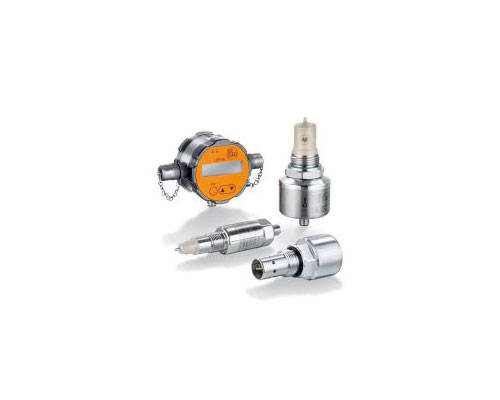
Analytical sensors
- Compact conductivity sensors for the food industry
- Inductive and conductive conductivity sensors
- Robust sensors for the monitoring of oil quality
- Relative humidity and concentration of particles
Conductivity sensors are pre-destined for use in the food industry. They detect the conductivity and concentration of different media and can differentiate between e.g. cleaning agents, rinsing water, and the food product. This means that it is not only possible to constantly track the product but also to reduce the waste of product and rinsing water – all possible without making adjustments to the sensor.
Oil sensors monitor the quality of hydraulic fluids and lubrication oils. To be more precise the particle monitor type LDP detects the purity level / level of contamination of mineral-, ester- and bio-oils. The oil humidity sensor type LDH measures the relative humidity and concentration of water in oil.
Analytical sensors make an important contribution to condition-based monitoring and the avoidance of downtime.
Industrial communication
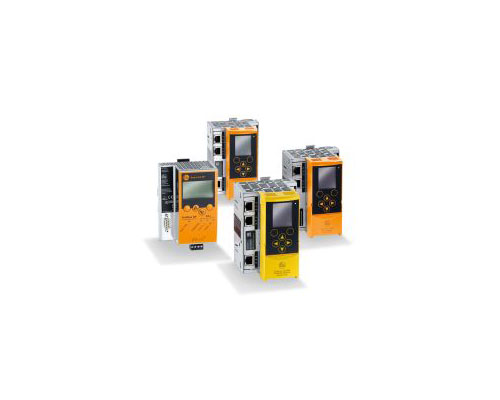
AS-Interface masters
- Simplified system installation by means of AS-Interface wiring system
- AS-Interface - perfectly complements for different field buses or industrial
- Ethernet Graphic user interfaces for clear configuration and diagnostics
- High-performance controllers and gateways
The actuator-sensor interface (AS-i) is a manufacturer-independent standard for connection of actuators and sensors of the first field level.
AS-Interface has become established as an economic wiring system in industrial automation. A two-wire flat cable transmits data and energy. AS-i considerably reduces wiring complexity since conventional parallel wiring of each sensor or actuator to the controller is no longer necessary. This saves the user a great number of terminals, splitter boxes, input/output cards and cable lines.
The AS-i gateways control the data exchange to the sensor/actuator level and communicate rapidly with the superior control level. They can be used as independent, decentralised controllers or as gateways to all common fieldbus systems.
The range includes interfaces with EtherNet/IP, PROFIBUS, PROFINET, EtherCAT or CANopen.
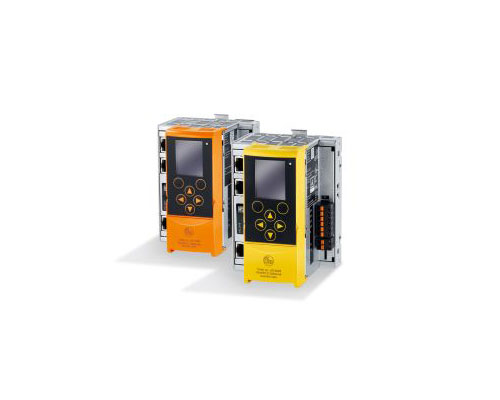
Industrial SmartSPS controllers
- All-rounder for solving industrial automation tasks
- High-performance automation system, also fail-safe up to SIL3, PL e, if required
- Programmable via CODESYS V3.5, the leading, manufacturer-independent automation software
- Various communication options for unimagined flexibility
- Simplified system installation by means of AS-Interface wiring system
The SmartPLC product family is a powerful automation system for industrial applications. The devices are designed for conventional control tasks and for processing failsafe data up to SIL 3, PL e.
Thanks to various interfaces and communication protocols, the SmartPLC is an all-rounder for universal use to solve your automation tasks and this at an unbeatable price/performance ratio.
The devices are programmed via CODESYS V3.5.
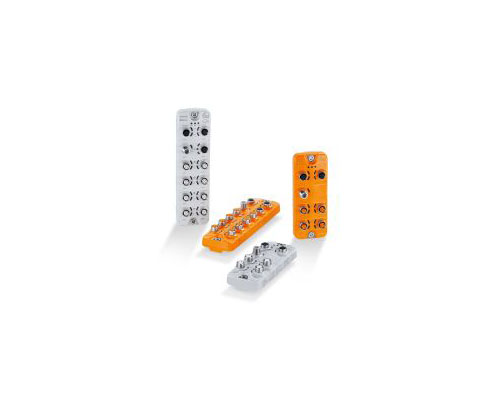
Ethernet field modules
- Reliable transmission of machine data, process parameters and diagnostic data to the controller
- Simultaneous data exchange with the controller and the IT world
- Large operating temperature range and high protection rating
- Robust housing with high protection rating
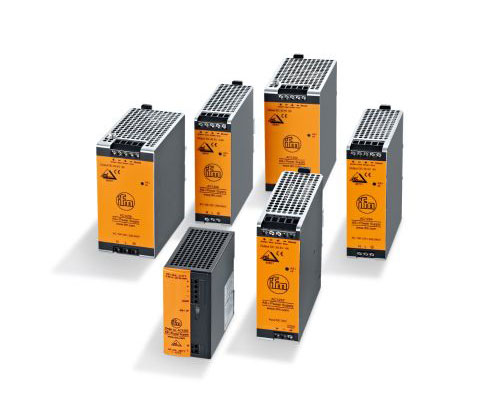
AS-Interface power supplies and monitors
- High noise immunity and electromagnetic compatibility
- Wide input voltage range
- Excellent short-circuit and overload protection
- Excellent power reserve
- Robust metal housing for secure mounting
AS-i power supplies provide power to the connected modules, sensors and actuators. They provide high noise immunity and sufficient power reserves.
Earth fault and insulation fault monitors are used for earth fault and insulation fault monitoring in unearthed AS-i and 24 V DC systems.
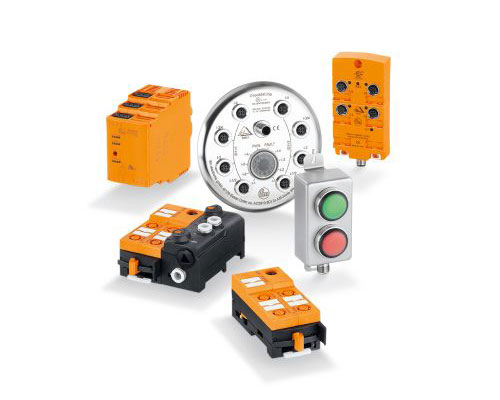
AS-Interface I/O modules
- ClassicLine: Modules for field applications with quick mounting technology, also for hazardous areas
- CompactLine: Modules for a secure connection in a harsh environment
- SmartLine: Modules for installation in control cabinets
- ProcessLine: Stainless steel modules with protection rating IP 69K for use in the food and beverage industry
- Compact illuminated pushbutton modules with high luminosity
The decentralised AS-Interface I/O modules connect binary and analogue sensors and actuators to the gateway or PLC via AS-Interface. For field applications, modules with quick or screw mounting technology are available. Connection of the two-wire flat cable by means of insulation displacement technology ensures reverse polarity protection. Sensors and actuators are connected via proven, robust connectors.
AS-i ProcessLine modules have been specifically developed for use in wet areas in the food and beverage industry. With a full stainless steel housing and protection rating IP 69K, the units are built to meet the hygienic requirements of high-pressure cleaning cycles.
AS-i SmartLine modules are designed for use in control cabinets. Thanks to their slim, compact design, they also fit into control panels.
AS-i PCBs are offered for use in small housings, control cabinets and panels.
The ifm product range features modules with digital and analogue inputs and outputs.
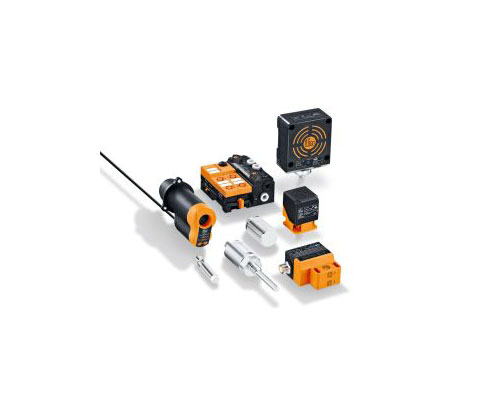
AS-Interface systems and sensors
- AirBoxes - the clever combination of AS-i input module and pneumatic valve
- Inductive dual sensors for position detection on valve actuators
- Position feedback for single and double seat valve and for diaphragm valves
- Inductive sensors for use in machine tools RFID for mounting, feeding and handling technology
In addition to PLCs, gateways, modules and connection technology, the ifm AS-Interface range includes a number of intelligent sensors and systems.
The AS-i AirBox is a combination of an I/O module and a solenoid valve. In pneumatic applications, it is used for decentralised control of cylinders or valves, flaps and slides actuated by valve actuators.
The RF identification system DTS125 enables non-contact reading from and/or writing to RFID transponders (ID tags). The compact read/write heads include, in addition to the antenna, the complete evaluation and the interface to AS-Interface. So the units can be operated directly in the AS-i network.
The range also includes inductive sensors, temperature sensors, valve sensors for rising stem valves and dual sensors for valve actuators with integrated AS-Interface.
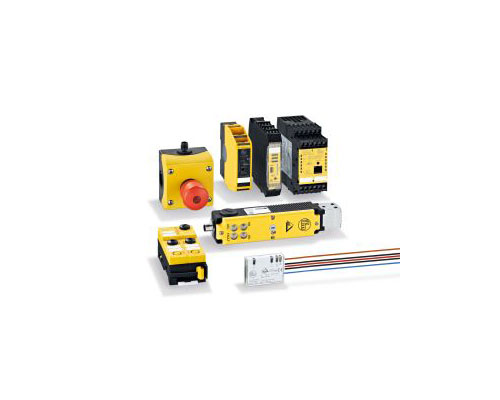
AS-Interface Safety at Work
- Various logic functions
- Monitoring of up to 31 safe AS-i slaves
- Areas of application: door monitoring, light curtains, e-stop, two-hand control
- Two OSSDs which can be switched off separately from each other
- TÃV approval to EN 954-1 and IEC 61508
AS-Interface is a simple and economic wiring system for the first level of industrial communication. An AS-Interface network consists of a control unit, the so-called master, the modules for signal processing, and the associated sensors and actuators.
Safety components can easily be incorporated into an AS-i network via AS-Interface Safety at Work. Signals from standard units and safe components are transmitted via a common cable.
The fail-safe AS-i PLC is certified for use in safety-related applications up to SIL 3, PL e.
AS-i safety monitors are used to monitor safety components in AS-i systems. They monitor the code sequences to be transmitted in the AS-i network. In the case of message deviations or timeouts the monitor ensures the safe state of the system.
Safe AS-i modules detect safety-related switching states of 1- or 2-channel E-stops, position switches or door contacts. Using the safe input module safety-related components without integrated AS-i interface can be connected to the AS-i system.
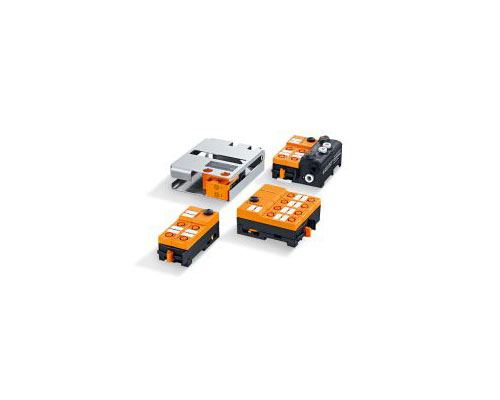
AS-Interface for hazardous areas
- I/O modules for field applications with quick mounting technology
- AirBoxes - the clever combination of AS-i input module and pneumatic valve
- Feedback systems for valve actuators with direct triggering of the solenoid valve
- For use in silos
- Approval for zone 22, category II 3D
The decentralised AS-Interface I/O modules of the ClassicLine series with quick mounting technology connect binary and analogue sensors and actuators to the gateway or PLC via AS-Interface. The AS-i AirBox is a combination of an I/O module and a solenoid valve. In pneumatic applications, it is used for decentralised control of cylinders or valves, flaps and slides actuated by valve actuators. The dual inductive sensors with AS-Interface provide reliable feedback of the valve positions on pneumatic valve actuators and valves.
In conjunction with an impact protection housing these units can be used in hazardous areas.

Fieldbus components
- The range of fieldbus components offered by ifm includes gateways, IO-Link masters, RFID evaluation units and encoders. Gateways establish the connection between AS-i and common fieldbus systems such as EtherNet/IP, Profibus, Profinet or EtherCAT. They control the data exchange to the sensor/actuator level and communicate rapidly with the superior control level. Variants with PLC functionality or fail-safe PLC are available.
IO-Link masters are used for connecting IO-Link devices such as sensors, valves or binary input/output modules. They feature an integrated fieldbus interface. The range includes types for control cabinet installation and for field applications.
RFID evaluation units control the data exchange to the RFID antennas and communicate with the superior control level via fieldbus.
In many manufacturing and production processes, encoders have become established as reliable instruments to ensure precise positioning. They are available as singleturn or multiturn encoders with CAN or Profibus interface.

Apps
- Fast and easy integration of intelligent sensors into the PLC world
- Straightforward web configuration instead of time-consuming and costly programming
- No special PC software required
- PLC connection via fieldbus protocols PROFINET, PROFIBUS, EtherNet/IP and others
- Tailored smart additional functions
App are used for parameter setting and set-up of IO-Link sensors, 1D/2D code readers, 3D cameras and RFID read/write heads.
ifm also offers apps for logging and saving process data of AS-i IO-Link modules and for managing AS-i configurations.
The single user licence for CODESYS is already included. The apps are loaded into the AS-i gateways. They establish the connection between AS-i and common fieldbus systems such as EtherNet/IP, PROFIBUS, PROFINET or EtherCAT. They control the data exchange to the sensor/actuator level and communicate rapidly with the superior control level.
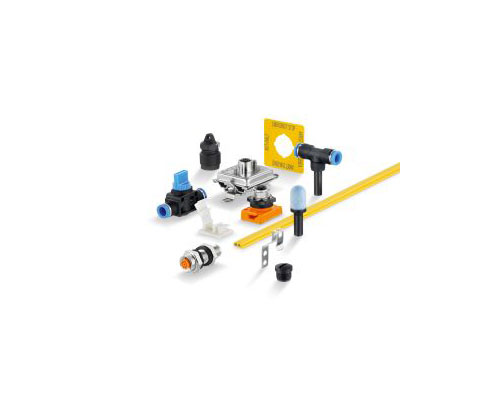
Accessories for AS-Interface
- Accessories for set-up, diagnosis and electrical installation
- Flat cable insulation displacement connectors as low-cost connection
The AS-i flat cable is an essential component of the quick connection concept, in which all components are connected via two poles by means of the insulation displacement technology. Connection cables, flat cable splitters, insulation displacement connectors, wirable plugs and sockets are used for the connection of sensors and actuators.
AS-i repeaters serve to extend the cable length of an AS-i network by another 100 metres.
The AS-i bus termination and further test and diagnostic units are used to detect and prevent communication problems in the network.
IO-Link
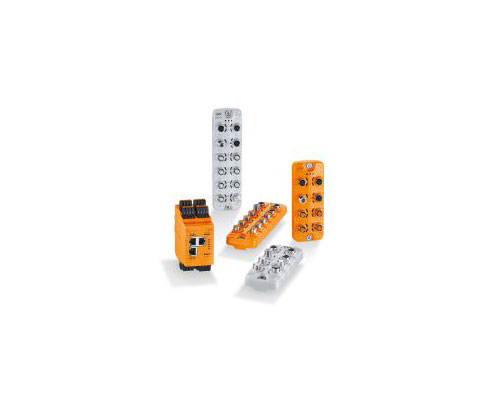
IO-Link masters
- For connection of up to eight IO-Link devices
- Reliable transmission of machine data, process parameters and diagnostic data to the controller
- Simultaneous data exchange with the controller and the IT world
- Units for field applications and control cabinets
- With integrated fieldbus interface
The IO-Link masters for field applications are gateways for the connection of up to eight IO-Link devices including sensors, valves or binary input/output modules. On some versions offer ports that are designed as B ports and supply auxiliary energy for the connection of IO-Link actuators. The master transmits machine data, process parameters and diagnostic data to the controller. The product range includes interfaces to Profinet, EtherCat, Ethernet/IP, Profibus or AS-Interface.
Excellent electromagnetic stability, a wide temperature range, a high protection rating and a robust housing qualify the device for use in harsh industrial environments. The master with AS-Interface has quick mounting technology with a slide that locks the upper and lower part.
The IO-Link master for control cabinet installation features an integrated web server for configuration and diagnosis. It transmits machine data, process parameters and diagnostic data via Profinet or Ethernet/IP to the controller. To ensure that the data can be processed by IT and used at several factory locations or even worldwide, the device has a second Ethernet port with an integrated switch. This second port allows direct networking of all connected IO-Link devices with a local server using a parallel communication path called 'Y path'. The integrated interface software LINERECORDER AGENT enables communication with the server.
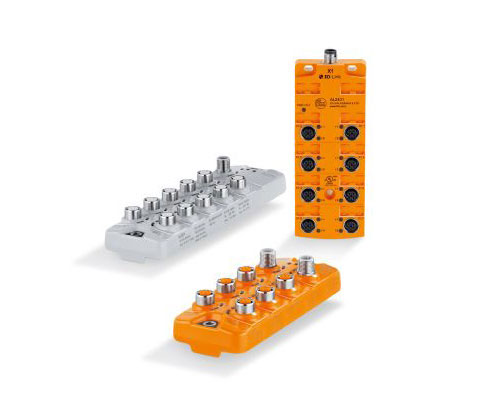
IO-Link modules
- For the simple connection of binary sensors to any IO-Link master
- Data and energy transmission also possible with unscreened connection cable
- Clearly visible LEDs for displaying operation, switching status and error
- Robust design with full potting for use in harsh industrial environments
- Robust M12 connectors for connecting sensors and actuators
Up to eight conventional sensors with switching outputs can be connected to the field modules with IO-Link. The signals are transmitted to any desired IO-Link master / PLC via one unscreened M12 connection cable. This considerably reduces wiring complexity since conventional parallel wiring of each sensor or actuator to the controller is no longer necessary. It also saves the user a great number of terminals, splitter boxes, input/output cards and cable lines. As opposed to bus systems IO-Link does not require any configuration or addressing. This simplifies the set-up. Excellent electromagnetic stability, a wide temperature range, a high protection rating and a robust housing qualify the device for use in harsh industrial environments.
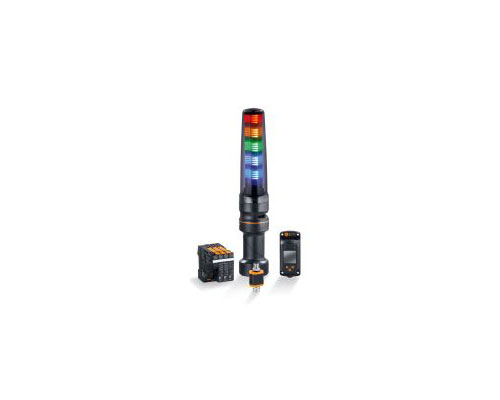
IO-Link devices
- Display for displaying up to four process values
- Electronic circuit breakers for the permanent monitoring of the 24 V secondary circuit
- Mini display to monitor limit values
- Signal lamps can be controlled via IO-Link
ifm's range of IO-Link devices comprises displays and electronic circuit breakers. The IO-Link display indicates process values, texts and messages provided by the connected IO-Link master. It displays up to four assigned process values, alarms and warnings. The optional colour change of text and background can be used to get a quick overview. Electronic fuses permanently monitor the 24 V secondary circuit and reliably switch it off in the event of a failure. These electronic circuit breakers will also switch off circuits in cases where mechanical circuit breakers often do not trigger, e.g. in case of overload of a circuit with long cables. By means of a pushbutton, each channel of a fuse module can be activated, deactivated or reset individually. The module can also be operated and configured via IO-Link.
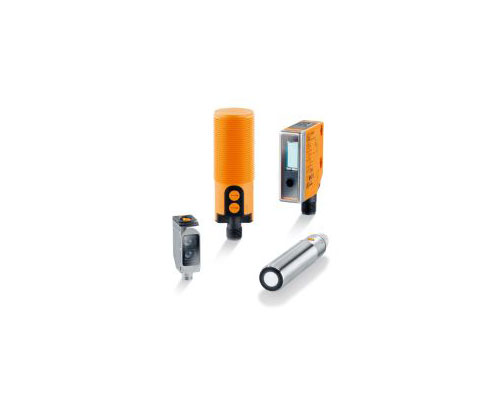
IO-Link position sensors
- Capacitive sensors for position detection or level monitoring
- Distance sensors with very long range and background suppression
- Ultrasonic sensors for non-contact detection of objects
- Photoelectric sensors for specific applications
- With switching output, analogue signal and IO-Link
Position sensors are nowadays indispensable in industrial applications to reliably detect positions on machines. Compared to mechanical switches, inductive, capacitive and magnetic sensors offer ideal characteristics: non-contact operation free from any wear and tear, high switching frequencies and accuracy. In addition, they are insensitive to vibration, dust and moisture.
Cylinder sensors are used for position detection of pistons in pneumatic cylinders.
In industrial processes where liquids, air or gases are used, valves are needed for dosing and control. Valve sensors reliably signal the positions of valve actuators, valves, slides and flaps.
Photoelectric sensors as "artificial eyes" are fundamental to automation technology. They are used where reliable and non-contact detection of the exact position of objects is required. The material of the object to be detected is of no importance. Compared to inductive, capacitive and magnetic sensors, photoelectric sensors have a much larger sensing zone.
Laser sensors are used for the detection of very small objects. In combination with time-of-flight measurement, even long distances can be measured reliably.
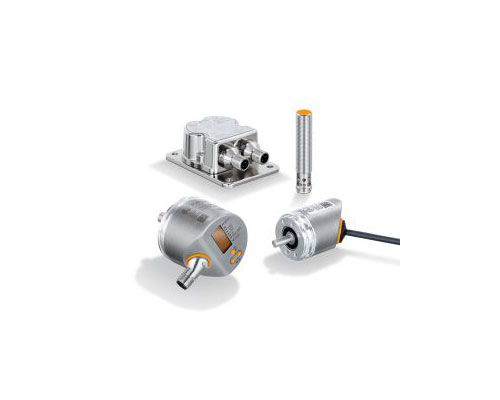
IO-Link sensors for motion control
- Encoder for precise position determination and linear measurement
- Inclination sensors for precise measurement of angles of inclination on X and Y axes
- High measurement accuracy across the total angular range in two axes
- High protection rating for the requirements of harsh industrial environments
In many industrial applications it is necessary to monitor drives for rotational speed or standstill, measure speeds, frequencies, distances, angles or positions and display, process and transmit current process values. In the materials handling and wood industry, encoders have become established as reliable instruments for position and linear measurement.
Often the horizontal alignment of machines or machine parts is an important requirement for reliable operation. Inclination sensors are used for reliable angular position detection on working platforms or levelling of mobile cranes or excavators. Industrial applications include solar panel tracking systems. The sensors can be configured via IO-Link, using, for example, a USB interface. The LINERECORDER SENSOR software is used to visualise, transfer and archive parameter sets.
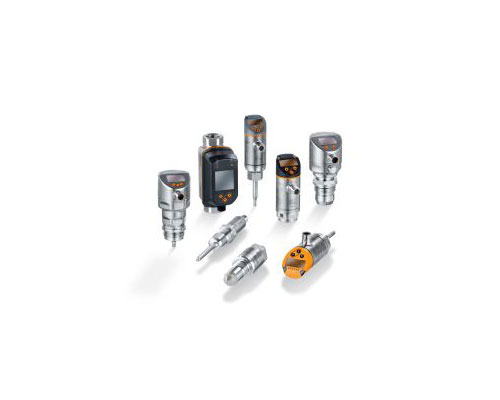
IO-Link process sensors
- Pressure sensors for the detection of the system pressure in machinery and plant
- Reliable monitoring of liquids and gases in pipes
- Level and limit level monitoring on tanks and containers
- Temperature sensors with high precision over the whole temperature measurement range
- Devices with clearly visible LED display with alternating red-green indication
In industrial processes where liquids, air or gases are used, process sensors serve to measure and detect pressure, temperature, flow and levels.
Pressure sensors are used to detect the system pressure of oil in hydraulic systems or to measure the hydrostatic pressure in tanks and vessels in the food and beverage industry.
Flow sensors monitor the coolant and lubricant supply of machines, power units and industrial furnaces or ensure ventilation of installations and buildings. Electronic level sensors monitor filling levels of liquids or bulk materials in containers, tanks and silos.
In the food, beverage and pharmaceutical industries, temperature sensors are used to ensure that products are at the correct temperature. In machine tool and automotive applications, the temperature or temperature difference measured at drives, gears and motors plays an important role as an indicator of the machine condition. In the steel, metal and glass industries, temperature monitoring of cooling circuits serves to prevent overheating of plants.
Valves are used for dosing and control of liquids, air or gases. Dual inductive sensors provide reliable position feedback for pneumatic valve actuators and valves. Valve sensors provide position feedback on linear valves.

IO-Link Identification systems
- Tried-and-tested RF identification system in 13.56 MHz technology
- Wide range of tags and accessories
- Ideal RFID antennas for material handling, packaging machines, and plant construction
IO-Link software
- Fast and easy integration of intelligent sensors into the PLC world
- Easy, fast and intuitive start-up of 1D/2D code readers, 3D cameras and RFID readers
- Apps for operation on AS-Interface gateways with fieldbus interface
- Simple, clear representation of the process values
- Shortened set-up time during commissioning
The LINERECORDER SENSOR is a software for clearly structured online and offline parameter setting of ifm IO-Link sensors via a USB adapter. It allows consistent parameter setting and visualisation of all sensors and actuators with IO-Link interface.
App are used for parameter setting and set-up of IO-Link sensors, 1D/2D code readers, 3D cameras and RFID read/write heads. ifm also offers apps for logging and saving process data of AS-i IO-Link modules and for managing AS-i configurations.
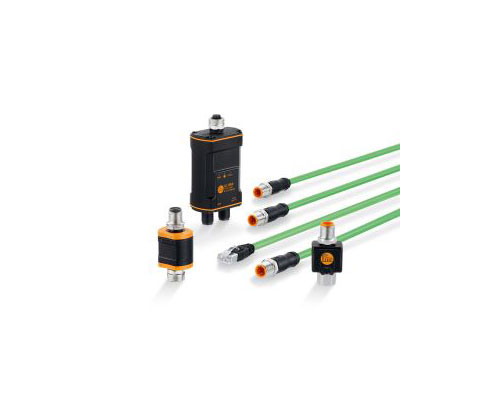
IO-Link accessories / connection technology
- USB interface for connecting sensors with IO-Link capability to a PC
- Bluetooth adapter for IO-Link sensors and masters
- Repeater for increasing the range
- Data splitter to integrate IO-Link sensors in old installations
- Converter for converting standard signals to IO-Link and vice versa
IO-Link accessories for signal evaluation, signal forwarding, sensor monitoring and parameter setting.
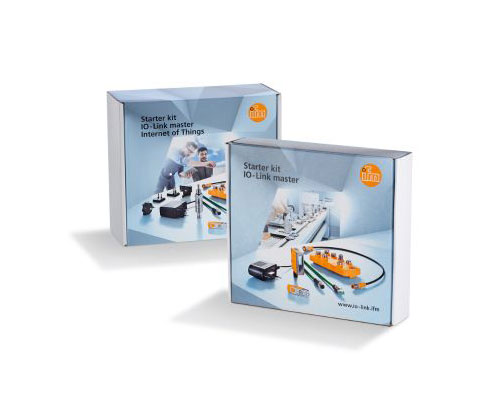
IO-Link starter kits
Identification systems
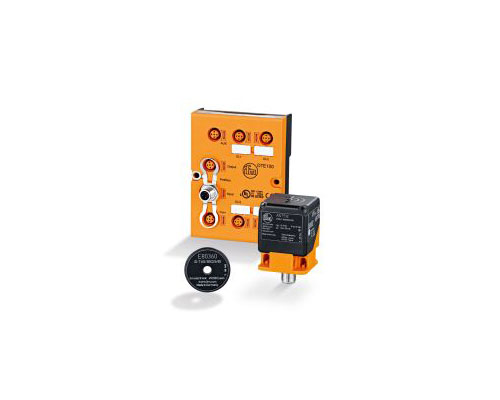
RFID 125 kHz
- Tried-and-tested RF identification system in 125 kHz technology
- Wide range of interfaces for RFID evaluation units
- Robust antennas and ID tags with long writing / reading distance
- Compact and at a low cost: Antenna and evaluation in one housing
- Read/write head with AS-i interface
The RF identification system for 125 kHz enables non-contact reading from and/or writing to RFID transponders (ID tags). The compact read/write heads include, in addition to the antenna, the complete evaluation and the interface to AS-Interface. So the units can be operated directly in the AS-i network. The data is converted into digitally coded values and provided to the AS-i control level without further programming. Applications are found in production lines, where the units are used for material flow control.
Up to 31 devices can be controlled by an AS-i master. The ifm app allows easy configuration of the RFID system. No special PC software is required; a web browser is sufficient. As an alternative to AS-Interface, antennas can also be connected directly to an RFID evaluation unit with fieldbus interface. The evaluation unit transmits the data to the PLC via PROFIBUS DP, PROFINET, Ethernet IP, Ethernet TCP/IP or EtherCAT.
The product range comprises read/write heads for detection zones of different sizes and a large variety of ID tags.
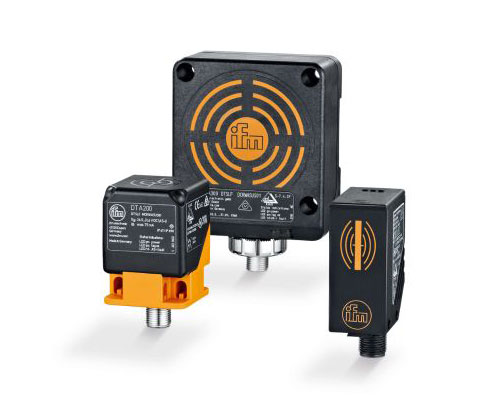
RFID 125 kHz with AS-Interface
- The RF identification system for 125 kHz enables non-contact reading from and/or writing to RFID transponders (ID tags). The compact evaluation systems include, in addition to the antenna, the complete evaluation and the interface to AS-Interface. So the units can be operated directly in the AS-i network. The data is converted into digitally coded values and provided to the AS-i control level without further programming. Applications are found in production lines, where the units are used for material flow control. Up to 31 devices can be controlled by an AS-i master. The ifm system solution app can be used for easy configuration of the RFID system. No special software is required; a web browser is sufficient.
Besides, the RFID handheld reader/writer allows the user to read and write RFID tags directly at the installation. The unit is connected to a PC via the USB interface. The required software is supplied with the unit.
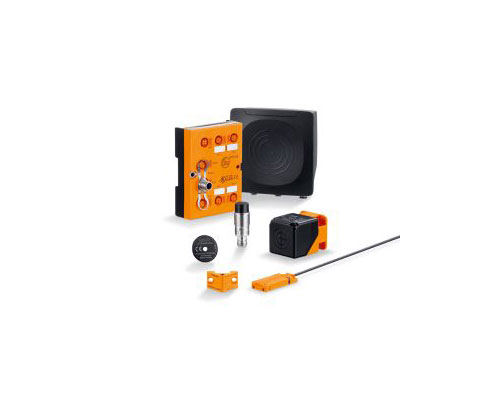
RFID 13.56 MHz
- Tried-and-tested RF identification system in 13.56 MHz technology
- Wide range of interfaces for RFID evaluation units
- With web server for device setup, diagnosis and monitoring
- Connection of RFID antennas, sensors or actuators up to 1 A
- RFID antennas for conveying and the food and beverage industry
The RF identification system for 13.56 MHz enables non-contact reading from and/or writing to RFID transponders (ID tags).
The data is converted into digitally coded values and provided to the AS-i evaluation unit without further programming. Applications are found in production lines, where the units are used for material flow control.
The integrated web server lets you configure the RFID system in a web browser. Function blocks enable easy integration into the control level.
The requirements of harsh industrial environments are met by a stable housing, a wide temperature range and a high protection rating.
The evaluation unit transmits the data to the PLC via PROFIBUS DP, PROFINET, Ethernet IP, Ethernet TCP/IP or EtherCAT.
The product range comprises antennas for detection zones of different sizes and a large variety of ID tags.

RFID UHF
- UHF read/write unit with four external antenna terminals
- Antennas for each application: ultra low, low, mid and wide range
- Powerful Ethernet interface for data transmission
- Support of bulk reading/reader dense mode
- For use in material flow control, intralogistics and conveying
RFID solutions in the UHF range are used in production, intralogistics and conveying. They are distinguished by their long ranges and the ability to read several transponders (ID tags) at the same time.
The UHF evaluation unit controls the data exchange to the RFID antennas or the sensor/actuator level, communicates with the higher control level and allows device configuration via a web server. Different versions are offered for use within and outside Europe.
The UHF evaluation unit transmits the data to the PLC via Ethernet IP or Ethernet TCP/IP.
UHF antennas for RFID enable non-contact reading from and/or writing to RFID transponders. They are offered for four ranges - ultra low range, low range, mid range and wide range.
ID tags are the information carriers of the RF identification system. They are fixed to the objects to be coded and thus establish a logical connection between the code and the related object.
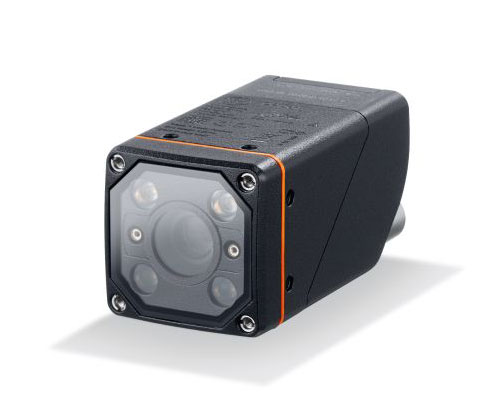
Optical identification
- Orientation-independent reading of 1D and 2D codes
- Recognition of more than 20 different code types Integrated code comparator system in the sensor
- For adjusting and monitoring vision sensors
- Ultra-flat or circular illumination units
Application areas of the 1D/2D code reader range from product tracking and product control to product identification.
The sensor can read 1D and 2D codes regardless of their position. Even if up to 25% of the code information becomes damaged or soiled, it is still read correctly. The reader can also be used for optical character recognition (OCR), e.g. in order to identify products based on type labels or serial numbers.
Additional illumination generates a homogeneous light field - either for virtually shadow-free object illumination or for emphasising surface characteristics.
The operating software allows for easy configuration of the 1D/2D code reader. The OPC server software provides an interface for integration into a higher level system. The Touch Panel PC ensures configuration, set-up and monitoring of object recognition sensors, 3D sensors, code readers and RFID readers.
Condition monitoring systems
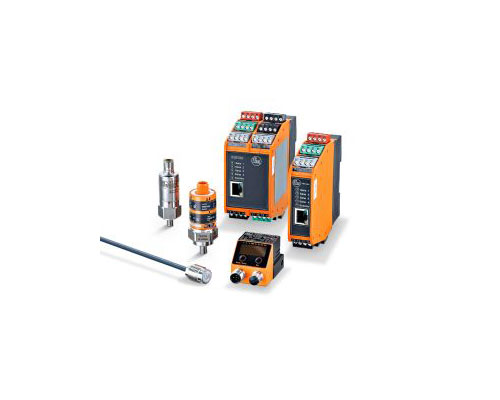
Systems for vibration monitoring and diagnostics
- Reliable permanent monitoring of the overall vibration to DIN ISO 10816
- Protection against permanent machine overload and unexpected standstill
- Decentralised monitoring of plant and equipment integrated into the machine
- Compact field units and modular control cabinet systems
- From compact, analogue vibration sensors in the field to intelligent diagnostic electronics in the control cabinet
Vibration monitoring systems are used for condition-based maintenance of machines and installations. They help to detect machine damage in good time and prevent costly consequential damage.
The ifm product range includes vibration transmitters, vibration sensors, accelerometers and evaluation electronics. Vibration transmitters and sensors detect damaged bearings and unbalance in drives and rotating machine parts. When combined with diagnostic electronics, accelerometers enable comprehensive vibration monitoring of large drives.

Flow meters for compressed air
- Measurement to ISO 2533 and DIN 1343
- For compressed air in industrial use as well as argon (Ar), carbon dioxide (CO2), nitrogen (N2)
- Large measuring range up to 700 Nm³/h
- Fast response time and high response sensitivity
- With volumetric flow quantity, total quantity and temperature indication
The compressed air meter of the SD series monitors the standard volume flow of compressed air in industrial use. It detects the four process categories flow velocity, volumetric flow quantity, consumed quantity and medium temperature. The sensor delivers reliable process values even in case of temperature or pressure fluctuations. The high accuracy of the sensor enables reliable detection of even the smallest quantities or leakages.
Peak consumption, present consumption or accumulated consumption can be accessed and adjusted via programmed switch and alarm level settings - all at the touch of a button.
The units feature two switching outputs which can be programmed as normally open or normally closed. For output of the measured value, one switching output can also be configured as a scalable analogue output. For consumed quantity monitoring, the other output transmits counting pulses to the controller.
Parameter setting is effected via the buttons on the sensor. Some sensor types can additionally be configured via IO-Link, e.g. using a USB interface. The LINERECORDER SENSOR software is used to visualise, transfer and archive parameter sets.
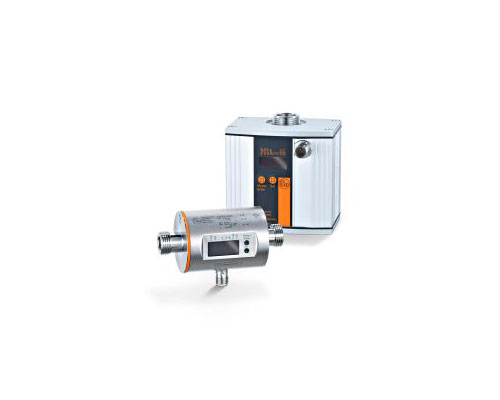
Flow meters for water
- With volumetric flow quantity, total quantity and temperature indication
- High accuracy, repeatability and measurement dynamics
- With switching output, analogue output and pulse output
- Clearly visible LED display
Efforts to reduce water consumption presuppose knowledge of the current consumption. Measuring systems such as magnetic-inductive or ultrasonic flow meters detect the three process categories volumetric flow quantity, consumed quantity and medium temperature. They are frequently used in cooling circuits, e.g. in steelworks, the automotive industry and in glassmaking. In water management and industrial installations, the sensors are used for water consumption measurement.
Peak consumption, present consumption or accumulated consumption can be accessed and adjusted via programmed switch and alarm level settings - all at the touch of a button.
The range also includes types for use in drinking water supply.

Systems for oil quality monitoring
- Reliable monitoring of oil contamination
- Reliable machine and plant protection by permanent oil moisture monitoring
Water is generally not wanted in hydraulic liquids and lubricants. Just like abrasion particles, high concentrations of water can seriously affect operation or even cause damage to hydraulic power units, pumps, valves, cylinders and machines.
The particle monitor of the LDP series monitors the degree of cleanliness - or the level of contamination - in oils, hydraulic oils and coolants. The oil moisture sensor of the LDH series measures the relative moisture in oil.
These products will greatly facilitate condition-based maintenance actions and help avoid downtime.

Pulse evaluation systems
- Intuitive, user-friendly handling Integrated wide-range power supply
- Easily programmable output functions
- Devices for monitoring standstill, speed, direction, slip, and frequency
- Switching relays and transistor outputs, scalable analogue output
Pulse evaluation systems monitor rotating and linear movements as well as all physical quantities which can be converted into pulse sequences.
Units with different functions allow tailor-made monitoring of slow and fast rotational speeds as well as complex synchronous or direction monitoring.
Relay or transistor outputs give a signal if the actual value is above or below the set limit value.
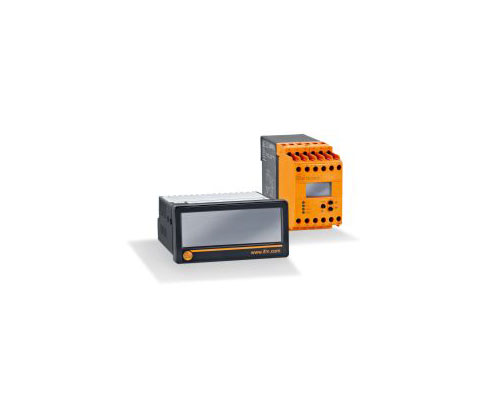
Systems for evaluation of standard signals
- Reliable evaluation of analogue signals
- Displays for visualising actual values
- Switching output to reliably monitor limit values
In many industrial processes, the indication and detection of analogue standard signals is an important requirement for the reliable operation of plants and machinery.
Threshold relays and displays with analogue input indicate actual values. Switching outputs signal if limit values are reached or exceeded.
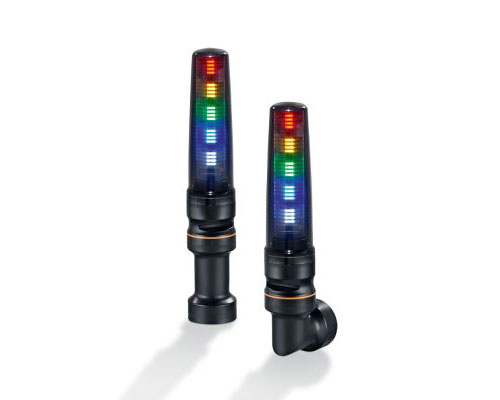
Signalling and display systems
- Display of analogue process values
- Display and monitoring of process values
- Display and monitoring of pulse-shaped signals
In industrial processes, decentralised indication and processing of current process values is essential both to keep important process data in view and to be able to quickly execute a fault analysis if disruptions occur. Displays with analogue input show the actual values according to the preset physical units. Displays with switching output signal if limit values are reached or exceeded.

Systems for signal conversion
- Reliable stretching and division of pulses
- Reliable frequency-to-current conversion
- Adjustable switch-on and switch-off delay
In machines and installations, monitoring and evaluation of pulse sequences is often necessary. For evaluation in a control system, the generated signals must be preprocessed. The ifm range includes pulse dividers, pulse stretchers, frequency-to-current converters and units for switch-on and switch-off delay of signals. All units can be mounted on a rail.
Systems for mobile machines
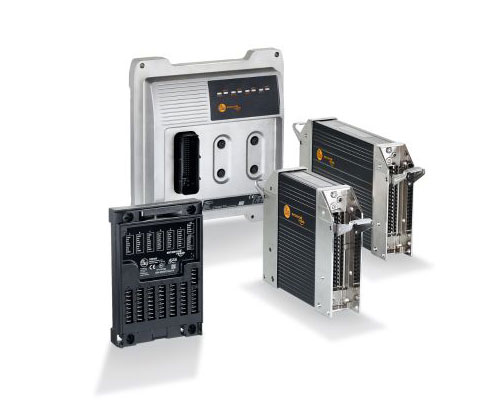
Controllers
- Inputs for analogue, digital, diagnostic and pulse signals
- Digital, PWM or current-controlled outputs
- Programmable to IEC 61131-3 with CODESYS
- High-performance CAN interface for various communication tasks
- E1 type approval by the Kraftfahrt-Bundesamt (German Federal Motor Transport Authority)
The ifm controllers of the ecomatmobile series are designed for use in harsh conditions. They are suitable for direct installation in vehicles and mobile machines.
Apart from compact, flexible and low-cost mini controllers, the range also offers powerful, freely programmable controllers with a large number of inputs and outputs. For safety-critical tasks, safety controllers are available.
The signals produced by sensors are quickly and reliably processed by the controllers and provided to the actuators. Besides multifunctional inputs and outputs for different applications, each controller has several CAN interfaces. Data from the engine controller can be processed by means of the J1939 protocol.
The IEC 61131-3 based programming software CODESYS enables easy and accurate adjustment of the controller function to the individual application.
The units offer increased EMC levels and hold an e1 type approval. Thanks to the high protection rating of the housing, the modules are suited for outside panel and surface mounting as well as for cabin installation in construction machines, agricultural machinery or municipal vehicles.
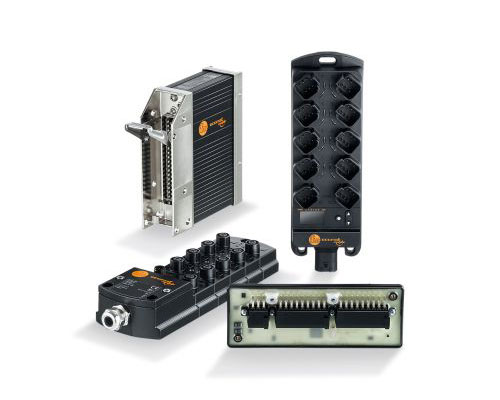
I/O modules
- Decentralised connection of sensors and actuators
- Multifunctional configurable input and output channels
- High-performance CAN interface for various communication tasks
- Modules with M12, DEUTSCH or central connectors
- E1 type approval by the Kraftfahrt-Bundesamt (German Federal Motor Transport Authority)
Decentralised I/O modules connect binary and analogue sensors and actuators to the mobile controller. They enable decentralised evaluation of sensor signals and control of actuators or proportional valves.
Data output and setting of the device functions is handled via a CAN interface.
The modules are particularly suited for mobile machinery such as construction equipment, agricultural machines or municipal vehicles.
The ifm product range includes models with digital, analogue and frequency inputs combined with digital or PWM outputs.
Modules for field use offer high protection ratings as well as shock and vibration resistance. The units offer increased EMC levels and hold an e1 type approval. Modules to be installed in driver's cabs, control panels or control boxes serve to connect operating and display elements to the CAN bus.
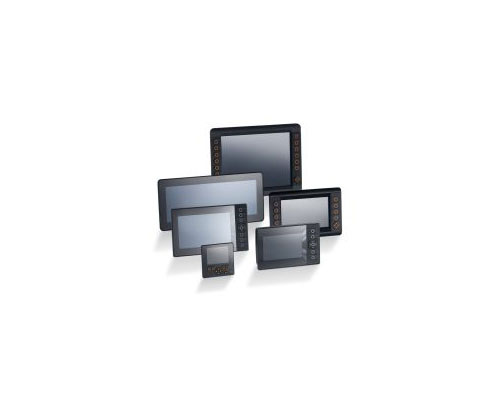
Units for operation and monitoring
- Robust and powerful HMI for operation and monitoring
- Programmable and parameterisable to IEC 61131-3 with CODESYS
- Vibration and shock resistant housings with high protection rating
- Units for surface or panel mounting
- Powerful interfaces for various communication tasks
Robust HMIs are programmable graphic displays for controlling, parameter setting and operation of mobile machines and installations. They can be used in conjunction with a mobile controller or as a stand-alone solution.
Some types have an analogue video input for connection to a mobile camera. Data and device functions are safely transferred via CAN interfaces.
The displays feature many freely programmable backlit function keys. Some types are equipped with an additional navigation key, a potentiometer with pushbutton function or a touch screen.
The units offer increased EMC levels and hold an e1 type approval. Thanks to the high protection rating of the housing, the modules are suited for outside panel and surface mounting as well as for cabin installation in construction machines, agricultural machinery or municipal vehicles.
The displays are available in different sizes.
The ecomatPanel has been designed for use in the harsh environment in driver’s cabins. The function keys and the rotary button with integrated 4-way button and push function ensure easy handling even when wearing gloves. The illuminated ring around the rotary button, consisting of four segments, as well as the illuminated keys provide a clear overview of the set functions. All LED lighting elements can be set separately and assigned individual colours.
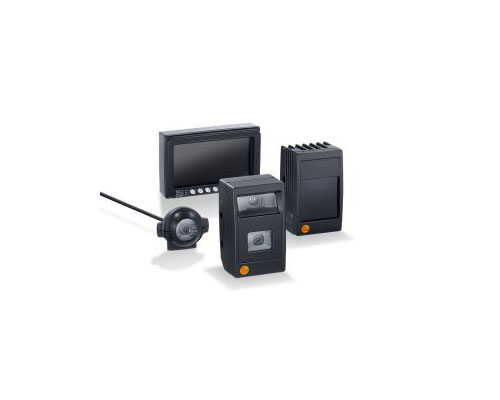
Cameras for mobile applications
- Programmable to IEC 61131-3 with CODESYS
- Robust metal housing for surface or panel mounting
- High-performance CAN interface for various communication tasks
- E1 type approval by the Kraftfahrt-Bundesamt (German Federal Motor Transport Authority)
Cameras for mobile applications and 3D sensors are used to monitor blind spots around mobile machines and commercial vehicles. They can be directly connected to graphic dialogue modules with colour display or to control systems. The cameras are enclosed in a sturdy metal housing rated IP 69K so that they can be mounted outside of the vehicle or machine. The units offer increased EMC levels and hold an e1 type approval. Applications include rear area and blind spot monitoring on construction machines, agricultural machinery and municipal vehicles.
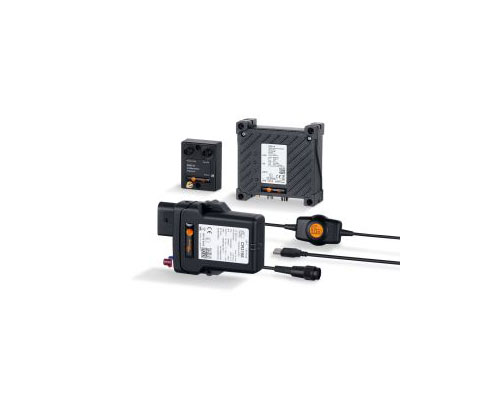
Diagnostic and service units
- Reliable wireless data exchange for mobile machines
- Real-time diagnosis via CODESYS programming system
- Data display and storage via internet portal
- Display and processing of position and route data
- Different interfaces for integration into the machine network
Diagnostic and service units are used for CAN system analysis, for remote maintenance and for position and route detection of mobile machines such as construction equipment, agricultural and forestry machinery, municipal vehicles and vehicles for transport and logistics.
Wireless systems - CANremote as a radio modem with integrated gateway, for example - help enable remote maintenance.
CAN bus diagnostic units can be used to detect the number of messages or error frames or display the current bus load.
Handheld terminals allow the user to monitor and enter data messages.
CANfox is an interface for the connection of a CAN system to a USB interface.

Sensors for mobile machines
- Inclination sensors with CAN or analogue interface
- Inductive sensors with high protection rating
- Pressure sensors with a robust measuring cell for mobile hydraulics
- High shock and vibration resistance
- Wide operating temperature range
In automation technology sensors are the "sense organs" of the control systems. They are also used in mobile machinery and installations. In contrast to devices for industrial automation, the demands on sensors for mobile applications are much higher.
The ifm units are distinguished by a robust housing and high protection rating for use in harsh environments. They are shock and vibration resistant and designed to be used in harsh, dirty environments. The sensors have an extended temperature range so that they can operate reliably in extremely cold conditions and when installed next to hot engines. Moreover, the devices are insensitive to rapid temperature changes. A wide voltage range ensures that even high fluctuations of the on-board system do not affect the function. To comply with the ever increasing EMC requirements in mobile applications the devices feature an increased EMC resistance.
Many sensors have the e1 type approval.
The ifm product range for mobile applications includes inductive sensors, pressure sensors, temperature sensors, inclination sensors and cameras, among others.
Connection technology
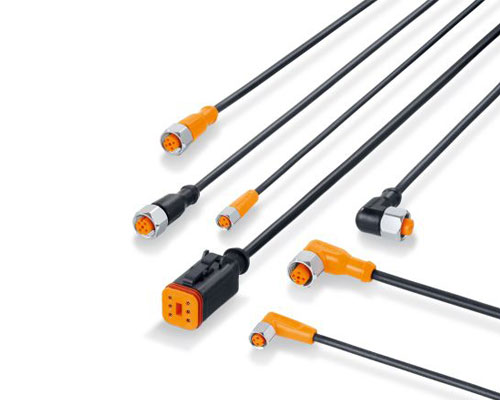
Complete product line
- Sockets
The ifm product range comprises sockets, cable plugs, jumper cables and splitter boxes in M8 and M12 design. The range is complemented by adapter sockets, adapter plugs, valve plugs and wirable sockets and plugs, as well as various special versions with parameter setting cables or for connection to mobile controllers.
Even when fastened by hand, a perfect lasting seal of sensor, actuator and splitter connections is guaranteed. The integrated end stop protects the O-ring against destruction caused by an over-tightened coupling nut. Even in harsh industrial environments, the connectors are protected against unintended loosening by a special vibration protection. Some types are fitted with highly visible LEDs for operation and switching status indication.
Industrial applications / factory automation
- Connection technology meets the M12 and M8 standard (EN 61076)
- Reliable sealing even when mounted without tools
- Mechanical end stop to protect the O-ring from destruction
- Nut secured against shock and vibration due to saw tooth contoured vibration protection
ifm's ecolink series comprises sockets, cable plugs, jumper cables and splitter boxes in M8 and M12 design. The range is complemented by adapter sockets, adapter plugs, valve plugs and wirable sockets and plugs.
Even when fastened by hand, a perfect lasting seal of sensor, actuator and splitter connections is guaranteed. The integrated end stop protects the O-ring against destruction caused by over-tightening the nut. Even in harsh industrial environments, the connectors are protected against unintended loosening by a special vibration protection. Some types are fitted with highly visible LEDs for operation and switching status indication.
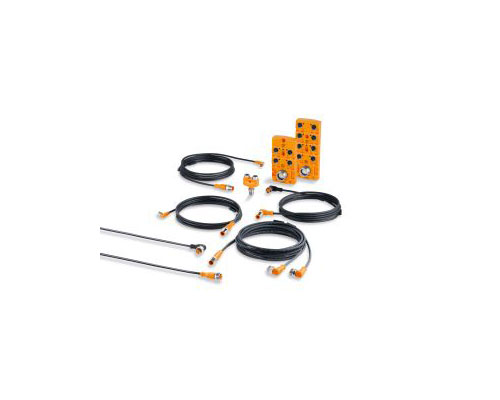
Use in machine tools, coolants and lubricants
- Reliable sealing even when mounted without tools
- Mechanical end stop to protect the O-ring from destruction
- Nut secured against shock and vibration due to saw tooth contoured vibration protection
- LEDs clearly visible even under bright lighting
- High material resistance to oils and lubricants
ifm's ecolink series comprises sockets, cable plugs, jumper cables and splitter boxes in M8 and M12 design.
Even when fastened by hand, a perfect lasting seal of sensor, actuator and splitter connections is guaranteed. The integrated end stop protects the O-ring against destruction caused by over-tightening the nut. Even in harsh industrial environments, the connectors are protected against unintended loosening by a special vibration protection. Some types are fitted with highly visible LEDs for operation and switching status indication.
The products of the ecolink EVC series are resistant to oils and lubricants, making them ideal for use in machine tools and the metalworking industry.
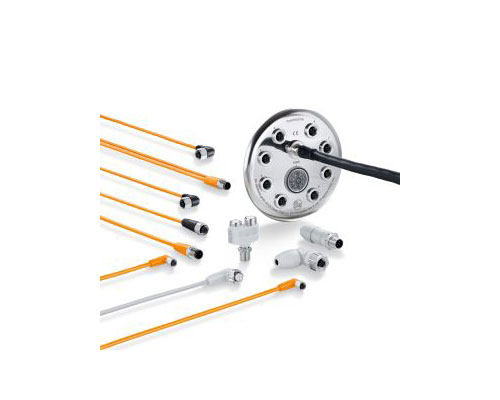
Use in wet areas and in the food and beverage industry
- High protection rating for the requirements of harsh industrial environments
- Reliable sealing even when mounted without tools
- High shock and vibration resistance LEDs clearly visible even under bright lighting
- Wide operating temperature range
ifm's ecolink series comprises sockets, cable plugs, jumper cables and splitter boxes in M8 and M12 design. The range is complemented by wirable sockets and plugs.
Even when fastened by hand, a perfect lasting seal of sensor, actuator and splitter connections is guaranteed. The integrated end stop protects the O-ring against destruction caused by over-tightening the nut. Even in harsh industrial environments, the connectors are protected against unintended loosening by a special vibration protection. Some types are fitted with highly visible LEDs for operation and switching status indication.
Their high-grade stainless steel nut and food-grade sealing materials qualify the ecolink EVT series for use in hygienic and wet areas. The products are resistant to frequent high-pressure cleaning with aggressive cleaning agents. Thanks to their wide temperature range and their insensitivity to fast temperature changes they are particularly suited for use in the food and beverage industry.

Use in welding applications
- Weld-slag resistant PUR cable with drag chain suitability
- Nut with special weld-slag resistant coating
- Mechanical end stop to protect the O-ring from destruction
- Nut secured against shock and vibration due to saw tooth contoured vibration protection
- LEDs clearly visible even under bright lighting
ifm's ecolink series comprises sockets, cable plugs and jumper cables as M8 and M12 versions.
Even when fastened by hand, a perfect lasting seal of sensor, actuator and splitter connections is guaranteed. The integrated end stop protects the O-ring against destruction caused by over-tightening the nut. Even in harsh industrial environments, the connectors are protected against unintended loosening by a special vibration protection. Some types are fitted with highly visible LEDs for operation and switching status indication.
The products of the ecolink EVW series for use in welding applications have a special PUR-jacketed cable.
The non-stick coating of the coupling nut allows weld spatter to roll off the sensor and enables easy and quick cleaning.
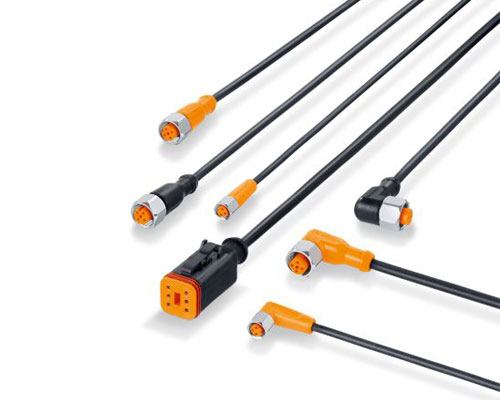
Use in mobile and robust applications
- Connection technology meets the M12 standard (EN 61076)
- Reliable sealing even when mounted without tools
- Mechanical end stop to protect the O-ring from destruction
- Nut secured against shock and vibration due to saw tooth contoured vibration protection
- LEDs clearly visible even under bright lighting
Connection technology for mobile machines ensures reliable signal transmission of controllers, dialogue units, modules and sensors. The ifm product range comprises sockets, cable plugs, programming, communication and jumper cables.
ifm's ecolink EVM series connectors guarantee a perfect lasting seal even when fastened by hand. The integrated end stop protects the O-ring against destruction caused by over-tightening the nut. Even in harsh industrial environments, the connectors are protected against unintended loosening by a special vibration protection. Some types are fitted with highly visible LEDs for operation and switching status indication.
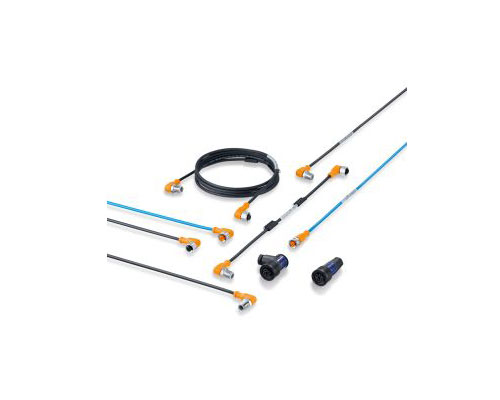
Use in hazardous areas
- For applications in hazardous areas
- Connection technology meets the M12 standard (EN 61076)
- With EC type examination certificate for components
- Mechanical end stop to protect the O-ring from destruction
- Nut secured against shock and vibration due to saw tooth contoured vibration protection
To avoid the risk of explosion products used in hazardous areas are subject to strict requirements.
ifm connection technology developed specifically for these applications complies with the international standard requirements and may be used in hazardous areas. The connectors of the EVC series have been tested with an impact energy of 4 joules. To comply with the requirements the nut of the connector has to be firmly attached to the sensor so that it is no longer possible to open it manually.
The ifm product range for potentially explosive atmospheres comprises sockets, cable plugs and jumper cables in M12 design. Even in harsh industrial environments, the connectors are protected against unintended loosening by a special vibration protection.
IIot software
Parameter setting software
- Quick set-up of sensors
- User-friendly setting of parameters
- Intuitive, user-friendly handling
The portfolio of ifm's parameter setting software covers a wide range of applications. This includes solutions for the configuration and set-up of IO-Link devices, 1D/2D code readers, 3D cameras and RFID read/write heads
as well as easy online and offline parameter setting of all IO-Link devices with just one software tool - LR DEVICE or its successor product moneo configure.
Both products simplify consistent parameter setting of all sensors and actuators with IO-Link interface and the parameter setting of ifm IO-Link masters.
Process data visualisation helps with set-up and diagnosis. Intelligent functions such as direct access to the IODD finder database increase process stability during set-up and replacement of IO-Link devices in production.
Connectivity
- Data interface software for controllers, sensors, machines, data bases and IT systems
The systems available in the field and on the market today support a large variety of interfaces which can provide relevant data and information from production.
To digitise the many different systems and processes efficiently on the basis of the sensors already in use, an intelligent, flexible and easy-to-use software is an indispensable prerequisite. This is the only way to achieve comprehensive sensor communication and a disruption-free data transfer for information acquisition.
With its LR AGENT, ifm offers a universal interface software for the configuration of data flows across a variety of common communication protocols. This opens up access to different devices and systems such as sensors, fieldbuses, controllers and gateways in a simple and safe way.
Software products
- Condition monitoring of machines and plants
- Analysis of the measured values
- Organisation of maintenance
- Quality assurance of the produced products
Moving from time-based to condition-based maintenance offers you enormous potential for improvement of your production processes.
The result is a significant reduction of costs, process stabilisation, increased product quality and machine uptime, and thus an efficient production process.
Our product LR SMARTOBSERVER allows you to easily identify and safely implement optimisation potentials in connection with condition monitoring and real time maintenance.
Industrial communication software
- IO-Link data from the sensor into the cloud Safe data transfer
- Web-based dashboard for visualisation and analysis of cloud data
Communication is the backbone of any connection. ifm offers industry standard languages to suit your specific needs and applications.
(OPC server software - "Codesys" products - apps)
IIot gateways and appliances
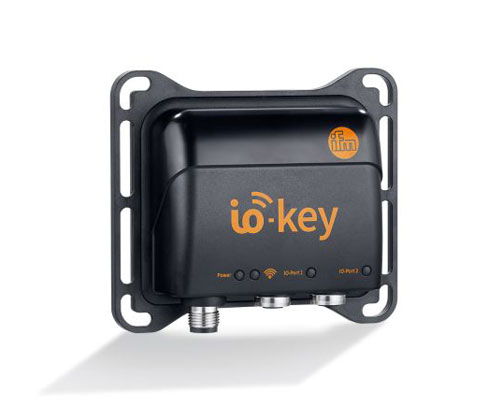
Gateways
- Pre-configured, no SIM card required
- Web-based dashboard for visualisation and analysis of cloud data
- Email or text message when limit values are exceeded
- IO-Link sensor data is sent directly via mobile network to the cloud
- Two IO-Link sensors can be connected
ifm offers different types of gateways to easily and securely transfer data from sensors and a growing number of data sources with different industry standards and communication interfaces to information systems in a bundled way.
The edgeGateways from ifm based on moneo edgeConnect are the ideal link between operational technology (OT) and information technology (IT), recording, processing and securely transferring field data to target systems and platforms in the Industrial Internet of Things (IIoT).
io-Key provides a quick, easy and wireless way to transfer sensor data into the cloud, especially for simple applications with limited connectivity.
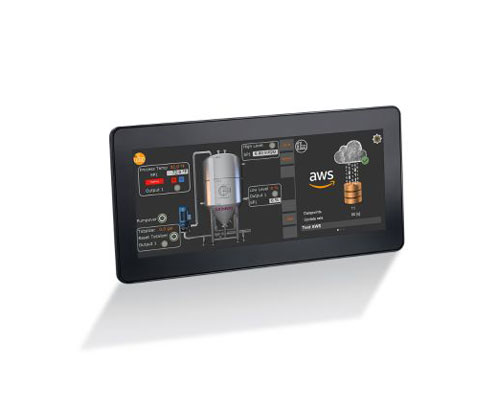
EdgeController
- Cloud connector, visualisation and powerful controller in one unit
- Programmable via CODESYS V3.5
- Plug & play access to the I/O level via Ethernet
- High protection rating IP 65 eliminates switching cabinets
- Housing and technology designed for use in demanding environments
The edgeController combines convenient connection of the system infrastructure to the IT level with the universal quality of a freely programmable system. This means: This device also provides your IT infrastructure with IO-Link data as readable value and unit information. Moreover, it offers all the freedom you need to integrate the edgeController with precision into your system. You alone decide whether the device in your application will act as a cloud connector, a visualisation system or even a control system.

Appliances
- Optimum hardware for operating the moneo software
- Laid out for the simultaneous processing of up to 250 moneo info points
- Integrated functions for IT maintenance (update, back-up, support)
moneo appliances is the optimal hardware platform for operating moneo software. In addition to providing the applications and data management, it offers functions for data backups, updates and system maintenance. The preconfigured solution allows you to get started with digitisation without any special IT skills. It can be integrated in the manufacturing environment, the production network and the data centre.
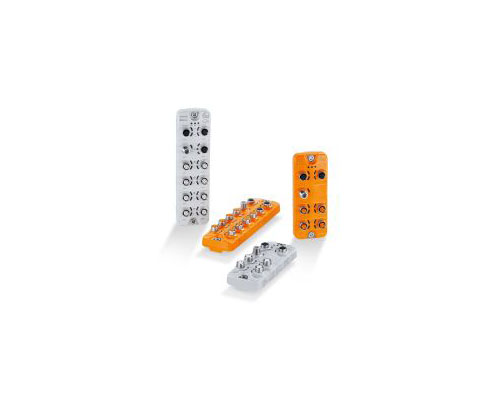
Ethernet field modules
- Reliable transmission of machine data, process parameters and diagnostic data to the controller
- Simultaneous data exchange with the controller and the IT world
- Large operating temperature range and high protection rating
- Robust housing with high protection rating
IIot solutions
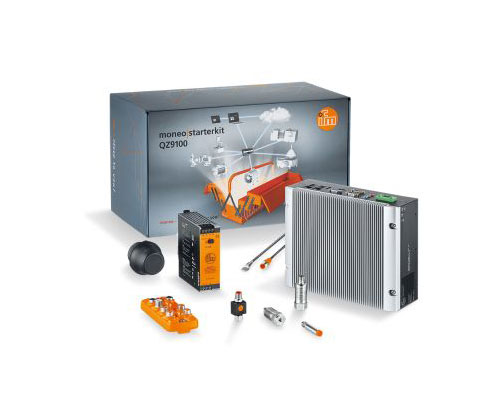
Condition Monitoring / RTM
- Condition monitoring on motors of fans, pumps and other simple machines
- Hardware package containing all components required for a condition monitoring application
- Stand-alone solution for condition monitoring
- Can be extended and integrated into the company IT infrastructure at any time
Application-specific system solutions for condition monitoring of machinery and plants.
Using the right sensors in the right locations, you can monitor individual applications in a targeted manner, thus optimising your processes. Expensive production downtime due to wear can be detected at an early stage using the analysis software LR SMARTOBSERVER. Maintenance and repair can be planned - downtime is reduced and expensive consequential damage is avoided.
In order to increase the availability of your systems and ensure consistent and comprehensive quality assurance in production, ifm offers solutions ranging from the monitoring of individual components to cross-site installations.
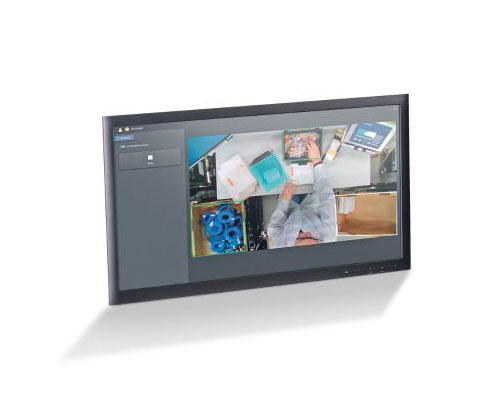
Worker assistance systems
- Simple and intuitive set-up of the complete software and hardware package (ifm mate)
- Simple fitting and retrofitting of manual workstations
- Special accessories such as tracking bracelets or VR glasses not required
- Individual real-time support during packaging and assembly and for training workers
- Visualisation of manual gripping processes and work steps
mate stands for Manual Assembly Training Engineer and a helping hand.
ifm mate is your reliable companion and guide for all manual assembly tasks - from simple to complicated - and ensures a consistently high level of accuracy when executing repetitive packaging tasks.
ifm mate helps the worker achieve the required level of occupational safety at every step. Time-consuming and costly on-the-job training by co-workers can be reduced, and rework to achieve the required quality can be avoided from the outset.
Power Supplies
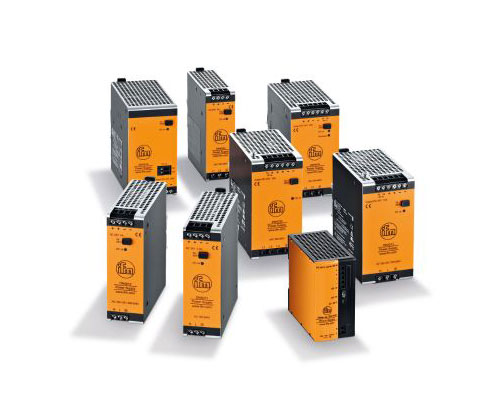
24 V DC power supplies
- Particularly space-saving design
- Low heating of the control cabinet
- High power reserves
- Safe switch-off by circuit breakers in case of short circuit
- Low inrush current

AS-Interface power supplies
- Low heating of the control cabinet
- High power reserves
- Particularly space-saving design
- Low inrush current
- Safe switch-off by circuit breakers in case of short circuit
AS-i power supplies provide power to the connected modules, sensors and actuators. They provide high noise immunity and sufficient power reserves to reliably handle short current spikes. In addition, they ensure reliable decoupling from interference in the primary supply.
The compact housing takes up very little space in the control cabinet. Thanks to their high degree of efficiency, the units save energy costs and reduce waste heat in the control cabinet.
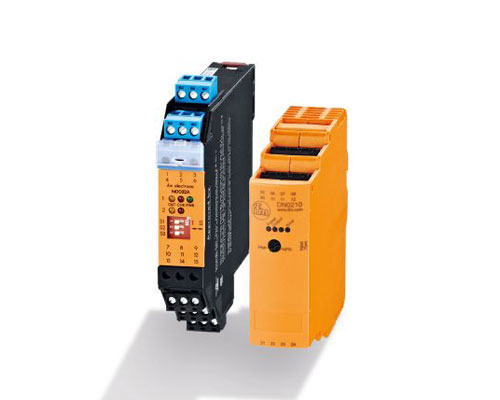
Switching amplifiers
- Integrated wide-range power supply for the sensor supply
- Particularly space-saving design
- Plug-in screw terminals simplify installation
- With PNP or NPN control
- One- or two-channel design
The transistor outputs of conventional sensors are designed for small load currents. If the user wants to switch higher currents or even alternating currents, he must use a switching amplifier. It uses the sensor signal to control an output relay.
ifm offers switching amplifiers in one and two-channel design. They have an integrated wide-range power supply (110...240 V AC) to supply the connected sensors with voltage (24 V DC). Thanks to their slim design, the switching amplifiers take up very little space in the control cabinet.
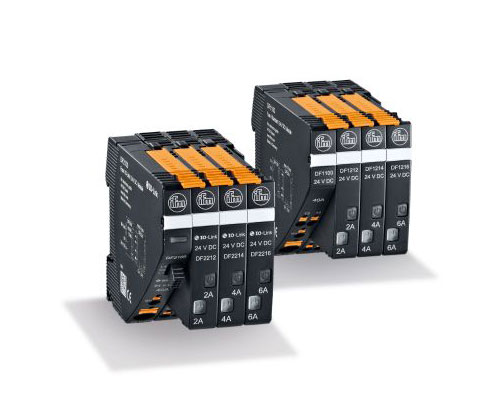
Electronic 24 V DC circuit breakers
- Electronic fuses permanently monitor the 24 V secondary circuit and reliably switch it off in the event of a failure. These electronic circuit breakers will also switch off circuits in cases where mechanical circuit breakers often do not trigger, e.g. in case of overload of a circuit with long cables. The system has a modular structure and consists of a feed module and side-by-side mountable fuse modules. These modules can be mounted next to the head module via a simple clip mechanism, completely without any bridges or jumpers. Easy mounting and minimised wiring complexity save cost and time. With the standard version the user can connect up to 10 and with the IO-Link version up to 8 safety modules to the feed module. The fuse modules feature an LED for signalling if the module has triggered, if it is active and in how far it is utilised. Each module is equipped with two channels. By means of a pushbutton, each channel of a fuse module can be activated, deactivated or reset individually. The IO-Link version allows remote configuration and operation of the modules.
Accessories
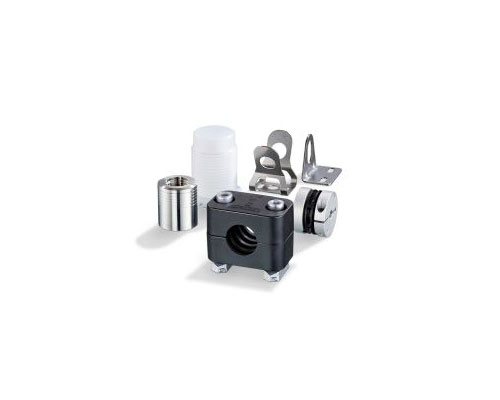
Accessories for position sensors
- Easy, quick and inexpensive fixing
- Wide range of angles, brackets, clamps and fixing elements
- Complete mounting sets for clamp mounting
- Robust design for use in harsh industrial environments
- For free-standing mounting, mounting to a rod or an aluminium profile
Correct mounting and a secure fit of the sensor are essential for reliable functioning. The wide range of accessories includes angle brackets, clamps, mounting plates, a variety of adapters and complete mounting sets.
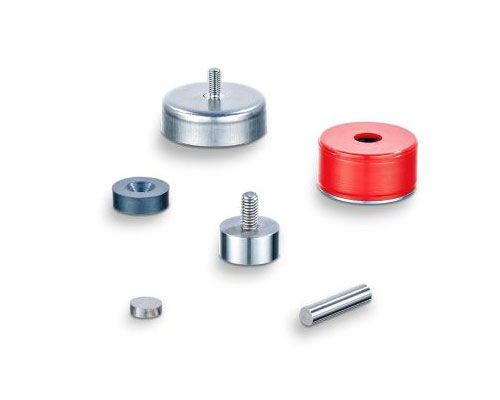
Accessories for magnetic sensors
- Extensive range of fixing components
- Damping magnets in different designs
In addition to the customised installation and fastening options ifm also offers various target magnets.
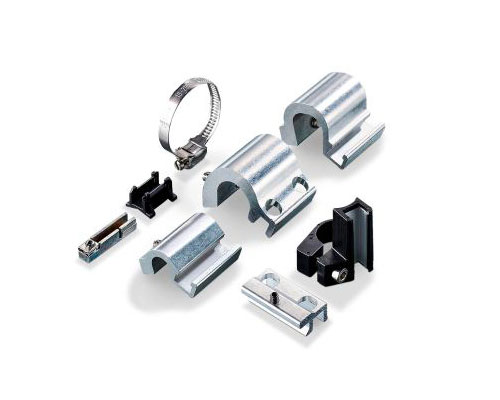
Accessories for cylinder sensors
- A sensor for all common cylinder types
- Accessories for clean line, tie rod, T-slot, integrated profile and trapezoidal slot cylinders
- Low height due to a perfectly adapted mechanical solution
- Protected position of the sensor in the adapter
- Easy, quick and secure mounting
Special adapters are offered in order to make the advantages of the T-slot cylinder sensor also available for all other common cylinder types. Thanks to the adapter range, the sensor can be easily fixed to different cylinder profiles such as clean line, tie rod, integrated profile or trapezoidal slot cylinders.
The special adapter design facilitates set-up and protects the sensor against mechanical damage.
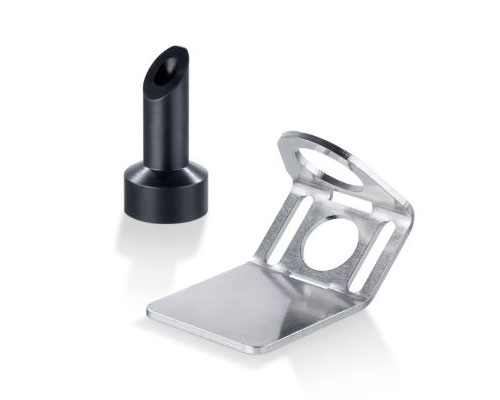
Accessories for ultrasonic sensors
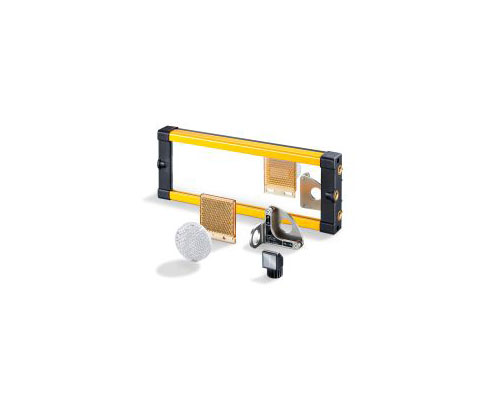
Accessories for photoelectric sensors
- Low-cost systems for standard mounting
- Just clamp - systems for rod mounting
- Rotatable in all directions for free-standing mounting
- Ingeniously simple, the ifm CUBE for aluminium profile mounting
- Wide range of reflectors for retro-reflective sensors
ifm offers a complete component system of easy-to-use mounting sets that make the installation of sensors and reflectors easier for you. The solutions consist of a clamp fastened by only one screw that keeps the sensors safely in position and guarantees free movement in all axes.
Whereas the sensor mounting elements used depend on the sensor type, the clamps can be mounted in three different ways: rod mounting, free-standing mounting and fitting onto aluminium profiles which are common in industry.
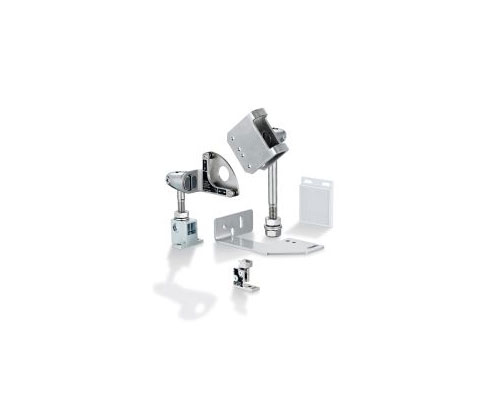
Accessories for laser sensors
- Low-cost systems for standard mounting Just clamp - systems for rod mounting
- Rotatable in all directions for free-standing mounting
- Ingeniously simple, the ifm CUBE for aluminium profile mounting
- Wide range of reflectors for retro-reflective sensors
ifm offers a complete component system of easy-to-use mounting sets that make the installation of sensors and reflectors easier for you. The solutions consist of a clamp fastened by only one screw that keeps the sensors safely in position and guarantees free movement in all axes. Whereas the sensor mounting elements used depend on the sensor type, the clamps can be mounted in three different ways: rod mounting, free-standing mounting and fitting onto aluminium extrusions which are common in industry.
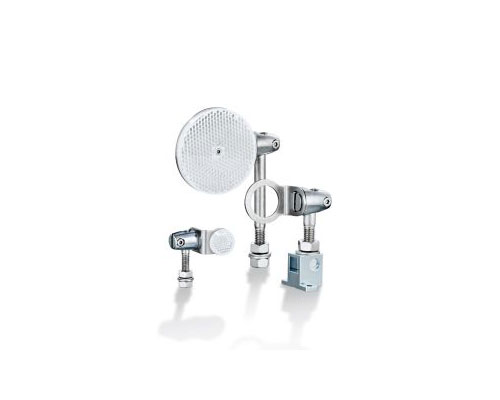
Accessories for distance sensors
- Low-cost systems for standard mounting
- Just clamp - systems for rod mounting
- Rotatable in all directions for free-standing mounting
- Ingeniously simple, the ifm CUBE for aluminium profile mounting
- Wide range of reflectors for retro-reflective sensors
ifm offers a complete component system of easy-to-use mounting sets that make the installation of sensors and reflectors easier for you.
The solutions consist of a clamp fastened by only one screw that keeps the sensors safely in position and guarantees free movement in all axes.
Whereas the sensor mounting elements used depend on the sensor type, the clamps can be mounted in three different ways: rod mounting, free-standing mounting and fitting onto aluminium extrusions which are common in industry.
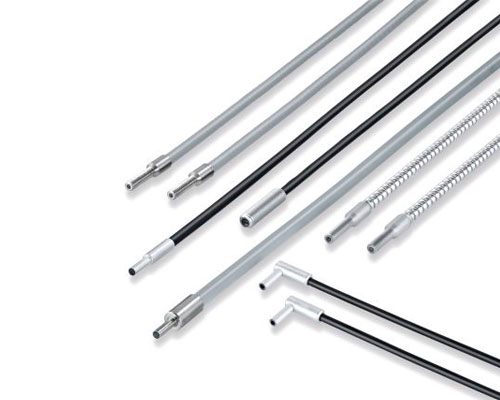
Accessories for fibre optic sensors
- Different designs and sensing heads for a large variety of applications
- For installation in places where access is difficult
- For installation in places where access is difficult
- For the reliable detection of tiny objects
- Resistant to various aggressive chemicals
Fibre optic systems are used where mounting space for photoelectric standard sensors is restricted. The evaluation unit and the fibre optics are mounted separately.
These systems can therefore be installed in places where access is difficult.
In addition to more than 100 types of acrylic and glass fibre optics with different sensing heads, ifm offers a large variety of components for the installation and operation of fibre optic systems. The range covers mounting clamps, special fixtures, coupling systems, cutters, diaphragms and lens attachments.
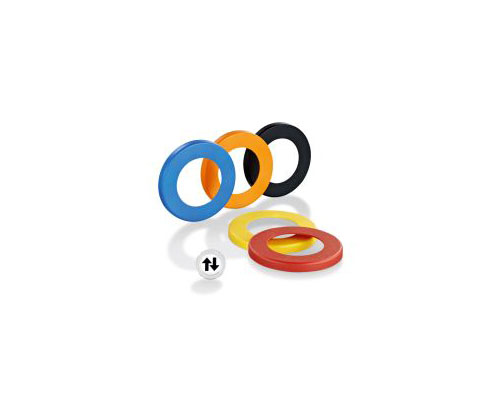
Accessories for touch sensors
- Simple clipping of the symbol disc in the touch sensor
- Robust design for use in harsh industrial environments
- Reliable identification of different functions
Capacitive touch sensors can be used, for example, as a start and stop button on machines, as enable switches and for opening and closing gates. Compared to mechanical switches the sensors operate without wear.
The symbol disc for the sensing face is snapped on after installation of the sensor. No sensor alignment is required during installation.
For 100 mm diameter touch sensors, coloured cover rings can be used to mark different functions.

Accessories for valve feedback systems
- Easy mounting of the puck directly on the shaft of the valve actuator
- Various diameters and heights for adaptation to the different drives
- Complete mounting sets for drives from different manufacturers
- High shock and vibration resistance
- Simple installation of the rising stem valve sensor on common valve types
A round target (also known as a 'puck') is used for reliable position feedback of pneumatic quarter-turn actuators or valve plates.
The puck is mounted directly on the actuator shaft. It is equipped with two metal screws that are mounted at different heights and offset by 90°. A dual inductive sensor with two integral sensors detects the upper or the lower metal screw and, thus, the "open" or "closed" position of the valve. The system operates without contact or wear and is self-cleaning. It is virtually resistant to external influence and insensitive to mechanical stress such as vibration and shock.
Mounting adapters allow for installation of the rising stem valve position sensor on valves of various manufacturers.
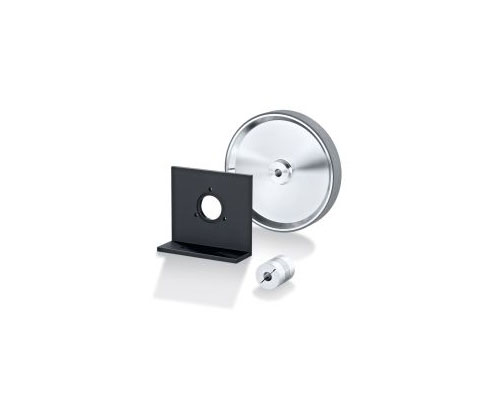
Accessories for encoders
- Angle bracket for easy, fast, and inexpensive installation
- Accessories for precise belt speed and linear measurement
- Couplings for clearance-free transmission of rotary movements
Angle brackets ensure simple, rapid and inexpensive mounting of encoders. Couplings and bearings for encoders ensure backlash-free rotation transmission, are vibration-isolating and compensate alignment errors.
If it is not possible to install the encoder at the drive train to detect the speed of a conveyor belt because the slip occurring at the belt causes measuring errors, a measuring wheel can be installed to provide speed feedback directly at the conveyor.

Accessories for vision sensors
- Illumination units for contour and position verification
- External LED illumination for object recognition
- Operating software and OPC server software
- Protective panes for vision sensors
- Mounting sets for quick and easy mounting
With the wide selection of accessories the vision sensors can be integrated simply, quickly and reliably into different applications.
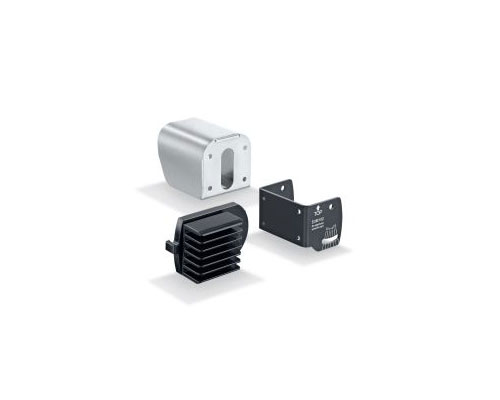
Accessories for 3D sensors and cameras
- Quick set-up of the sensor
- Quick and easy mounting
- For safe installation to a mounting rod
- User-friendly setting of parameters
- Intuitive, user-friendly handling
The 3D sensor is adjusted and put into operation with the highly intuitive software 'ifm Vision Assistant'. A mounting set allows easy, fast and cost-efficient installation of the camera on an existing rod on the machine.
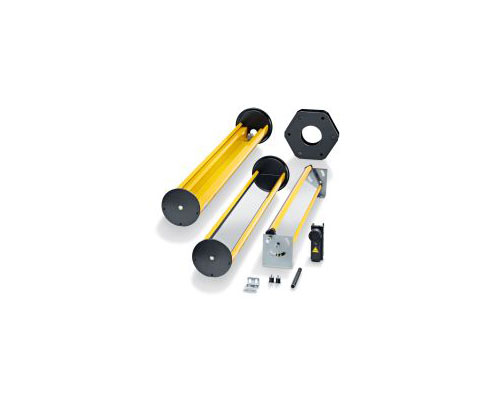
Accessories for safety light grids and curtains
- Fast and easy adjustment of safety light curtains and grids
- Reliable verification of the resolution of the safety light curtains
- Efficient vibration damping
- Reliable deflection of the light beam
- Protection of hazardous areas from several sides
Adjustable angle brackets and mounting bases ensure quick, easy and low-cost mounting and fixing of safety light grids and curtains. Corner mirrors for safety light grids and curtains are used to protect hazardous areas with access from several sides. The laser adjustment aid for safety light curtains works with visible laser light. This ensures fast and easy alignment of the transmitter and the receiver. The proper function of the safety light curtains must be checked by means of an appropriate test rod before work starts.
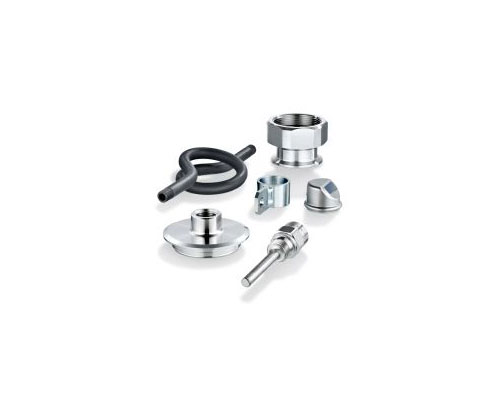
Accessories for process sensors
- For the installation of sensors in tanks or pipes
- Easy, quick and secure mounting For use in industrial and hygienic applications
- Large variety of process connections
- Efficient protection against soiling, impact and shock
Adapters and T-pieces provide easy, fast and reliable installation of process sensors in tanks or piping systems. ifm offers a wide range of process connections for use in industrial or hygienic applications. Protective devices shield the electronics, housings and displays of pressure, flow, level and temperature sensors from dirt, overheating, shocks and impacts. Device-specific accessories enable quick set-up and safe operation of the sensors.
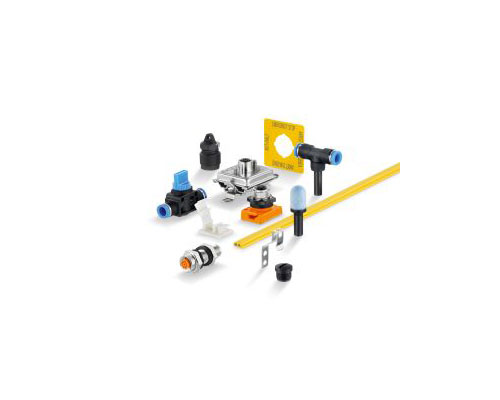
Accessories for AS-Interface
- Accessories for set-up, diagnosis and electrical installation
- Flat cable insulation displacement connectors as low-cost connection
The extensive range of accessories for set-up, diagnosis and electrical installation ensures reliable operation of AS-Interface networks.
A great variety of module sub-parts makes it possible to connect AS-i flat cables, screened or unscreened round cables and field modules. Flat cable insulation displacement connectors are available for cost-saving network extension as well as fast connection of units with round cable or M12 connector. Software, literature and the AS-i tester for detection and documentation of corrupted data messages complete the range.
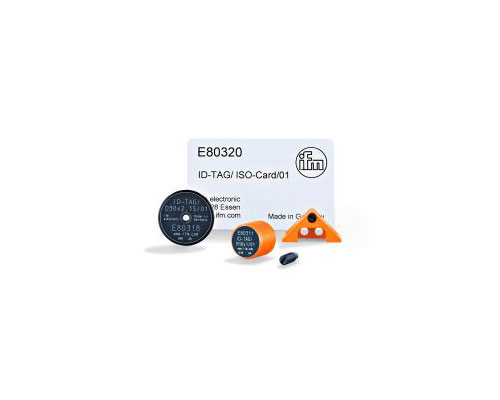
Accessories for identification systems
- ID tags for use in high temperatures up to 200 °C
- Large write/read distances up to 80 mm
- Flush installation of the ID tags in metal
- Easy, universal fixing
- For mounting on pallets and workpiece carriers
ID tags are the information carriers of the RF identification system. They consist of a robust, easy-to-mount housing with integrated transponder.
The tags are used for coding of workpiece carriers in guided material handling systems. ifm offers different types of ID tags for various applications. The range includes cylindrical, metric and special designs.
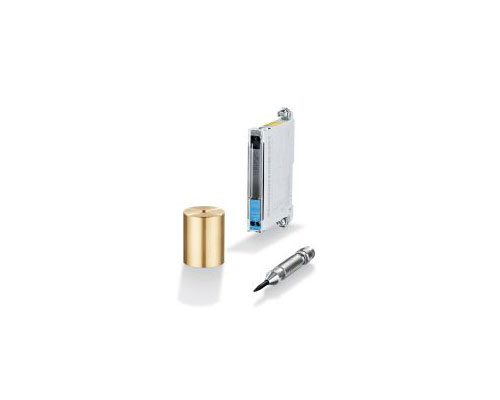
Accessories for vibration monitoring systems
- High-performance OPC server software for vibration diagnosis
- User-friendly parameter setting software with data visualisation
- Safety barrier for the intrinsically safe operation of vibration sensors
- Pulse generator for the generation of defined mechanical pulses
- Efficient protection against defeating and soiling
The ifm range of accessories for vibration monitoring systems comprises mounting adapters, pulse generators, protective covers and safety barriers. Mounting adapters are used for screwing vibration sensors into the machine surface. Pulse generators serve to determine the optimal installation position for a vibration sensor. The protective cover prevents unintentional setting or manipulation of sensors. Combined with safety barriers, vibration sensors can be used in hazardous areas.

Accessories for signalling and display systems
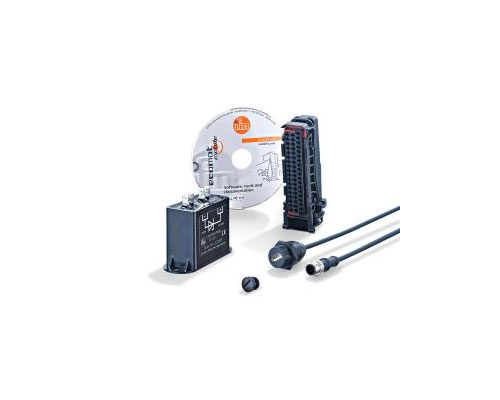
Accessories for control systems
- Reliable connection of controllers and dialogue units
- Connection technology with high protection rating
- For mobile vehicles
- Wide operating temperature range
Device connection, programming and communication cables allow for the reliable connection of controllers, cameras, displays and dialogue modules with CAN interface and facilitate parameter setting, testing and set-up. The cables designed for use in mobile machines are characterised by a wide operating temperature range and a high protection rating.
Device protection
- Efficient protection against soiling, impact and shock
- Robust stainless steel mounting brackets and angles
- Quick and easy mounting
ifm offers a wide range of accessories to protect the sensors against environmental influences, dirt, deposits, mechanical destruction or inadvertent manipulation. The range includes protective covers for position and process sensors, siphon tubes, cooling and protection boxes for distance sensors or thermowells and temperature sensors.
Spare parts
- Protective caps ensuring the protection rating even if sockets are not used
- Nuts for the reliable fixing of sensors with threaded sleeve
- Mounting bases for a fast exchange of sensors
- Label tags for the reliable marking of connections and sub-assemblies
Protective caps are used to cover unused sockets of splitter boxes or modules to guarantee the requested protection rating. Label tags are used to mark components. Sealing rings are used for reliable sealing of process sensors installed in pipes or vessels.