- Offer Profile
-
From the German “Ore Mountains” region into the world
Zehnder Pumpen GmbH is a renowned manufacturer of various pumps and systems for water supply and disposal, based in Germany. Our products are used throughout Europe and beyond, underlaying the trust our customers and partners have in our flexibility and quality.
Our team consists of experienced employees who are active in all fields and who set high standards for the quality of our products. We believe in "Made in Germany" and pride ourselves on producing branded products that have a high level of customer satisfaction. By constantly refining our products, we secure our position in the market and guarantee reliable products with a long service life and the highest quality.
In addition to the technical features of our products, we also attach great importance to our service. We ensure that our partners in the after-sales area meet a high standard by training them specifically. Our priority is to provide our customers with the best possible support.
Visit us on:


Pump technology for industry home and garden

-
Quality from Germany
Zehnder pumps move a lot of water and they do so for many decades. For this reason, only the best materials such as stainless steel or high-quality plastic are processed in our factory at the company headquarters in Grünhain, Saxony. Therefore, we like to keep an eye on the complete value chain. At Zehnder Pumpen, development, production, sales, service and logistics are all under one roof.
Water disposal
-
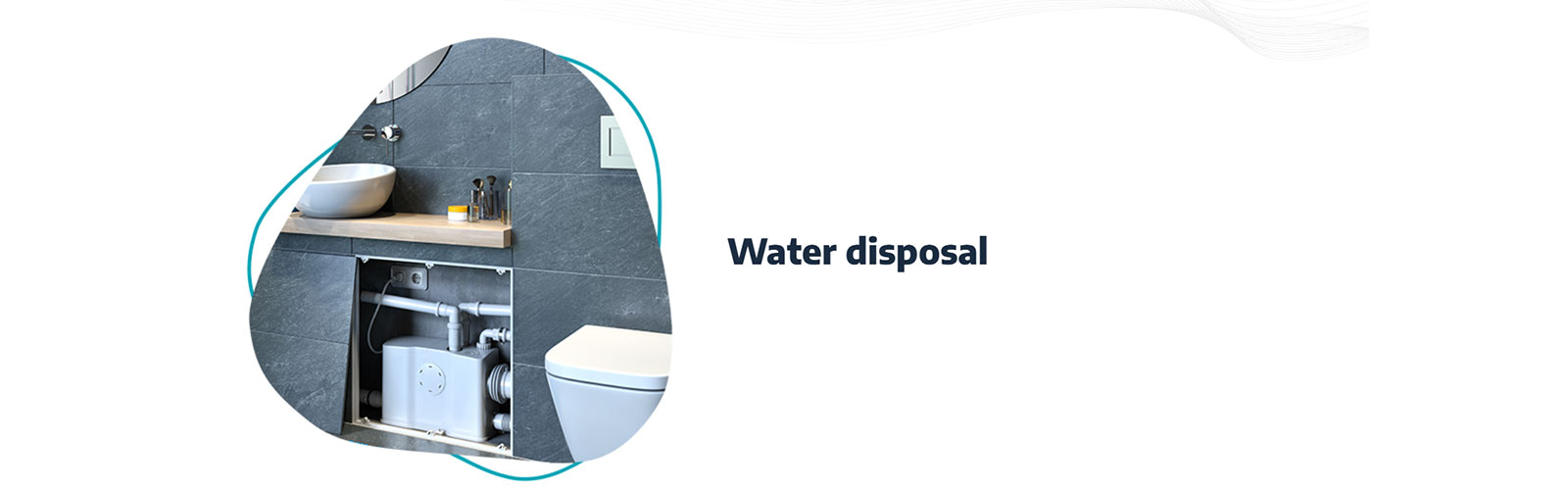
Wastewater disposal with modern pumping systems Made in Germany
Zehnder Pumpen is an expert in the development, manufacture, sales, and installation of state-of-the-art pumps for water disposal. We offer you models Made in Germany – crafted from durable materials such as stainless steel or high-quality plastic. Our lifting stations are available in various designs, ranging from small lifting units for basements and bathrooms to large-scale equipment for building drainage. Our submersible pumps, on the other hand, can be used in different fluids such as clear water, greywater, and sewage. We also provide specialized types including puddle sucker pumps, pressure pumps, deep well pumps, and construction pumps. This allows you to choose the ideal submersible pump for disposing of wastewater depending on your specific application. With the help of Zehnder Pumpen pumping stations, you can transport greywater and sewage containing fecal matter into the sewer system above the backwater level. They are suitable for use in industry, municipalities, as well as single- and multi-family homes. Especially when water disposal cannot be handled via natural gravity into the sewage system, our pumping stations are the perfect choice.
Lifting units
Sewage lifting units
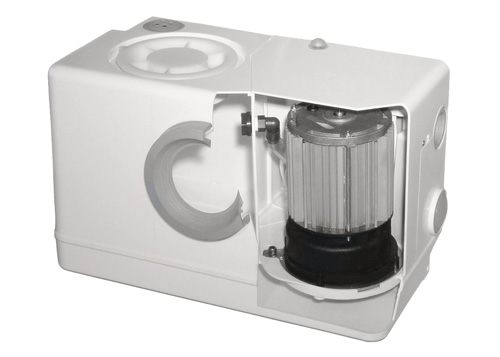
- Sewage lifting units are suitable for pumping sewage containing faecal matter (black water) and also pump waste water (grey water) without faecal matter below the backflow level. They are installed at the lowest point, whereupon a pump conveys the black or grey water into the sewer system. Sewage lifting units can be used in the private, commercial and industrial sectors.
Grey water lifting units
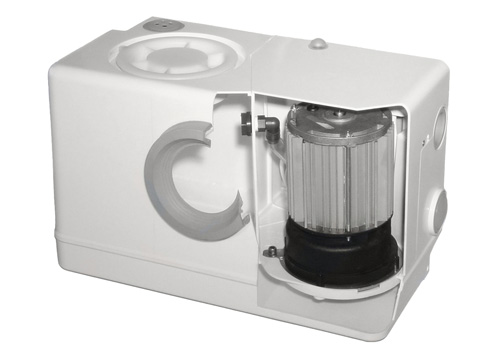
- Grey water lifting units are used to drain grey water from showers, washbasins, washing machines or dishwashers. They are used in basement bathrooms, for example, if these are below the level of the sewerage system. Grey water lifting units must not be used to pump waste water containing faeces (black water) from toilets. Special sewage lifting units are used for this case.
Macerators
- Macerators are individual WC lifting units for limited use in accordance with DIN EN 12050-3. They are used to dispose of waste water (grey water) and sewage (black water) from toilets, showers, washbasins and bidets. Macerators are often used for bathrooms in basements below the backflow level or the level of the sewer. They may only be operated by a small group of users and are therefore not suitable for apartment blocks or public buildings.
Condensate lifting units
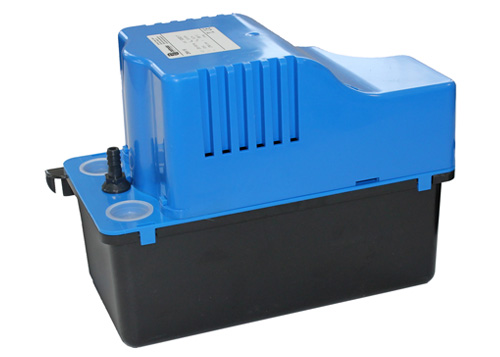
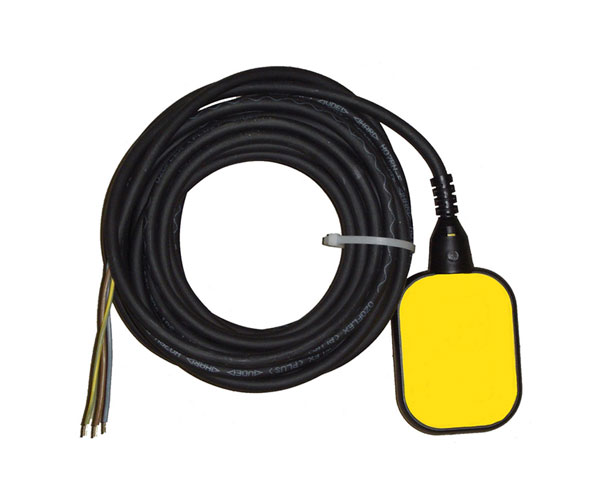
- A condensate removal pump (or condensate lift station) is used to reliably dispose of condensate generated by heating systems, air conditioning units, or other technical systems when natural gravity drainage is not possible due to structural conditions. The condensate initially collects in a collection tank. A sensor, typically a float switch, continuously monitors the water level. As soon as a certain level is reached, the pump activates automatically and pumps the condensate through a line to the nearest wastewater drain. An integrated check valve ensures that the pumped-back water does not flow back into the tank.
Submersible pumps
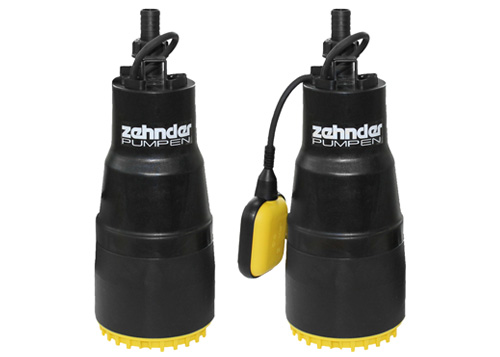
- Compared to normal or self-priming pumps, a submersible pump works completely immersed in the pumping liquid. It has a special intake grille on the lower side, which draws in the respective liquid directly. A discharge hose or pipe is fitted to the discharge connection, i.e. the outlet of the pump, in order to pump out the pumping liquid.
Submersible sewage pumps
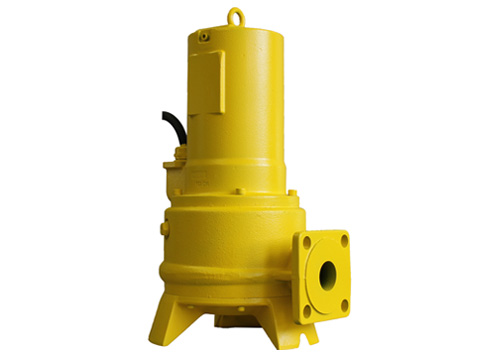
- Submersible sewage pumps are also known as waste water pumps and can pump waste water and water containing faeces. Due to the possible build-up of sewer gases in waste water treatment plants, submersible waste water pumps have special motors and cables that are explosion-proof (explosion protection in accordance with the Atex directive).
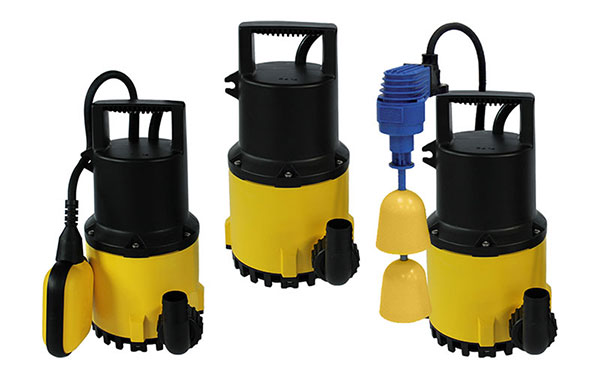
Submersible grey water pumps
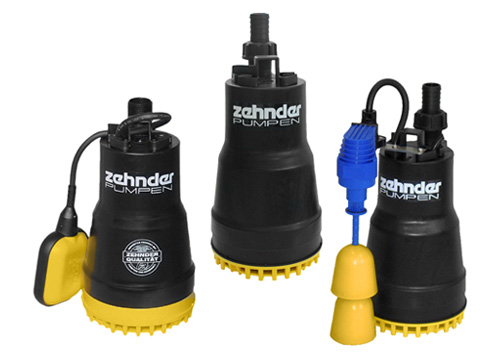
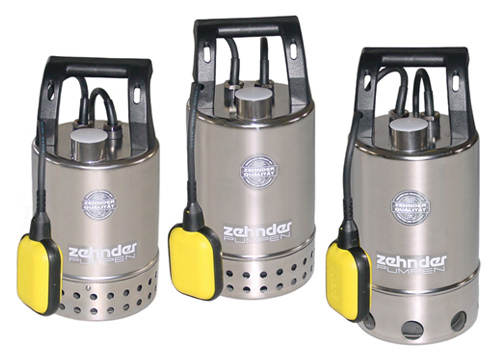
- Waste water pumps are used to pump clear and contaminated water. They pump water from pits and drainage shafts. They also drain domestic waste water from a sump pit. They are also used to pump water out of flooded cellars after a burst water pipe or flooding. Alternatively, special versions of the pumps can be used to pump out construction pits. Submersible pumps for waste water from Zehnder Pumpen are available in various designs such as stainless steel, plastic or grey cast iron.
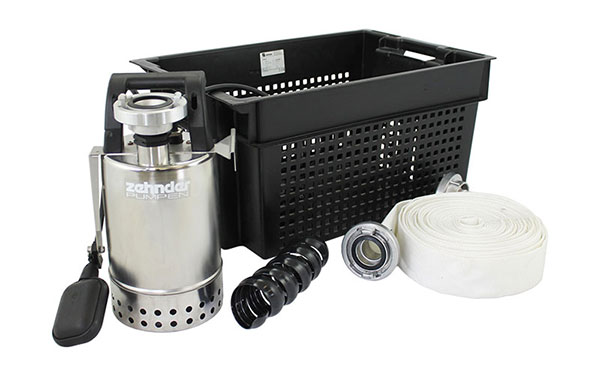
Flood sets – complete emergency pumps for fast flood response
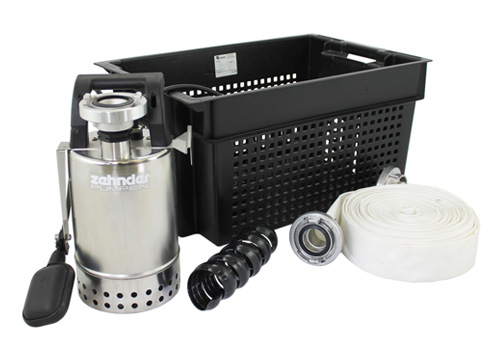
- Flood sets provide a fast, reliable solution for emergency dewatering during floods and severe water ingress. The compact kits combine high-performance submersible drainage pumps with pre-assembled hoses and a practical transport box so they are ready for immediate use in an emergency. Thanks to the smart design, the pumps can be operated either inside the box or flexibly outside of it. Durable materials, fully submersible designs (IP68) and automatic controls ensure safe operation even in demanding conditions. Whether caused by rising groundwater, heavy rainfall or flooding, flood sets enable a rapid response and help to effectively limit damage.
Pumping stations
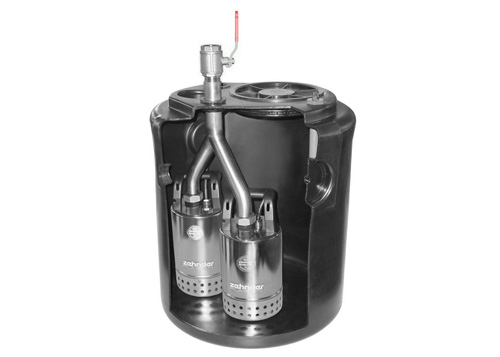
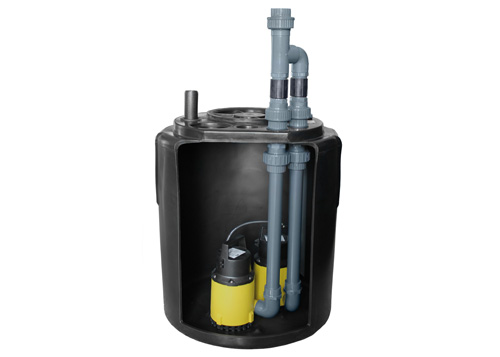
- Pumping stations, also known as pump shafts, are used to dispose of waste water (grey water) or sewage containing faeces (black water) into the sewer system using the backwater level. This prevents backwater even when the sewer is overfilled. Pumping stations are used when drainage cannot be carried out directly into the sewer system using gravity pipes. This type of sewage disposal is also known as pressurised drainage. Pumping stations are used for domestic sewage from detached houses and apartment blocks, in industry and in the municipal sector.
FPS Basic 1200
- Model
- packaged pumping station made of corrosion-resistant PE-LLD
- buoyancy-proof up to ground water level of max. 0,5 m from manhole's lower edge
- installation of one pump of the series ZFS 71, ZPG 50, ZPG 71
- stainless steel piping DN 32, pre-assembled with coupling system
- non-return valve, gate valve and flushing connection 1" pressure outlet PE-HD 63 x 5.8 – outside the manhole
- 1 x inlet DN 150, further inlets optional
- 2x connection DN 100 for cable gland and air vent
FPS-K 1600 simplex and duplex
- Model
- packaged pumping station made of corrosion-resistant PE-LLD
- buoyancy-proof up to ground water level of max. 0,5 m from manhole's lower edge
- installation of one pump of the series ZFS 71, ZPG 50, ZPG 71
- stainless steel piping DN 32, pre-assembled with coupling system
- non-return valve, gate valve and flushing connection 1"
- pressure outlet PE-HD 63 x 5.8 – outside the manhole
- 1 x inlet DN 150, further inlets optional
- 2x connection DN 100 for cable gland and air vent
FPS-K 2100 simplex and duplex
- Model
- packaged pumping station made of corrosion-resistant PE-LLD
- buoyancy-proof up to ground water level of max. 1,2 m from manhole's lower edge
- installation of one pump of the series ZFS 71, ZPG 50, ZPG 71
- stainless steel piping DN 50, pre-assembled with coupling system
- non-return valve, gate valve and flushing connection 1"
- pressure outlet PE-HD 63 x 5.8 – outside the manhole
- 1 x inlet DN 150, further inlets optional
- 2x connection DN 100 for cable gland and air vent
FPS-K 3100 simplex and duplex
- Model
- packaged pumping station made of corrosion-resistant PE-LLD
- buoyancy-proof up to ground water level of max. 1,2 m from manhole's lower edge
- installation of one pump of the series ZFS 71, ZPG 50, ZPG 71
- stainless steel piping DN 50, pre-assembled with coupling system
- non-return valve, gate valve and flushing connection 1"
- pressure outlet PE-HD 63 x 5.8 – outside the manhole
- 1 x inlet DN 150, further inlets optional
- 2x connection DN 100 for cable gland and air vent
Grease separators
- As soon as sewage containing grease is produced and discharged in the catering or meat-processing industries, sewer systems need to be protected from deposits that are difficult to remove and sewage treatment plants need to be relieved as best as possible. Suitable grease separators must therefore be installed wherever such sewage is produced. Zehnder Pumpen offers high-quality grease separators for your kitchen in a hotel, restaurant, canteen or butcher's shop. Please convince yourself of the high quality!
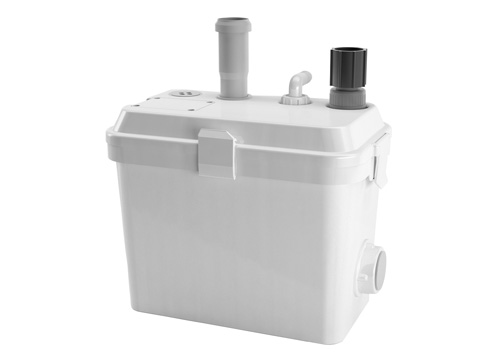
Grease separators for underground installation
-
Model
- seamless plastic container made from one piece
- all installation parts made of plastic
- low maintenance costs due to easy to clean inner surface
- car- and/or truck-accessible
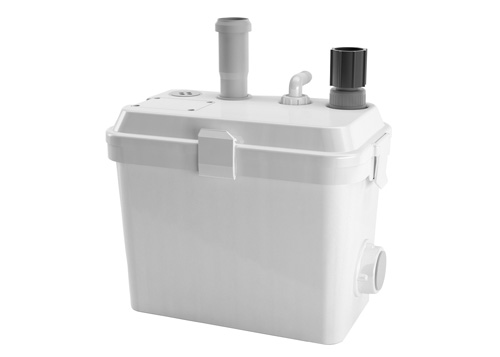
Grease separators free-standing
- Model
- free standing, polyethylene grease separator in frost-free rooms
- compact oval design
- acc. to DIN EN 1825 without partition between silt trap and separating chamber
- connections for inlet and outlet suitable for PEHD-pipe
- odour-proof inspection cover 1 x up to NS 2, 2 x for NS 4-10
- circular sight glass, sampling device, filling devices and discharge device optionally available
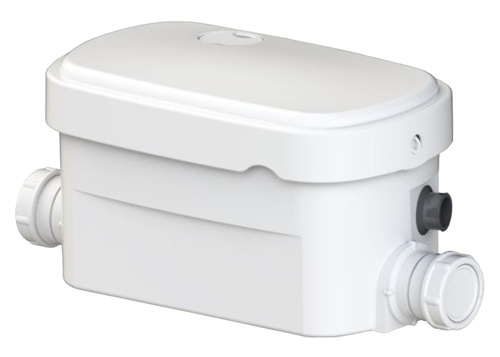
Mobile grease separators
- Model
- polyethylene grease separator for installation in frost-free rooms for mobile flushing systems
Water supply
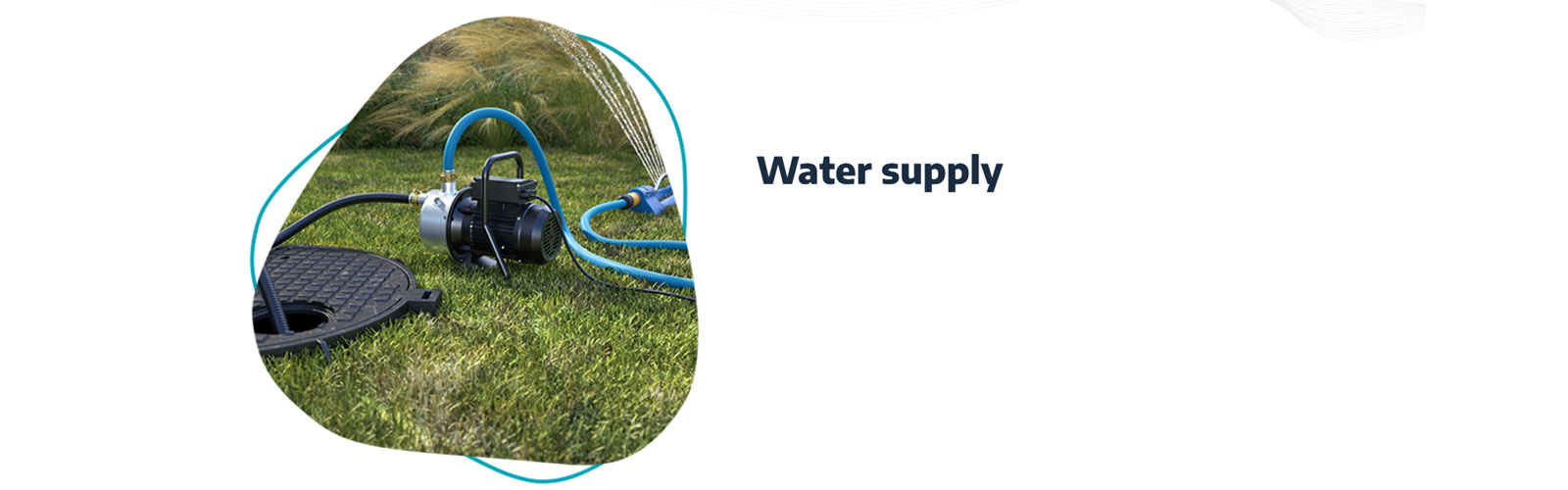
- Zehnder Pumpen offers a wide range of pumps for home and garden use, including domestic water systems with pressure switches as well as complete domestic waterworks for household water supply. We place great emphasis on the resource-efficient use of water and therefore also manufacture various automatic rainwater harvesting systems. Our deep well pumps are ideal for extracting water from wells and cisterns. A broad portfolio provides solutions for different well diameters and flow rates. Additionally, we have vertical and horizontal pressure boosting systems in our range to ensure a constant water pressure.
Pumps for home and garden
Domestic water works
- How a Domestic Waterworks System Works
Domestic waterworks systems typically consist of a pump, a pressure tank, a pressure switch, and various valves and piping. The pump draws water from an external source and pumps it into the pressure tank, where it is stored. The pressure switch monitors the pressure within the system and activates the pump when the pressure drops below a certain threshold to supply the system with water. Once the pressure reaches a predefined maximum value, the pressure switch turns the pump off to prevent system overload. Put simply, a booster pump maintains a constant pressure in pipes or hoses so that water is always automatically available to the end user. It can also compensate for water pressure that is too low.
Domestic water systems
-
Automatic domestic waterworks are self-priming pumps with an electronic pressure switch. These are used to pump water from cisterns or wells, whereby they can be permanently installed or alternatively mobile and flexibly used in the garden. Automatic domestic water systems are used for garden irrigation and sprinkling.

Garden pumps
- Model
- self-priming electric centrifugal pump with built-in injector, capable of pumping gases dissolved in water during suction
- with carrying handle
- self-priming up to 8 meters
- smooth-running suction and pressure ports, internal thread (1")
- diffuser and injector made of thermoplastic material, suitable for drinking water
- filling/drain screw made of stainless steel

Rainwater harvesting systems
- Structure and Operation of Rainwater Harvesting Systems
Fundamentally, a rainwater harvesting system consists of a pump with an automatic switch and an electronic control unit. The system pumps the collected rainwater to the desired extraction point. If the rainwater supply is depleted, the control unit automatically switches to the mains water supply, allowing you to use regular tap water. This ensures that you use your collected rainwater first and only revert to mains drinking water afterward.
In principle, there are different types of rainwater harvesting systems—one for garden irrigation and one for both garden and domestic use. The former features a standard pump as well as a filter and suitable connections for a lawn sprinkler or garden hose. If the rainwater is also to be used for the household, it is first necessary to clean the collected water in multiple stages. Afterward, the treated rainwater is pumped to extraction points such as the washing machine or toilet flush via a separate pipe network. In this setup, the rainwater harvesting system is often combined with a domestic waterworks system including a top-up unit, which activates the mains water supply if the rainwater is completely used up.
Borehole pumps
-
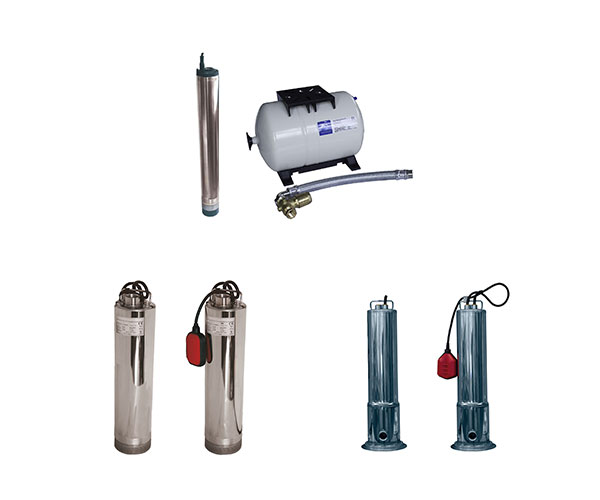
Borehole pumps are used for water supply and irrigation. They are used for domestic gardens, agriculture or the irrigation of sports fields. This type of pump also pumps water from drilled wells.
Borehole pumps consist of several stages. In contrast to centrifugal pumps, they are installed directly in the well. Borehole pumps are used for pumping water from a depth of eight metres. Self-priming pumps can no longer be used beyond this depth as they reach a physical limit. Borehole pumps pump significantly more water than normal submersible pumps or self-priming pumps. This also applies to great depths. They pump clear water with few abrasive and aggressive particles. This is where sand in particular can cause problems. That is why we offer pumps that can take up to 150 sand per g/cum. Borehole pumps are cooled by circulating water. This is usually done by so-called jacket flow cooling. When installed in a cistern, a cooling jacket may also be required depending on the construction of the borehole pump. The devices can either be controlled using an integrated pressure switch or alternatively with an external electronic pressure switch. Both types are equipped with a dry-running protection system.
Pressure booster systems
-
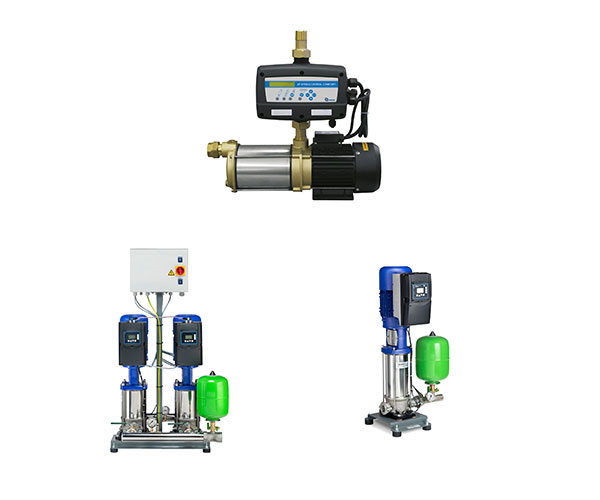
Components and Operation of Water Pressure Booster Systems
Pressure booster systems generally consist of various components that work together to increase and maintain water pressure. The main components of a booster system are the pumps, which serve to move water through the system and increase the pressure. Depending on the requirements and demand, different types of pumps can be used. A control unit monitors the water pressure within the system and controls the pumps accordingly. It can automatically turn the pumps on and off to maintain the desired pressure. Depending on the model, a pressure accumulator (expansion tank) is also integrated into the system to compensate for short-term pressure fluctuations and improve system stability. The pressure accumulator acts as a buffer to keep the pressure constant and balance peak loads. Piping then transports the water between the various components of the system, while valves are used to regulate water flow and control pressure. Booster systems also feature sensors to monitor water pressure, flow rate, and other relevant parameters in the system. This information is used by the control unit to adjust the performance of the pumps accordingly.