UNISIGN Expands Portfolio of High-Performance Machining Heads
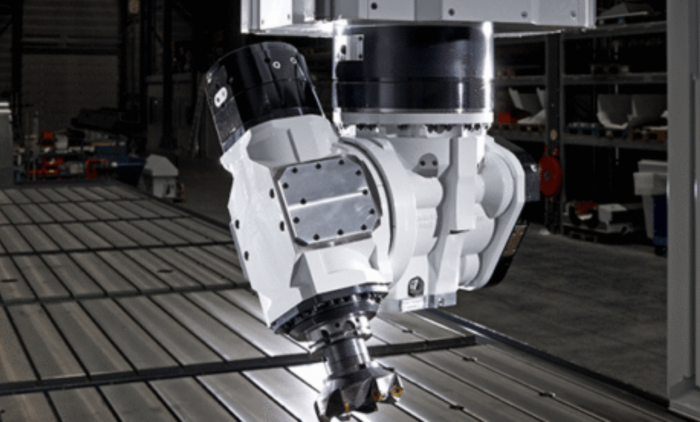
Manufacturers in demanding industries increasingly require machining systems that combine flexibility, precision, and high productivity. To address these growing requirements, UNISIGN has expanded its range of high-performance machining heads, offering manufacturers greater versatility for complex machining applications.
The extended portfolio enables companies to optimize machining processes for a broader range of materials, geometries, and production requirements while maintaining high precision and operational efficiency.
Greater Flexibility for Modern Manufacturing
Machining operations today must adapt to increasingly complex production environments. Different workpiece materials, component sizes, and machining strategies require flexible solutions that can maintain consistent performance across multiple applications.
With its expanded range of machining heads, UNISIGN provides manufacturers with additional options to tailor machining systems to their specific production needs. This flexibility supports more efficient processing of demanding components while improving overall machine utilization.
By offering a broader selection of machining heads, manufacturers can better optimize cutting performance, surface quality, and process reliability.
Designed for High-Performance Machining Applications
The new machining heads are engineered for high-performance applications where precision and productivity are critical. Industries such as aerospace, energy, heavy equipment, and general precision manufacturing increasingly depend on machining systems capable of handling complex geometries and challenging materials.
UNISIGN’s machining heads are designed to support these demanding requirements through robust construction, high rigidity, and stable machining performance.
The technology enables efficient material removal rates while maintaining tight tolerances and consistent machining quality throughout production.
Improved Precision and Surface Quality
Precision remains one of the most important factors in advanced manufacturing. The expanded machining head portfolio helps improve machining accuracy and surface finish quality, even during complex multi-axis operations.
Optimized spindle performance and stable cutting conditions contribute to reduced vibration and improved process consistency. These factors are particularly important when machining high-value components where dimensional accuracy and surface integrity are essential.
The ability to maintain stable machining conditions also helps reduce tool wear and improve overall production efficiency.
Supporting Multi-Axis Machining Processes
Modern industrial components often require sophisticated multi-axis machining strategies to achieve complex geometries efficiently. UNISIGN’s machining heads are designed to support these advanced manufacturing requirements.
By enabling flexible machining angles and optimized tool positioning, the systems allow manufacturers to process complex workpieces with fewer setups and shorter production times.
This capability improves workflow efficiency and supports higher productivity in industries that require advanced machining precision.
Optimizing Productivity and Machine Utilization
The expanded range of machining heads allows manufacturers to adapt machining systems more effectively to specific production tasks. This contributes to higher machine utilization and more efficient production planning.
Selecting the appropriate machining head for a given application helps optimize cutting parameters, improve throughput, and reduce cycle times. These benefits are increasingly important as manufacturers seek to maximize productivity while controlling operational costs.
Advanced machining solutions also support greater flexibility when responding to changing customer demands and evolving production requirements.
Strengthening Future Manufacturing Capabilities
The expansion of UNISIGN’s machining head portfolio reflects the ongoing evolution of manufacturing technology. As industrial production becomes more specialized and technologically advanced, manufacturers require highly adaptable machining systems capable of meeting diverse operational challenges.
By extending its range of high-performance machining heads, UNISIGN strengthens its ability to support customers with flexible and future-oriented manufacturing solutions.
These technologies help manufacturers improve precision, efficiency, and competitiveness in increasingly demanding industrial markets.
For more information, please visit: https://www.unisign.com/news/
News Categories
- » NEWS HOME
- » Automation & Robotics
- » Industry 4.0
- » Material Handling
- » Sensors
- » Quality & Testing
- » Machine Vision
- » Laser & Optics
- » Metalworking
- » Motion Control & Drives
- » Hydraulics & Pneumatics
- » Process Industry
- » Renewable Energy
- » Agriculture
- » Home & Office Furniture
- » Additive Manufacturing
- » Environmental Tech
Related Expos





Tags
 |
 |
 |
 |
 |
 |
||
 |
 |
 |
 |
 |
 |
 |
 |