Fully automated handling and testing cell for surgical components by Pinger Robotic
Just 30 years ago, laser eye surgery was new medical territory. Today, estimates put the number at around 100,000 such procedures per year. WaveLight GmbH, headquartered in Erlangen (Germany), is benefitting from this rapid increase. As a global leader in this field, Alcon’s subsidiary develops and produces diagnostic and surgical technologies for refractive surgery. With success: Most recently, a new production hall was built and occupied at the Pressath (Germany) location, further increasing the medical technology specialist’s capacity.
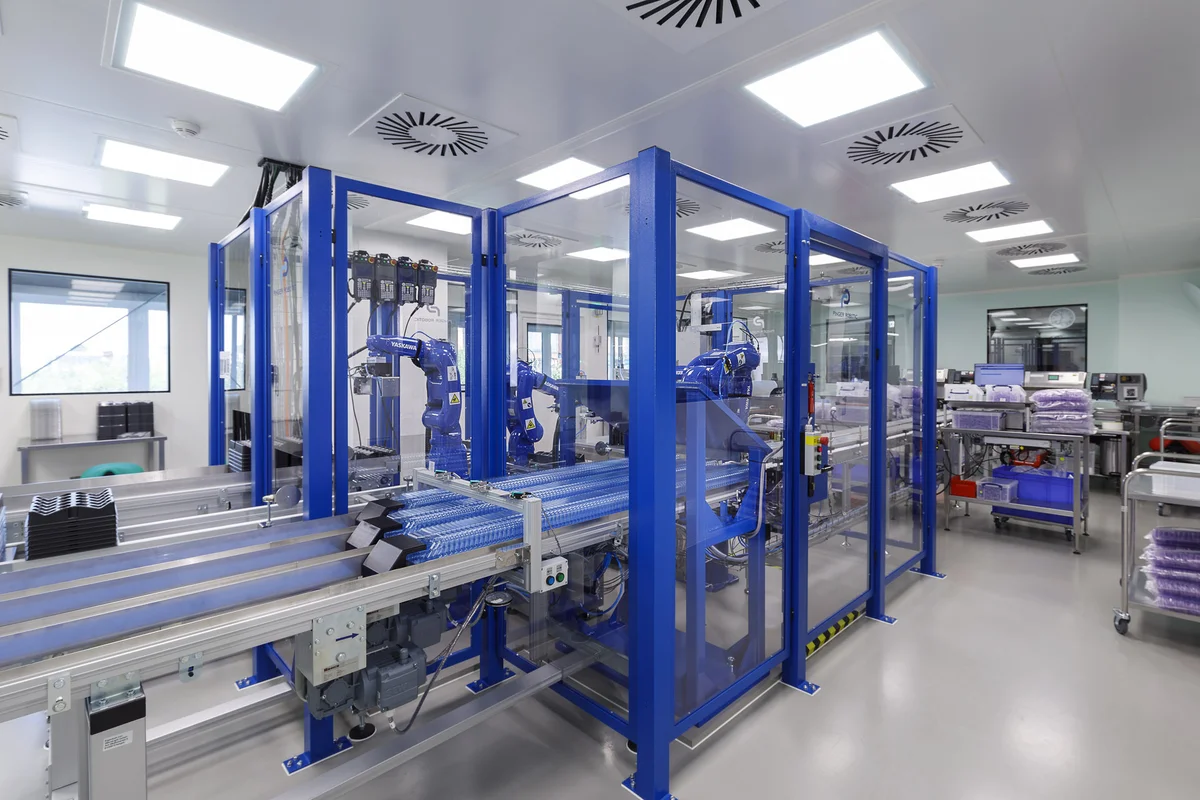
Photo by YASKAWA
The company also sees additional growth potential in the automation of further production steps. The focus is particularly on handling tasks which, due to their complexity, previously had to be carried out manually. Against this background, the experts at WaveLight also contacted robot manufacturer Yaskawa and its system partner Pinger Robotic GmbH, based in Polch in Rhineland-Palatinate.
Task: Automated quality testing
Specifically, this request was about automating the quality testing of a component – more precisely: inserting it into the camera-based testing system and then removing a so-called applanation cone. The applanation cone is part of the WaveLight FS200 patient interface. This is a disposable medical product that connects the eye to the laser system during surgery. It consists of several components – an applanation cone, suction ring and hose system.
The task at Pinger Robotic initially consisted of only the automation of core processes, i.e. accurate removal of the applanation cones from the trays, insertion into the camera-based testing centre, removal after the inspection has been passed and precise pressing into the blister packaging – all of this within a specified cycle time.
“It has once again paid off that we as automation partners were involved at a very early stage,” says Jochem Pinger, Managing Director of Pinger Robotic, looking back on the last few months. This is because as the project progressed it became apparent that the upstream and downstream steps could also be usefully integrated into the solution – on the one hand feeding the trays and on the other hand separating the blisters, including the assembly of the conveyor technology for the onward transport of the tested and repackaged applanation cones within the factory.
The automation of these diverse handling processes made several aspects more difficult. Because they come from different sources, the plastic cones to be tested are present in different geometries. The delivery trays also vary in shape and layout, requiring flexible handling. Additionally, the entire process takes place in an environmentally controlled room. Compliance with strict hygiene standards prevents contamination of the products, and the components are then sterilized along with the blister packaging.
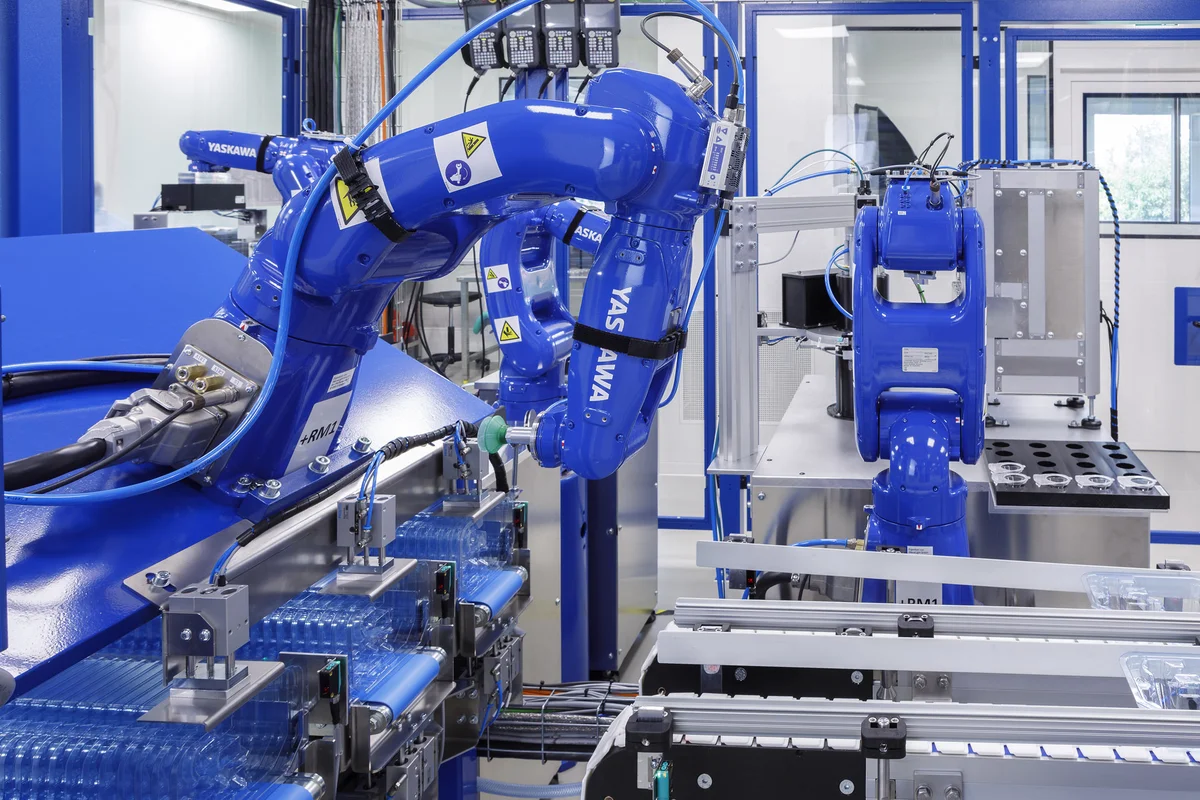
Photo by YASKAWA
For further information visit: yaskawa.eu.com
News Categories
- » NEWS HOME
- » Automation & Robotics
- » Industry 4.0
- » Material Handling
- » Sensors
- » Quality & Testing
- » Machine Vision
- » Laser & Optics
- » Metalworking
- » Motion Control & Drives
- » Hydraulics & Pneumatics
- » Process Industry
- » Renewable Energy
- » Agriculture
- » Home & Office Furniture
- » Additive Manufacturing
- » Environmental Tech
Related Expos





Tags
 |
 |
 |
 |
 |
|||
 |
 |
 |
 |
 |
 |
 |
 |
 |
 |
 |
 |
 |
 |
 |
 |