Innovative Substrate Preparation Improves Efficiency at Mühlacker Biomethane Plant
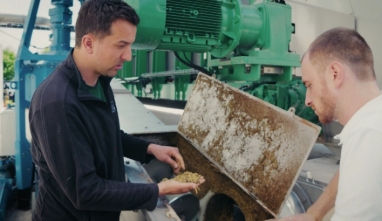
As biogas plants increasingly process more complex feedstocks, efficient substrate preparation becomes a crucial factor for stable and productive operation. The biomethane plant in Mühlacker, Baden-Württemberg, has addressed this challenge by integrating the BIO-ROXX substrate preparation module from Wangen Pumps.
The new system improves substrate consistency, reliably handles long fibres, and removes solid contaminants, enabling the plant to operate more efficiently while adapting to changing feedstock requirements.
Modernising Biogas Production with Flexible Feedstock Handling
Biogas plant operators face growing challenges as feedstocks become more diverse. While traditional energy crops such as maize silage were once dominant, modern plants increasingly rely on biological residues like manure, grass, and straw.
This shift requires more sophisticated processing technologies capable of handling substrates with long fibres and potential contaminants such as stones or other foreign materials.
At the Mühlacker biomethane plant, the integration of Wangen Pumps’ BIO-ROXX module represents a significant step toward addressing these evolving requirements and improving overall process stability.
A Key Hub in Regional Circular Economy
Established in 2007 as a subsidiary of the Mühlacker Department of Public Works, the biomethane plant was among the first facilities in Baden-Württemberg to include its own gas upgrading system.
Today, the plant plays a central role in the regional circular economy. It processes feedstock supplied by around 120 local agricultural partners and produces both biomethane and high-quality universal fertilisers for horticultural applications.
The treated biogas is fed directly into the public natural gas network, contributing to decentralised and renewable energy generation.
The facility has a processing capacity of approximately 30,000 tonnes of fresh material annually and generates up to 5 MW of gas power and 2 MW of electrical power.
Transition from Solid to Liquid Substrate Infeed
Originally, the plant relied on a dry infeed system where solid substrates were fed directly into the fermenter via screw conveyors. However, increasing feedstock complexity made this method less suitable over time.
To modernise the plant while maintaining operational redundancy, operators decided to transition to a liquid-based substrate infeed concept.
This approach allows for greater flexibility in substrate handling and supports dynamic control of the fermentation process.
BIO-ROXX: Advanced Substrate Preparation Technology
To implement the new infeed strategy, the plant partnered with Wangen Pumps, a company already known for its reliable progressing cavity pump systems used elsewhere in the facility.
The BIO-ROXX module was specifically developed to process solid substrates efficiently in biogas plants. The system combines advanced mixing technology with effective removal of foreign materials.
An integrated agitator mixes liquid and solid substrates intensively to create a homogeneous mixture that can be pumped directly into the fermentation process. This improves substrate consistency and optimises fermentation conditions.
In addition, the system includes an active stone discharge outlet that removes unwanted contaminants before the substrate reaches the fermenter, protecting downstream equipment such as pumps and agitators.
Efficient System Integration at the Mühlacker Plant
Two BIO-ROXX modules were installed at the Mühlacker facility, positioned between the solids infeed system and the fermenter.
Solid materials are introduced via two solids dispensers and transported into the BIO-ROXX modules using screw conveyors. At the same time, digestate from the post-fermenter is delivered as a liquid substrate by Wangen KL65 progressing cavity pumps.
The BIO-ROXX modules blend the solid and liquid substrates into a homogeneous mixture with optimal consistency for fermentation. Once prepared, the substrate is transferred into the fermenter using a Wangen KL80 discharge pump.
The entire modernization project was completed within six months without interrupting plant operations, thanks to close collaboration between the plant operators and Wangen Pumps.
Improved Fermentation and Operational Efficiency
The introduction of the BIO-ROXX system has significantly improved performance at the Mühlacker plant.
Operators report higher methane yields, more stable fermentation processes, and reduced formation of floating or sinking layers in the fermenter. The system also requires minimal maintenance due to its low number of wear components.
These improvements contribute to increased operational reliability and long-term efficiency.
Supporting Dynamic Energy Production
One of the major benefits of the new substrate preparation system is the ability to adjust substrate infeed dynamically based on demand.
This flexibility enables the plant to respond more effectively to changes in feedstock composition or operational requirements. It also helps stabilise energy supply by allowing biomethane production to be adjusted in response to network demand.
By implementing the BIO-ROXX technology, the Mühlacker biomethane plant demonstrates how innovative engineering solutions can support the future of renewable energy production.
For more information, please visit: https://www.wangen.com/en/
News Categories
- » NEWS HOME
- » Automation & Robotics
- » Industry 4.0
- » Material Handling
- » Sensors
- » Quality & Testing
- » Machine Vision
- » Laser & Optics
- » Metalworking
- » Motion Control & Drives
- » Hydraulics & Pneumatics
- » Process Industry
- » Renewable Energy
- » Agriculture
- » Home & Office Furniture
- » Additive Manufacturing
- » Environmental Tech
Related Expos




Tags
 |
 |
 |
 |
 |
 |
 |
 |
 |